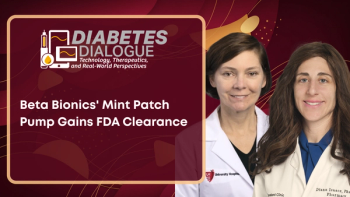
Diana Isaacs, PharmD, and Natalie Bellini, DNP, discuss Beta Bionics' new insulin patch pump, expected to be commercialized in Q1 2027.
Bharat Saboo, MS, discusses his recent study investigating the LLM device in improving both physical and psychological issues associated with T1D.
The usage of a digital conversational support tool resulted in improved glycemic control and self-care behaviors, as well as reduced diabetes distress, in adults with
Presented at the
“We have a patchy healthcare system in our country, and it is not possible for us at any point in time to provide 24/7 continuous care and coverage to our patients,” Saboo told HCPLive in an exclusive interview. “We wanted to see if this device could improve patients’ distress scores, which is a very common problem with type 1 diabetes patients.”
Diabetes distress, unlike standard depressive symptoms, is directly linked to poor glycemic control and problematic self-care behaviors. Patients with either T1D or
To this end, Saboo and colleagues implemented Mitraa-T1D, an AI-driven digital support platform, among patients in India with T1D. A total of 308 adult patients with T1D – defined as HbA1c ≥7% - were enrolled to this 6-month, multicenter, parallel-group randomized controlled trial. These patients were randomly assigned in a 1:1 ratio to receive either usual care plus digital conversational support or usual care alone. Pregnant patients, as well as those with recent diabetic ketoacidosis, severe hypoglycemia, severe cognitive impairment, or advanced renal disease were excluded.1
Saboo and colleagues assessed patients’ self-care behaviors via the Summary of Diabetes Self-Care Activities (SDSCA), and diabetes distress was monitored via the Diabetes Distress Scale. The study’s primary endpoint was change in HbA1c, while secondary outcomes included self-monitoring of blood glucose and physical activity.1
HbA1c data were available for 292 of the 308 enrolled patients (94.8%), and mean age among these patients was 30.2 +/- 9.6 years. By the end of the study, mean HbA1c had decreased from 8.2 +/- 1% to 7.5 +/- 0.9% in the intervention group compared with 8.1 +/- 1.1% to 7.9 +/- 1% in the usual care group. This yielded a between-group difference of -0.5% (P <.001). SDSCA scores also improved more in the intervention group (+1.3 vs +0.4; P <.001), and Diabetes Distress Scale scores declined by -0.8 in the intervention group compared to -0.3 in the usual care group (P <.001). Mean self-monitoring of blood glucose frequency increased from 4 to 7 checks per day versus 4 to 5.1
Saboo and colleagues concluded that the use of Mitraa was associated with these improvements in both physical and psychological symptoms of T1D.1
Saboo also discussed the developmental process behind the device, pointing out that Mitraa was not a fully autonomous AI but instead a Large Language Model (LLM). The device is not designed to prescribe treatments or medications to patients – instead, Saboo emphasizes that it is simply programmed to serve as a conversational tool for patients unable to contact or visit their endocrinologists.
“The biggest advantage with Mitraa is that we have sandboxed it – it doesn’t give any treatment, it just acts as a buddy,” Saboo said. “It doesn’t prescribe insulin, it never adjusts the dose of insulin, it just directs the patient to connect with the doctor.”
Editors’ Note: Saboo reports no relevant disclosures.