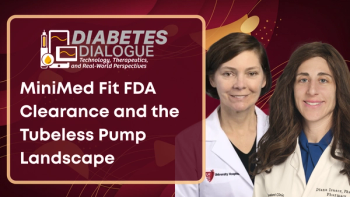
Diana Isaacs, PharmD, and Natalie Bellini, DNP, discuss the MiniMed Fit clearance and how new tubeless pumps will reshape insulin pump selection.

Intensive systolic blood pressure targets in type 2 diabetes are back under scrutiny after the OPTIMAL-DIABETES trial showed no statistically significant reduction in major cardiovascular events with a goal below 120 mm Hg.
On a recent episode of
The open-label trial randomized 9,476 adults aged 50 years and older with type 2 diabetes, elevated blood pressure, and high cardiovascular risk at 33 sites in Brazil. Patients were assigned to a systolic target below 120 mm Hg or below 140 mm Hg, with mean achieved pressures of 121.8 mm Hg and 135.4 mm Hg, respectively.
Over a median follow-up of four years, the primary composite end point occurred in 6.0% of the intensive group vs 6.7% of the standard group (HR, 0.90; 95% CI, 0.77-1.06; P = .2). The composite included cardiovascular death, nonfatal myocardial infarction, nonfatal stroke, and hospitalization for unstable angina or heart failure. Intensive treatment increased a composite kidney outcome (5.7% vs 3.7%) and required a mean of 3.2 antihypertensive agents.
The results diverge from BPROAD, in which a target below 120 mm Hg reduced cardiovascular events in a Chinese population with a higher baseline stroke burden. A prespecified meta-analysis pooling OPTIMAL-DIABETES, BPROAD, and ACCORD BP still showed a 16% relative reduction in major cardiovascular events with intensive lowering (HR, 0.84; 95% CI, 0.77-0.93).
The 2025 American Heart Association/American College of Cardiology guideline on
Collectively, the findings reinforce individualized blood pressure goals in type 2 diabetes and may prompt guideline committees to narrow the population advised to pursue a systolic target below 120 mm Hg. Subgroup analyses and replication in additional populations will be essential to identify which patients benefit most.
Editors’ Note: Isaacs reports disclosures with Dexcom, Abbott, Lilly, Novo Nordisk, Medtronic, Insulet, and others. Bellini reports disclosures with Abbott Diabetes Care, MannKind, Povention Bio, and others.