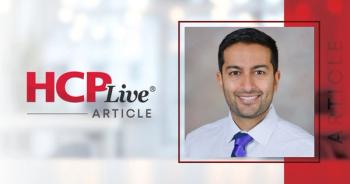
Ankeet Bhatt, MD, MBA, ScM, explains how prediction markets could threaten clinical trial integrity by undermining participant retention and trust.
Christopher Kramer, MD, discusses his substudy of SUMMIT, which utilized CMR imaging to evaluate further heart health metrics versus standard imaging.
Tirzepatide treatment effectively reduced multiple ventricular and atrial measures of heart function in patients with
This substudy was presented at the
“Most studies previously with HFpEF therapies have been with echo, and echo is less sensitive for assessment of the right ventricle, left atrium, and right atrium,” Kramer told HCPLive in an exclusive interview. “Because CMR is a very accurate imaging modality for LV, RV, and atrial size and function, we can make important observations in many fewer patients.”
SUMMIT was a randomized, double-blind, placebo-controlled phase 3 study evaluating the efficacy and safety of tirzepatide compared to placebo in patients with HFpEF and obesity. Patients were eligible for inclusion if they had a diagnosis of stable HF of New York Heart Association class II-IV and left ventricular ejection fraction (LVEF) ≥50%. Additionally, patients were required to have elevated NT-proBNP and a body mass index (BMI) ≥30 kg/m2.2
Patients enrolled in the study would receive either a starting dose of tirzepatide 2.5 mg administered once weekly, followed by escalation by 2.5 mg every 4 weeks to a maximum of 15 mg, or matching placebo. The primary endpoints were change from baseline in the Kansas City Cardiomyopathy Questionnaire (KCCQ) Clinical Summary Score (CSS) by week 52 and first occurrence of a composite of cardiovascular death or death from a worsening HF event.2
A total of 364 patients were enrolled in the tirzepatide group, and 367 were assigned to receive placebo. The median duration of follow-up was 104 weeks – during this time, the composite mortality endpoint occurred in 36 patients receiving tirzepatide and 56 receiving placebo (HR, 0.62; 95% CI, 0.41 to 0.95; P = .026). At week 52, mean change in KCCQ-CSS was 19.5 +/- 1.2 in the tirzepatide group and 12.7 +/- 1.3 in the placebo group (between-group difference, 6.9; 95% CI, 3.3 to 10.6; P <.001).3
In the present substudy, Kramer and colleagues examined the 175 patients enrolled in the SUMMIT trial who had undergone CMR at baseline and at 52 weeks. Of these, 94 had adequate images for analysis at both timepoints, and had their follow-up CMR on-treatment or within 2 weeks of completion. Left and right ventricular (LV, RV) mass and volumes, as well as left and right atrial (LA, RA) volumes, were measured in volumetric 4D fashion.1
Of the included patients, 42 were receiving tirzepatide and 52 received placebo. Kramer and colleagues found that tirzepatide use decreased LA and RA maximal volume compared with placebo (-8mL; 95% CI, -15 to -2; P <.02; -10 mL; 95% CI, -18 to -1; P <.03, respectively). Additionally, the drug reduced RV mass by 5 g (95% CI, -10 to -1; P <.02), RV end-diastolic volume (-10 mL; 95% CI, -19 to -2; P <.02) and RV end-systolic volume (-7 mL; 95% CI, -13 to 0; P <.04). These decreases in RV correlated with changes in LV mass and paracardiac adipose tissue, while the reductions in LA and RA maximal volume correlated with improvements in KCCQ-CSS score.1
Ultimately, Kramer and colleagues concluded that these data reinforced not only the efficacy of tirzepatide, but also that of CMR imaging. In addition to indicating tirzepatide’s effects on LV, LA, and RA measurements of HFpEF, the study underscores the device’s capacity for measuring far more metrics than standard imaging modalities.1
“I think that this points out the power of CMR in clinical trials, but I’m not advocating for doing yearly CMRs in patients with HFpEF,” Kramer said. “The changes are subtle, small, and only seen when you average patients together. But certainly for clinical trials purposes, the CMR is a very powerful technique to understand the potential benefit of whatever novel therapy is being applied.”
Editors’ Note: Kramer reports disclosures with Bristol-Myers Squibb and Cytokinetics.