

Christie Ballantyne, MD, discusses his analysis of the CORALreef Lipids trial, highlighting enlicitide’s effects on LDL-C, ApoB, Lp(a), and non-HDL-C.


Christie Ballantyne, MD, discusses his analysis of the CORALreef Lipids trial, highlighting enlicitide’s effects on LDL-C, ApoB, Lp(a), and non-HDL-C.

Lp(a)HORIZON and ZEUS hit their biomarker targets but not MACE. Stephen Greene, MD, and Muthiah Vaduganathan, MD, MPH, unpack both at AHA 2026.

Michelle O’Donoghue, MD, discusses the results of Part A of the TYDAL-TIMI 78 trial, demonstrating MAR001’s comparative efficacy to placebo.

Robert Rosenson, MD, discusses the long-term extension of the phase 3 PALISADE trial, which demonstrated plozasiran’s association with lower ApoC3 and fasting TG.

Ryan Tedford, MD, discusses his analysis of the phase 2 CADENCE trial, highlighting sotatercept’s beneficial effects on both the right and left sides of the heart.
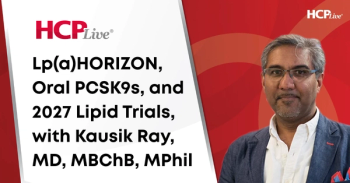
Kausik Ray, MD, MBChB, MPhil, discusses Lp(a)HORIZON, remnant cholesterol targets, enlicitide, and the lipid outcome trials to watch in 2027.
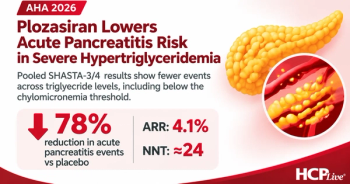
In 757 adults with severe hypertriglyceridemia, plozasiran cut acute pancreatitis events by 78% overall and 91% in those with recent prior pancreatitis.
Todd Villines, MD, discusses the PARAMOUNT trial, which contrasted AI-based CT scan analysis against standard-of-care in patients with suspected CAD.
With LDL-C target-guided titration, starting statin plus ezetimibe vs a statin alone yielded similar 3-year events in ASCVD.
Stopping statins was noninferior at 2 years in adults 70 and older without CVD, but events were higher over full follow-up (12.7% vs 9.2%).
Chronic hypertension in pregnancy was tied to 30% higher odds of critical congenital heart disease in a study of 44 million US births.

Pelacarsen cut lipoprotein(a) by 78.4% at 12 months but did not reduce MACE vs placebo in 8322 patients with cardiovascular disease.
Despite lowering free IL-6 and hsCRP, monthly ziltivekimab did not reduce 3-point MACE vs placebo in 6376 patients with ASCVD and CKD.

Nicholls highlights tirzepatide’s capacity to lower the risk of heart failure mortality, as well as hospitalizations or urgent visits.

Stein discusses the results of a groundbreaking open-label extension, which indicates the efficacy and safety of this investigative oral PCSK9 inhibitor.

Tamura discusses the positive results of the phase 2 trial and its implications for the treatment of a specific subset of patients with high-sensitivity IL-6 PAH.

Grapsa highlights the significant treatment gap between men and women suffering from aortic stenosis, as well as the skewed mortality risks resulting from them.

Bhatt discusses the positive results from the phase 2 trial of quarterly and monthly doses of investigational IL-6 inhibitor pacibekitug.

Ip highlights the uniform safety of patient-administered etripamil nasal spray across a series of phase 2 and 3 studies.

Gulati discusses how cardiologists should change their standard care practices to include and educate patients, which will reduce treatment burden and improve adherence.
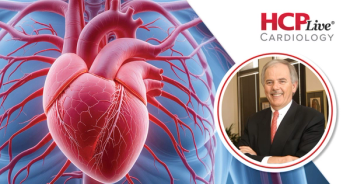
Whelton discusses the successful results of an open-label extension investigating GMRx2 (WIDAPLIK), a novel triple combination pill for hypertension.

Badimon explains the impact of sotagliflozin’s improvements in left ventricular mass, diastolic function, and 6-minute walk test results in patients without diabetes.

Marston discusses the CORE and CORE2 trials, highlighting olezarsen’s success in lowering fasting triglyceride.

Le discusses the increased risk of mortality and major adverse cardiovascular events in patients with both PAD and AF.
Data from 4 of the most impactful trials presented at the American Heart Association Scientific Sessions 2025.

Lau discusses the use of virtual shared medical appointments for increasing access to cardiovascular care in a traditionally underserved population.

Acoramidis also increased serum transthyretin in patients with wild-type ATTR-CM or the pathogenic variant ATTRv-CM.

Cohosts Stephen Greene, MD, and Muthiah Vaduganathan, MD, sat down with Ambarish Pandey, MD, to discuss the revolutionary POLY-HF trial and how polypills can fit into heart failure treatment.
Lau discusses the importance of developing and applying technology to predict potential adverse cardiovascular outcomes in pregnant patients.

Although the initial MACE composite outcome was not statistically significant, investigators saw follow-up MI risk reduced by >50%.