

News|Videos|August 31, 2026
The Patient Who Is Better but Not Clear: Shared Decisions in Psoriasis
"The Patient Who Is Better but Not Clear: Shared Decisions in Psoriasis" takes up the common scenario of a patient content with partial improvement.
Advertisement
Episodes in this series
"The Patient Who Is Better but Not Clear: Shared Decisions in Psoriasis" takes up the common scenario of a patient content with partial improvement.
Dr. Han says fear of the unknown is powerful. A patient who remembers how bad things were feels better and hesitates to switch. It is the devil they know versus the one they don't. They wonder whether a new medicine will truly be better or carry some side effect, and they have grown used to their current injection.
Dr. Han describes a gentle, repeated approach across visits. He reminds patients he still notices them changing their clothing or dropping activities they used to enjoy. He tells them the arsenal now holds tools he is confident can help more, possibly with a better dosing regimen. Crucially, he does not lead with numbers like a PASI 90 comparison. He leads with seeing the patient as a person who is struggling and a bit fearful, backed by his own confidence and experience.
Dr. Wright calls that genuine shared decision-making rather than dictating a switch. She recounts a patient she had followed for milder rheumatic disease who suddenly presented with a scalp covered 100%, plus enthesitis, dactylitis, and synovitis. The patient's risk threshold favored the safest option even if slower, so Dr. Wright started with that drug.
Dr. Wright reports the patient improved only about 45% and returned frustrated by the slow pace, now willing to try the faster agent originally recommended. Within days the patient felt dramatically better and was grateful. Dr. Wright frames this as the art of medicine, moving someone from fear to confidence, and understanding that patients ultimately choose not a pill or a shot but where they want to land in their lives.
In "The Next Five Years in Psoriasis: Remission, Access, and Combinations," the panel closes by looking ahead at where psoriatic disease management is heading over the next five years, and what is still missing.
Advertisement
Related to this article
Participants described how comorbidities, payer formularies, and patient preference shape biologic choice in asthma and COPD.
Diana Isaacs, PharmD, and Natalie Bellini, DNP, recap the first-ever Breakthrough T1D Clinical and Research Congress.

Alpha-gal syndrome is reaching new regions, but delayed reactions and GI-only symptoms can leave patients undiagnosed for months or years.
Repeated oral steroid bursts are the main trigger for starting a biologic, while therapy for non-type 2 inflammation COPD remains an unmet need.
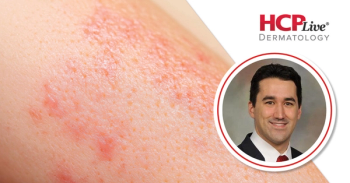
At Fall Clinical 2026, Aaron S. Farberg, MD, shares how gene expression testing guides melanoma and atopic dermatitis care and what Ameluz PDT adds.

A roundup of updates spanning PsO, atopic dermatitis, alopecia areata, vitiligo, palmoplantar pustulosis, cutaneous sarcoidosis, and discoid lupus.

Catch up on HCPLive’s second-half Fall Clinical 2026 coverage, from HS underdiagnosis in men and long-term acne data to advanced cutaneous SCC care.

In mice, liraglutide reduced steatosis through PPARα without needing iNKT cells, pointing to a possible GLP-1 RA plus PPARα combination.
Advertisement
Advertisement
Trending on HCPLive
1
Tezepelumab Meets Co-Primary End Points in Phase 3 CROSSING Trial in EoE
2
52-Week Litifilimab Data in Cutaneous Lupus Erythematosus
3
Tenapanor Linked to Lower IBS-C Care Use, With Kyle Staller, MD, MPH
4
Mirikizumab Shows Early Efficacy in Pediatric UC in SHINE-2 Trial
5