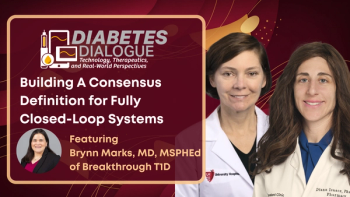
Brynn Marks, MD, MSHPEd, joins Diana Isaacs, PharmD, and Natalie Bellini, DNP, to discuss a new framework defining fully closed loop insulin delivery.
Vanda’s oral NK-1 receptor antagonist cut any vomiting by 27% vs placebo after a single 1 mg semaglutide dose, and the company plans an sNDA submission.
Vanda Pharmaceuticals has announced positive results from Study 3601, a phase 3 trial of tradipitant (Nereus), an oral neurokinin-1 (NK-1) receptor antagonist, for prevention of GLP-1-induced vomiting. According to the Company, tradipitant significantly reduced vomiting vs placebo after a single 1 mg dose of semaglutide, meeting its primary and key secondary endpoints.1
Vanda intends to submit a supplemental New Drug Application (sNDA) to the
"These results demonstrate that NEREUS can meaningfully reduce vomiting and frequent multi-day vomiting induced by GLP-1 therapy, which are key contributors to treatment discontinuation," Mihael Polymeropoulos, President, CEO and Chairman of the Board of Vanda, said in a press release.1 "The consistency and magnitude of the effects observed across this program could offer significant benefit to the millions of people seeking or using GLP1 therapies."
Tradipitant received FDA approval in December 2025 for prevention of motion-induced vomiting. Vanda states the agent blocks substance P signaling in central emetic pathways, including the area postrema and nucleus tractus solitarius. The Company expects it to work with all available glucagon-like peptide-1 (GLP-1) receptor agonists.1
Study 3601 (VP-VLY-686-3601) was a randomized, placebo-controlled trial with 142 participants assigned to tradipitant and 164 assigned to placebo. All participants received a single 1 mg dose of semaglutide without the gradual titration used in clinical practice. Vanda described this as a highly emetogenic test condition.1
According to the press release, tradipitant met the primary endpoint. Results showed any vomiting occurred in 43.0% (61/142) of participants compared with 58.5% (96/164) with placebo (P = .006), a 27% relative reduction. The key secondary endpoint, vomiting plus a worst nausea score ≥ 3, occurred in 33.1% (47/142) versus 50.6% (83/164), respectively (P = .002), a 35% relative reduction.1
Both P values were site-adjusted. Nearly all vomiting occurred by day 2 and peaked on day 1, with the largest between-group separation on days 1 and 2. Vanda also reported a pooled exposure-response analysis of phase 2 and phase 3 data, which the Company said showed a stable treatment effect across semaglutide concentrations.1
Post hoc analyses showed larger relative reductions in higher-burden vomiting outcomes.¹ Frequent multiday vomiting, defined > 2 episodes on more than one day, occurred in 6.3% (9/142) of participants receiving tradipitant compared with 15.9% (26/164) receiving placebo (P = .008). This was a 60% relative reduction.1
Extreme vomiting, defined as > 10 total episodes, occurred in 2.8% (4/142) versus 14.6% (24/164), respectively (P = .0003), an 81% relative reduction.1 According to Vanda, its earlier phase 2 study showed a similar reduction of approximately 80% in extreme vomiting.1 The Company characterized these higher-burden analyses as post hoc and exploratory.
Vanda reported tradipitant was generally well tolerated, with a safety profile consistent with prior studies and no new safety signals.1
The data arrive as GLP-1-based therapies move well beyond diabetes and obesity care. Semaglutide 2.4 mg (Wegovy) received accelerated approval in August 2025 for noncirrhotic metabolic dysfunction-associated steatohepatitis (MASH) with moderate to advanced fibrosis. This built on existing evidence for semaglutide in cardiovascular and chronic kidney disease.3
At APhA 2026, presenters described the class moving toward chronic kidney disease and substance use disorder indications. They also pointed to new oral, high-dose injectable, and multi-agonist formulations.4
As use broadens, tolerability now concerns clinicians in cardiology, nephrology, hepatology, and primary care. In a retrospective cohort of 125,474 US adults with overweight or obesity, 53.6% stopped GLP-1 therapy within 1 year, and gastrointestinal adverse events were associated with discontinuation.2 Citing Morgan Stanley Research, Vanda puts the global GLP-1 market at more than $50 billion.1
Vanda expects to meet with the FDA in 2027 to discuss the Study 3601 results ahead of its planned sNDA submission.1