Now Playing
Trivedi and Lawitz discuss seladelpar’s mechanism of action and its use as a second-line therapy in PBC.
While the
Seladelpar (Livdelzi), a proliferator-activated receptor (PPAR) delta agonist, was one of these recent additions to the PBC treatment armamentarium and was a major topic of discussion at
Findings from a 2.5-year interim analysis of the ongoing open-label phase 3 ASSURE study were presented in a late-breaking abstract at the meeting and highlight seladelpar’s sustained efficacy and long-term safety for the treatment of PBC.
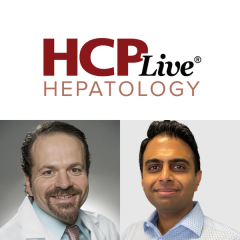
In this segment, which is part 1 of a 4-part series, experts Palak Trivedi, MD, PhD, and Eric Lawitz, MD, discuss seladelpar and its emerging role as a second-line therapy for PBC.
Trivedi begins by explaining that seladelpar offers a more targeted mechanism of action compared with traditional therapies, optimizing bile transport within the liver with a focused approach that not only improves and normalizes liver blood tests in a substantial proportion of patients, but also correlates with better long-term, transplant-free survival. He highlights its impact on quality of life, with long-term data showing significant relief of pruritus—a symptom commonly reported by patients with PBC.
Lawitz goes on to emphasize seladelpar’s efficacy in patients unable to tolerate or inadequately responsive to UDCA. By improving alkaline phosphatase levels and, in some cases, achieving normalization, he asserts that seladelpar holds promise in mitigating disease progression.
Palak Trivedi, MD, PhD: associate professor and honorary consultant hepatologist and clinical research director for industry engagement at the University of Birmingham
Eric Lawitz, MD: medical director of the Texas Liver Institute and a clinical professor of medicine at the University of Texas Health San Antonio
Relevant disclosures for Trivedi include Bristol Myers Squibb, Gilead, Intercept, CymbaBay, and others. Relevant disclosures for Lawitz include 89Bio, Boehringer Ingelheim, Merck, Novo Nordisk, Sagimet Biosciences, AstraZeneca, Bristol Myers-Squibb, Cymabay, Eli Lilly, Gilead Sciences, GlaxoSmithKline, Intercept, Ipsen, Madrigal, Novartis, Regeneron, Takeda, Terns, Viking Therapeutics, AbbVie, and others.
References