Atacicept also stabilized eGFR and matched placebo on safety, with a full FDA approval filing planned for Q4 2026.
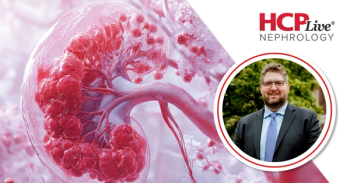
George Vasquez-Rios, MD explains the barriers in GN care that ASN's new compendium may address.
An estimated 200 glomerular disease specialists practice across the US and Canada, with some states lacking an expert within 200 miles, a scarcity that puts real weight on how early general clinicians recognize a glomerular disease before a referral ever happens.¹
George Vasquez-Rios, MD, MSCR, FASN, Director of the Glomerular and Genetic Diseases Center at Renal Medicine Associates, discussed how general clinicians can recognize glomerular disease earlier and navigate referral pathways as part of the
Vasquez-Rios pointed to unexplained proteinuria or hematuria, even when kidney function looks normal as a specific, actionable trigger for workup.
"Whenever we see patients that are dealing with proteinuria and/or hematuria, meaning blood in the urine, and we don't have a clear etiology, a clear answer why this is happening, this should prompt urinalysis, renal ultrasound, additional evaluations for considerations of a glomerular disease, even when the kidney function is relatively preserved," Vasquez-Rios said.
That distinction matters given how specialist access is distributed. Research published in the Journal of the American Society of Nephrology in July 2025 found that patients managed only by general nephrologists, without access to a glomerular disease specialist, were less likely to receive a kidney biopsy or newer therapies, a gap the authors linked to delayed diagnosis and treatment.²
Earlier recognition during the point of entry to care with the clinicians patients actually see first, in Vasquez-Rios's view, is one way to narrow that gap before geography or specialist availability becomes the limiting factor.
Vasquez-Rios framed reaching out to more experienced colleagues as a normal part of managing an evolving field, not a sign of a gap in a clinician's own knowledge.
"There is no shame and there is no problem with calling other folks with more experience to ask for advice or support. I see that happening all the time, and I think that's where we as a community need to work together to create that level of bidirectional discussions," Vasquez-Rios said.
He also noted that access barriers don't stop at referral. Prescribing decisions for newer glomerular disease therapies carry their own friction, from prior authorization to documentation, which is part of why the ASN's GD-C compendium built out a dedicated recognition-to-referral pathway alongside practical guidance on navigating access issues.
Vasquez-Rios's closing point was that clinicians managing glomerular disease patients don't have to do it in isolation.
"Nobody has to do this alone. We are a community," Vasquez-Rios said. He pointed to ASN's online communities, where complex cases, including acute kidney injury and
"I swing by every now and then," he said. "We are all together in this, and we can really make it better for our patients."
Editor's Note: Vasquez-Rios reports no relevant disclosures.