




Inflammatory Bowel Disease
Latest News
Advertisement
Latest Videos

Shorts


CME Content



























































Advertisement
More News
Review the biggest gastroenterology news from the first half of 2026, including FDA updates, IBD advances, and key clinical trials.
Catch up on Q2 GI headlines you may have missed, including an expanded FDA approval for linaclotide, a submission for risankizumab SC induction in Crohn’s, and more.
Catch up on phase 3 data for tulisokibart and obefazimod, expert perspective on linaclotide's expanded FDA approval, and more.

Study 108 interim data show 68% of UC patients remained in clinical remission at week 144 after de-escalating from 50 mg to 25 mg obefazimod daily.
Despite a growing armamentarium of approved IBD therapies, outcomes remain suboptimal. Rubin explains how earlier treatment and smarter optimization can close the gap.
Laurent Peyrin-Biroulet, MD, PhD, breaks down FUZION data demonstrating meaningful fistula healing with guselkumab in Crohn’s disease patients with perianal disease.
Routine depression and anxiety screening in IBD clinics was tied to significantly more referrals and sustained follow-up with psychogastroenterology services
1-year results from ASPIRE-CD suggest risankizumab (Skyrizi) improves HRQL, well-being, and treatment satisfaction in adults with Crohn's Disease.
Edward Barnes, MD, MPH, explains mirikizumab’s strong remission and durable response in Crohn’s disease patients after anti-TNF failure, supporting second-line use.
Maria Abreu, MD, breaks down efficacy and safety data for dual-target co-antibody JNJ-4804, offering a potential new option for heavily pretreated UC patients.

The phase 3 FUZION trial found guselkumab achieved increased fistula remission rates than placebo in perianal fistulizing Crohn's disease.

JNJ-4804 phase 2b results showed higher week-48 remission rates in refractory ulcerative colitis and Crohn disease.
Long-term LUCENT-3 data show mirikizumab sustained disease clearance in ulcerative colitis through 4 years of treatment.
Stephanie Gold, MD, explains prospective IBD-Metabolic Clinic data show GLP-1 RAs are safe and effective for weight management in IBD, with added benefits for bowel function and fatigue.
Gil Melmed, MD, breaks down real-world data showing risankizumab has the lowest switch rates in Crohn’s over 24 months, highlighting strong persistence vs other biologics.
Marla Dubinsky, MD, explains LIBERTY post hoc data showing SC infliximab 240 mg recaptured clinical response within 8 weeks in CD and UC patients following a drug holiday.

AbbVie submitted an FDA application for risankizumab subcutaneous induction in Crohn's disease based on phase 3 AFFIRM data.

If approved, the novel corticosteroid therapy would be the first and only FDA-approved hydrocortisone acetate suppository.

Positive 12-week induction data from Part A of the phase 2 trial highlight the potential best-in-class safety and efficacy of SPY001, a novel anti-α4β7 therapy.
Q1 2026 GI updates include advances in IBD and IBS therapies, long-term data, and new insights into access challenges for younger patients.
Catch up on new IBD drug trial data, updated HE guidelines from the American College of Gastroenterology, and more.

Long discusses AFFIRM data showing strong clinical and endoscopic outcomes with SC risankizumab (Skyrizi) induction in Crohn’s disease.
Catch up on durability data and real-world insight from trials across inflammatory bowel disease and short bowel syndrome.

Risankizumab achieved superiority for the co-primary and ranked secondary endpoints at week 12 for SC injection versus placebo.
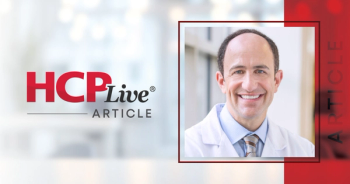
David Rubin, MD, discusses rapid advances in IBD care, new therapies, multidisciplinary models, and the push toward precision GI medicine.
Advertisement
Advertisement
Trending on HCPLive
1
Half-Life vs. Real Life: How Real-World Evidence Is Reframing Wet AMD Treatment
2
FDA Grants Priority Review for Insmed's ARIKAYCE sNDA for MAC Lung Disease
3
The HCPFive: Top News for Healthcare Providers from the Week of 09/13
4
When Innovation Builds Clinical Confidence: Evaluating Treatment Options in Hemophilia A
5