






Psychiatry
Latest News
Advertisement
Latest Videos




CME Content




























































Advertisement
More News

The results of the study presented during SLEEP 2023 show the rate of suicidality was 46% in individuals who reported moderate-to-severe nightmares.

A preference for eveningness was significantly associated with worse overall sleep difficulties, longer sleep latency, reduced sleep satisfaction, more prolonged sleep inertia, more daytime naps, and more severe depressive symptomatology.

The results show engagement in the Telehealth Collaborative Care program visits was greater compared to the Telehealth Enhanced Referral group.

Participants who only initiated non-stimulant therapy for ADHD had significantly greater odds of past-year prescription stimulant misuse than the population controls.

Patients with comorbid major depressive disorder were more likely to have a diagnoses of tobacco, alcohol, opioid, cannabis, stimulants, hallucinogens, sedatives-hypnotics, or anxiolytic use disorders compared to patients with only systemic lupus erythematous.

The rate of sleep apnea is greater in patients with bipolar disorder and depression.

The results show 26.3% of patients in the daily cannabis use only group endorsed 2 or more items on the symptom checklist, consistent with DSM-5 SUD, compared to 30.2% of the other drug use group and 51.8% of the daily cannabis and other drug use group.

A prospective cohort analysis of Denmark residents suggests correlation between cannabis overuse and risk of psychiatric conditions.

New prospective data show more adult patients achieved clinical response with ketamine than the historic standard ECT over a 6-month regimen.

Buprenorphine is available either in a weekly injection formulation and a monthly formulation for patients already being treated with buprenorphine.

The study revealed that healthcare workers with psychiatric disorders had slightly lower Anti-SARS-CoV-2-Spike IgG levels before their third COVID-19 vaccination, but this effect was mediated by age and body mass index.

Paul Ruberg, PA-C, presents a patient case and discusses the importance of educating patients and about the treatment process.

Merrideth Leggat, MD, reviews clinical and practical implications of findings from the TRANSFORM and SUSTAIN studies exploring the utility of esketamine in the treatment of TRD.
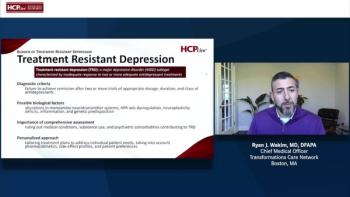
Ryan J. Wakim, MD, DFAPA, explores the causes and diagnostic criteria for treatment resistant depression. He also discusses the importance of comprehensive assessment and personalized approaches to care.
Dr. Levine talks with Marketa Wills, MD, about the role of the payer in medicine.

The LYNX drug development platform is able to deliver drug consistently, while minimizing peaks and troughs of drug levels compared to daily medicine.

Depression is linked with an increased incidence of multiple nonoverlapping physical conditions requiring hospital treatment, including endocrine, musculoskeletal, and vascular diseases.

Clozapine treatment may offer the added benefit of improved sleep in patients with schizophrenia, according to a meta-analysis.

According to the study, gay and bisexual adolescents show higher rates of sleep issues and sleep disturbances.
The extended-release injectable suspension treatment represents the first subcutaneous, long-acting formulation of risperidone.

The long-acting injectable can be administered once every 2 months to either treat schizophrenia or serve as a maintenance monotherapy for bipolar disorder.

An analysis of data from more than 119,000 pregnancies suggests women with prenatal depression were at increased risk for multiple forms of cardiovascular disease within the first 2 years following delivery relative to their counterparts without prenatal depression.

Treatment with benzodiazepines, antipsychotics, and antidepressants was associated with an increased risk of all-cause hospitalization or mortality, while mood stabilizer treatment did not have a statistically significant association with any of the predetermined outcomes and ADHD medications were linked to a lower risk of psychiatric hospitalization.

New research highlights the shared and unique characteristics of sleep and rest-activity rhythm measures among patients with schizophrenia.
Advertisement
Advertisement
Trending on HCPLive
1
The Case for Routine Kidney Screening, With Pranav Garimella, MBBS, MPH
2
FDA Approves Obinutuzumab (Gazyva) for Idiopathic Nephrotic Syndrome
3
Anti-Alpha-Gal Antibodies Block IgE Binding in Alpha-Gal Syndrome
4
Zilurgisertib Receives FDA Approval for FOP in Patients 12 and Older
5