




Psychiatry
Latest News
Advertisement
Latest Videos






CME Content




























































Advertisement
More News

At the 14-year follow-up, ADHD medication use was associated with a 4% increased risk of cardiovascular diseases.

After years 1, 3, and 5, patients with diabetic retinopathy patients had increased odds of depression and suicide, patients with glaucoma had increased odds for all mental health conditions with higher odds for suicide or suicide ideation, and patients with AMD had increased odds for depression.

Children of mothers in minority group were associated with a higher likelihood of ASD diagnosis, but only children of White mothers had ASD associated with neighborhood disadvantages.
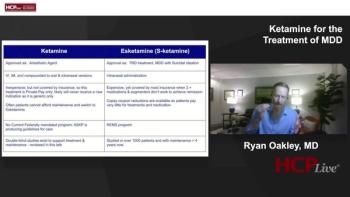
Ryan Oakley, MD, takes a closer look at the recent history of ketamine in depression. He also explores the differences between ketamine and esketamine.
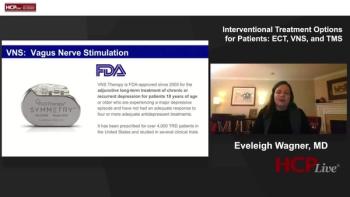
Eveleigh Wagner, MD, discusses the role of electroconvulsive therapy and transcranial magnetic stimulation in depression treatment.
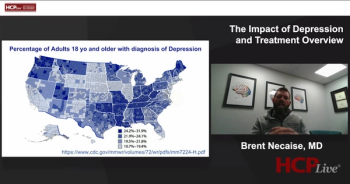
Brent Necaise, MD, reviews incidence and risk factors of depression, as well as the challenges associated with treatment.

A new study found that 25% of PSG-PTSD were related to metabolic traits.

Adults with ADHD have greater reduction of symptoms with regulatory licensed doses of stimulants than unlicensed doses.

Two pivotal phrase 3 centanafadine trials show positive outcomes for children and adolescents with ADHD.

Papola comments on the study he led which found that cognitive behavior therapy is the most effective form of treatment for GAD.

The rates of pediatric and adolescent treatment for depression, anxiety, ADHD, and behavior disorders vary by age, income level, and region.

CBT is the most effective treatment for GAD, according to new network meta-analyses that compared several psychotherapies.

Adult ADHD is associated with a 2.77-fold increased risk of dementia, according to new research.

Solriamfetol could potentially serve as a new ADHD treatment if future research goes positively.
Solriamfetol, typically used to treat narcolepsy and sleep apnea, has demonstrated it can reduce ADHD symptoms with no adverse cardiovascular effects.

Participants with PTSD in a new study heard voices more significantly than did patients with schizophrenia and schizoaffective disorder, according to investigators.

A new analysis was unable to provide conclusive comparisons between the 2 methods of psychotherapy delivery, despite robust data.

Regarding teachers’ responses to handle anxiety in students with autism spectrum disorder, 33.3% teachers promote anxiety and 37.1% promote autonomy.

A trend shows there is an association between the rise of LSD and adults with depression—but it is even more prevalent in young adults aged 18-34 than older adults.

Only roughly 21% of adolescents with mental health issues receive outpatient treatment, according to a new study.

95% of the veterans who screened positive for PTSD also screened positive for insomnia, showing how PTSD is linked to insomnia.

Children and adolescents with autism spectrum disorder have less physical activity, longer sleep latency, shorter total sleep time, and lower sleep efficiency than their peers without autism.

A newly developed prediction model for opioid treatment relapse includes 4 consecutive week urine drug screenings to test for risk of return.

Extended-release quetiapine is commonly used for treatment-resistant depression, but a new study reveals patients receiving esketamine nasal spray are 54% more likely to reach remission at 8 weeks.

Race/ethnicity, parental education, household income, housing tenure, household food sufficiency, and health insurance coverage are all factors linked to the likelihood of mental health challenges in children and adolescents.
Advertisement
Advertisement
Trending on HCPLive
1
The Case for Routine Kidney Screening, With Pranav Garimella, MBBS, MPH
2
Anti-Alpha-Gal Antibodies Block IgE Binding in Alpha-Gal Syndrome
3
FDA Approves Obinutuzumab (Gazyva) for Idiopathic Nephrotic Syndrome
4
Zilurgisertib Receives FDA Approval for FOP in Patients 12 and Older
5