






Psychiatry
Latest News
Advertisement
Latest Videos






CME Content




























































Advertisement
More News

New data presented at SLEEP 2024 show sleep disorders including insomnia are only linked to worse quality of life when veterans do not also have PTSD.

A study presented at SLEEP 2024 found persistent or progressive insomnia symptoms are linked to a greater depression risk than subthreshold cases with gradual improvement.

Van der Kolk discusses the long-term outlook of MDMA in patients with PTSD and what further outcomes he'd like to see explored in the space.
The FDA will decide on an application this summer for the treatment of PTSD with MDMA-assisted therapy. A renowned researcher explains how the treatment benefits patients with trauma.

At APA 2024, psychiatry experts shared their message to their colleagues for Mental Health Awareness Month.

The new psychedelic CPT codes, effective January 1, 2024, could impact MDMA if approved. The FDA's Psychopharmacologic Drugs Advisory Committee will discuss MDMA on June 4.

Julie Thomas, MS, DMSc, PA-C, discusses why ADHD cases may go undetected into adulthood, and the methods to treat such patients.

Beth Browning, PA-C, LPC, provides advice for busy primary care providers to efficiently incorporate timely and treatment-initiating depression screening.

An AAPA 2024 poster from University of Utah shows significant disparities in which patients are missed for depression screening, despite a clinic's universal screening protocol.

From the prospect of semaglutide and MDMA for substance use disorder to evolving research around personality disorders and OCD, here are 5 key topics from the annual psychiatric meeting.
Oldham highlights the anticipated change to a more dimensional perspective on personality disorders in new guidelines anticipated later this year.

In an interview, King provided an overview of the history of psychedelic research for psychiatric conditions, where we are now, and what hurdles investigators must address.

At APA 2024, Weinrieb discussed the positive patient outcomes of using a psychiatry-hepatology approach for the treatment of alcohol-associated liver disease.

Sibille and colleagues have made progress in refining the therapeutic pathways of Alzheimer disease. Human trials may soon follow.

Phillips emphasizes the importance of screening for obsessive-compulsive disorders, such as OCD, body dysmorphic disorder, and trichillomania.

In an interview with HCPLive, Jha said clinicians should think of interventional approaches for treatment-resistant depression “sooner rather than later.”

McIntyre discusses how GLP-1 and GIP receptor agonists like semaglutide could potentially improve both acute and long-term measures of psychiatric disease.
In an interview, Phillip explained the difference between OCD and body dysmorphic disorder, even though they are grouped in the DSM-5.
In an interview with HCPLive, Barnett discussed the ethical concerns of using psychedelics for treating substance use disorders.
In an interview with Adler at APA 2024, he also explained how adults with ADHD may present additional symptoms not noted on the DSM when they have comorbidities.

Compass Pathways reports positive results for psilocybin in PTSD treatment, showing safety and symptom improvement in an open-label phase 2 study.

Robert O. Cotes, MD, discusses why the proven agent clozapine may still be underutilized in schizophrenia.

In an interview with HCPLive, Karlin and Robinson discuss the phase 2b trial on MM120 for generalized anxiety disorder.

In an interview with HCPLive, Karlin discussed the unmet need for GAD screening.
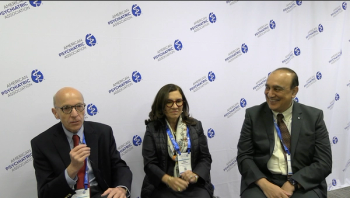
At APA 2024, HCPLive interviewed APA members about how DSM-5-TR classifies psychiatric disorders differently than previous iterations.
Advertisement
Advertisement
Trending on HCPLive
1
The Case for Routine Kidney Screening, With Pranav Garimella, MBBS, MPH
2
Anti-Alpha-Gal Antibodies Block IgE Binding in Alpha-Gal Syndrome
3
FDA Approves Obinutuzumab (Gazyva) for Idiopathic Nephrotic Syndrome
4
Nearly 9 in 10 US Adults With CKD Don't Know They Have It, With Pranav Garimella
5