
































































Reforming healthcare often took center stage during the presidential campaign. Having won the election, President Obama continues to tout healthcare reform as one of the top issues he wants addressed his first year in office.

Reforming healthcare often took center stage during the presidential campaign. Having won the election, President Obama continues to tout healthcare reform as one of the top issues he wants addressed his first year in office.
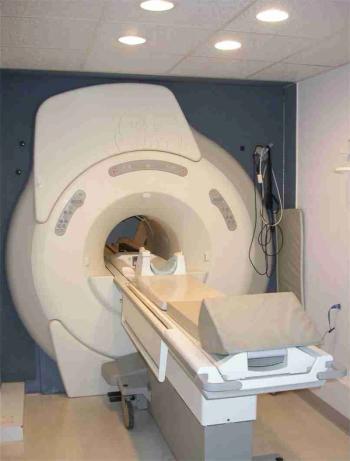
With the help of functional MRI (fMRI), Italian researchers at the University of Udine have found that in patients who suffer from stress-related psychiatric disorders, the neural circuitry that links the prefrontal cortex to the hippocampus is dysfunctional, hampering memory suppression.

Andy Josephson, MD, is an assistant professor of neurology at the University of California, San Francisco, where he directs the Neurohospitalist Program.
Although deep brain stimulation (DBS) is typically used as a last resort treatment for people with Parkinson’s disease (and other neurological and psychiatric disorders), it is important that technology and research companies remain up to date on recent developments to make it easier to treat patients with these diseases.

FMRI shows that reactions in the brain to anticipatory pain are stronger among persons with major depressive disorder.
Our most modern iteration of the portable, wirelessly connected, handwriting- and speech-recognition-capable computer is the "tablet PC."
Throughout history, the public's pursuit of good health has, in the absence of scientific method or even common sense, motivated the creation of some downright ridiculous medical devices.

A new study published in the September 10 issue of Neuropsychopharmacology suggests that teens are more susceptible to becoming addicted to the pain killer OxyContin than adults.
What is the most effective way to translate research findings, such as those summarized in the Institute of Medicine report Unequal Treatment: Confronting Racial and Ethnic Disparities in Health Care and other published studies, into practice- and behavior altering information and interventions?

Chronic conditions are leading causes of illness, disability, and death among Medicare beneficiaries and account for a disproportionate share of healthcare expenditures.

If the results of a Tufts University rat study hold true for humans, the chances are good that obesity will be treated as an addictive behavior in the future.

Although studies show early intervention to be effective in reducing psychotic symptoms in patients with first-episode psychosis, the benefits aren’t sustainable.
In June 2008, I participated in an online interview with Ed Silverman, author of the popular pharmaceutical industry blog Pharmalot.
A year later, as we read and watch the breathless coverage devoted to recent moves by Google, Microsoft, and Apple, we are left asking "is healthcare IT worth the hype?"
Do you have blog envy? Are you getting jealous of your tech-savvy colleagues who end conversations with "I posted something about it on my blog"?

The leading causes of adolescent morbidity and death are injury risk, depressive symptoms, and substance use, all of which are clinically relevant to psychiatry.

In a study of pathological gamblers conducted by at team of researchers at the University of Minnesota in Minneapolis, the urge to gamble diminished among those who took naltrexone.
We talk ethics with Joel Frader, MD, MA, Professor of Pediatrics and Professor of Medical Humanities and Bioethics, Northwestern University's Feinberg School of Medicine.
Prior to 2004, my exposure to information technology in healthcare had been limited to selling an early version of the Oracle database management system to a few hospitals.
The 23rd annual TEPR Conference & Exhibition took place May 19-23 in the Dallas Convention Center in Dallas, TX.
Research studies published in JAMA and by the Institute of Medicine demonstrate that prescription errors account for a staggering number of deaths and adverse drug reactions in the US.
MDNG spoke with Neal Goldman, MD, assistant professor, department of otolaryngology, Wake Forest University Baptist Medical Center, Winston-Salem, NC, to learn how he juggles practicing both...
The beat on the people, devices and companies shaping healthcare.
End-stage organ failure is a growing problem in the US, due in part to the fact that the number of available donor organs is lagging far behind the number of people (approximately 96,000...