

No catch-all drug works to treat irritable bowel syndrome with constipation. But as the Mayo Clinic expert explains, enough unique options exist to tailor care better than ever.
No catch-all drug works to treat irritable bowel syndrome with constipation. But as the Mayo Clinic expert explains, enough unique options exist to tailor care better than ever.

Induction treatment with guselkumab resulted in a rapid onset of efficacy, beginning at week 1 and increasing over time to week 12, for patients with refractory moderately to severely active ulcerative colitis.

Etrasimod demonstrated rapid and significant symptomatic improvement, with differences compared to placebo evident as early as 2 days after initiation of treatment in patients with ulcerative colitis.

Study author Uma Mahadevan, MD, discusses her team's findings suggesting the concern of IBD flare risk in pregnant women receiving aspirin to prevent preeclampsia is unwarranted.

Completion of prescription app-based cognitive behavioral therapy using Mahana IBS significantly reduced symptom severity and perceived stress for patients with irritable bowel syndrome.

The study author discusses the clinical implications of his team's assessment into a risk factor score for alcohol relapse among post-transplant patients with ALD.

Results from the 104-week extension study were presented at ACG 2023, demonstrating mirikizumab’s favorable safety and efficacy profiles.

Investigator Brian E. Lacy, MD, PhD discusses new post hoc analysis that he hopes will provided clearer expectations for timing of benefit with tenapanor.

Advanced therapies for inflammatory bowel disease, namely small molecules and biologic therapies, did not increase the risk of a major adverse cardiovascular event or venous thromboembolism.

Consumption of fruit and vegetables was found to be protective while consuming sweet snacks and candy along with supercenters and warehouse clubs as a primary food source were determined to be risk factors for early onset colorectal cancer mortality.

Investigator Jiten P. Kothadia, MD, discusses the advent of a predictive score for alcohol relapse risk in patients with alcohol liver disease who received a liver transplant in the last year.

The 15 mg dose of tirzepatide was the most efficacious GLP-1 agonist for obesity management in patients without diabetes in a systemic review of data from MEDLINE and Embase databases.

Presented at ACG 2023, findings from a retrospective cohort analysis revealed patients with ALD diagnosed with and prescribed at least 1 medication for alcohol use disorder had a decreased risk of mortality.

Thomas F. Imperiale, MD, discusses the pivotal findings showing improvements to the prior iteration of Cologuard, as well as bettered sensitivity and specificty relative to fecal immunochemical tests.
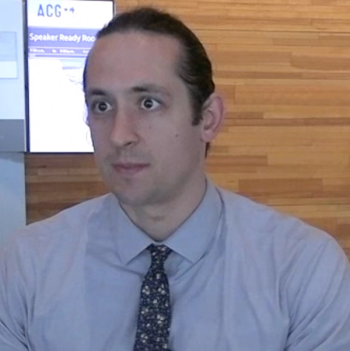
Data presented at ACG 2023 shows a significantly increased risk of infection and hospitalization due to RSV in patients with IBD. An investigator discusses implications during an era of increased vaccine options.

New phase 1b data supports further investigation into Adiso Therapeutic's prospective treatment.

Post-hoc analysis clarifies efficacy of upadacitinib for patients with moderately to severely active Crohn's disease with a CDAI of 220 or more.

New data presented at ACG 2023 showed an approximate 60% success rate of recurrent C difficile prevention in adults with comorbid conditions including CKD and cardiac disease.

Presented in an abstract at ACG 2023, filgotinib missed both co-primary endpoints at week 10 but was efficacious at week 52 in the maintenance cohorts.
Up to 2% of patients with IBD also have EoE.

Guselkumab bested placebo in clinical results of patients with ulcerative colitis.

"The best test is the 1 that gets done," Williams said.

In a late-breaking abstract, the investigators compared antibody levels at month 6 compared to month 1.

A greater proportion of the upadacitinib 15 mg and upadacitinib 30 mg group achieved clinical remission based on the Crohn’s Disease Activity Index

Antibiotics followed by oral SER-109 demonstrated a low rate of recurrent clostridioides difficile infection through week 8, regardless of the number of prior episodes.

Extended induction treatment with upadacitinib 45 mg led to achievement of clinical response in a clinically meaningful proportion of patients with ulcerative colitis who do not respond to 8 weeks of induction therapy.
RBX2660 reduced clostridioides difficile infection recurrence at 8 weeks, with a sustained clinical response through 6 months, in an open-label phase 3 cohort of patients representative of real-world clinical practice.

The agency has set an April 26, 2023 action date for the live microbiotic therapeutic for the prevention of recurrent CDI.

Dupilumab represents the first ever approved treatment for EoE.
Treatment with guselkumab resulted in greater improvements across key clinical and endoscopic/histologic outcome measures at week 12 compared with placebo in patients with moderately to severely active ulcerative colitis with or without a history of inadequate response or intolerance to advanced therapy.