

Brendon Neuen, MBBS, PhD, joins the podcast to discuss the latest updates in nephrology, including the landmark FLOW trial.
Brendon Neuen, MBBS, PhD, joins the podcast to discuss the latest updates in nephrology, including the landmark FLOW trial.

Jonathan Barratt, MD, discusses a matching-adjusted indirect comparison of sparsentan and irbesartan against standard of care plus optimized RASI.
An analysis of more than 800 IgAN patients treated from 2002-2021 provides an overview of factors associated with anemia as well as its impact on prognosis.

Fadi Fakhouri, MD, PhD, discusses the 1-year results of the NOBLE trial examining use of pegcetacoplan in patients with post-transplant C3G or IC-MPGN.

A phase 2b dose-finding study suggests use of clazakizumab was associated with a reduction in hs-CRP among patients undergoing maintenance dialysis.
Jonathan Barratt, MD, discusses the 52-week data from the phase 1/2 trial of zigakibart, which was presented at the 61st European Renal Association Congress.

A Q&A with David Kavanagh, MBChB, PhD, on the results of the APPEAR-C3G trial and implications for care moving forward.
The phase 2 NOBLE trial shows pegcetacoplan reduces disease activity in post-transplant C3G and IC-MPGN, with benefits persisting through the 40-week double-blind period.
In the APPEAR-C3G trial, iptacopan reduced proteinuria by 35.1% in patients with C3 glomerulopathy, with Novartis planning regulatory submissions for C3G before the end of 2024.

Helen Colhoun, MD, discusses the results of a SELECT analysis she presented at the 61st European Renal Association Congress.
Semaglutide 2.4 mg reduces kidney events in SELECT participants, showing renoprotective effects in addition to cardiovascular benefits.

Circulating antinephrin autoantibodies identified as reliable biomarkers for MCD and primary FSGS, enhancing diagnostic precision and monitoring of nephrotic syndromes.

Data from ERA 24 builds on previous research examining the effect of SGLT2 inhibitors on hemoglobin levels among patients with chronic kidney disease.
Hear from Katharina Mayer, MD, and Georg Böhmig, MD, on the results of the phase 2 trial of felzartamab in patients with antibody-mediated rejection following kidney transplantation.

Atrasentan significantly reduces proteinuria in patients with IgA nephropathy, showing a 36.1% reduction compared to placebo at 36 weeks.
Hosts break down the FLOW trial, take a deep dive into secondary findings, and provide insight into how this alters the perception of the role for semaglutide in management of CKD in type 2 diabetes.
Study finds roxadustat effectively treats anemia in both dialysis-dependent and non-dialysis-dependent CKD patients.
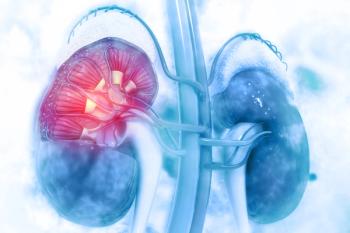
New study finds SGLT2 inhibitors reduce proteinuria in IgA nephropathy, with greater initial eGFR dips predicting stronger treatment responses.
Semaglutide 1.0 mg reduced major kidney disease events and slowed eGFR decline in patients with type 2 diabetes and chronic kidney disease, according to the FLOW trial.