

Check out these 7 late-breaking abstracts to watch at the upcoming SLEEP 2025 meeting.
Check out these 7 late-breaking abstracts to watch at the upcoming SLEEP 2025 meeting.

In an interview Adrian Quartel, MD, discusses the next steps for evaluating KP1077 in idiopathic hypersomnia after the phase 2 study.
The phase 2 findings set up the foundation to design a phase 3 trial evaluating KP1077 for idiopathic hypersomnia.
Gozal told HCPLive about the issue of the classic approach when diagnosing children with OSA.

Bourjeily told HCPLive at SLEEP 2024 that sleep issues, such as insomnia and restless legs syndrome, are the most common during the first and third trimester of pregnancy.

The first line treatment for restless legs syndrome—dopamine agonists—may be making a patient’s condition worse in the long-term, Winkelman told HCPLive at SLEEP 2024.

At SLEEP 2024, Kolla shared tips to help his fellow practitioners for improving patient outcomes when dealing with patients with both sleep issues and psychiatric illnesses.

Martin spoke about the barriers standing in the way of CPAP adherence in women with sleep apnea at SLEEP 2024.
At SLEEP 2024, Hartung discussed FloraWorks’ study finding patients on CBN had greater improvements in sleep quality than melatonin, but the difference was not significant.

At SLEEP 2024, Badr presented on novel treatments for central sleep apnea like phrenic nerve stimulation.
Grandner highlights the importance of focusing on insomnia treatment for sleep-related anxiety—not anxiety treatment.
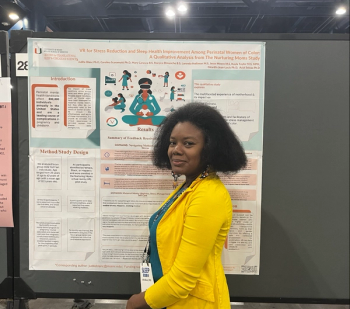
During SLEEP 2024, Judite Blanc, PhD, discussed her team’s ongoing study assessing whether an education VR program improves maternal stress and sleep among women of color.
At SLEEP 2024, Broussard told HCPLive about how eating time restriction can serve as another as another dietary tool for people who are unsuccessful with other strategies.
Broussard discussed the importance of eating during the day at SLEEP 2024.
In an interview at SLEEP 2024, Brager talked about the benefits of exercise on cardiovascular health and sleep.

Parthasarathy discussed next steps for research on the relationship between sleep disturbances and immunity in an interview with HCPLive at SLEEP 2024.
Parthasarathy told HCPLive women have a weaker immune response to COVID-19 than men.
In an interview with HCPLive, Parthasarathy discussed the relationship between sleep disturbances and immune function.

In an interview with HCPLive, DelRosso spoke about the 1-year plans of the "Count on Sleep" OSA project.

At SLEEP 2024, Revana told HCPLive her thoughts on the potential of pitolisant to address excessive daytime sleepiness in Prader-Willi syndrome compared to treating narcolepsy.

Analysis of the OASIS trial shows, on average, women post-menopause with vasomotor symptoms experience at least moderate rates of sleep disturbance.

A study presented as a late breaker at SLEEP 2024 found patients with COPD who have a greater mortality risk have a worse sleep quality.
A cohort analysis suggests upper airway collapsibility prevalence may correlate closely to race in patients with OSA.

New study data show patients with OSA may use a fixed CPAP device for a longer daily duration than those with an automatic option.

Presented at SLEEP 2024 as a late-breaker, a study found a positive relationship exists between suicide severity on any day and next-day suicide severity.
New data presented at SLEEP 2024 show sleep disorders including insomnia are only linked to worse quality of life when veterans do not also have PTSD.

A study presented at SLEEP 2024 found medicinal cannabis shows promise for improving sleep onset latency, quality, and duration in children with ASD.
New analysis from SURMOUNT-1 support the use of GLP-1/GIP agonist tirzepatide to reduce weight in patients with OSA and obesity/overweight.
A study presented at SLEEP 2024 found melatonin increased sleep latency and overall sleep quality and decreased awakenings.

A late-breaking abstract from SLEEP 2024 shows the effect of mandibular devices on respiratory effort, and its overall impact on OSA.