

At SDPA 2025, Gordon presented on the future of dermatology, discussing current drugs being evaluated for atopic dermatitis, psoriasis, and hidradenitis suppurativa.
At SDPA 2025, Gordon presented on the future of dermatology, discussing current drugs being evaluated for atopic dermatitis, psoriasis, and hidradenitis suppurativa.

In her SDPA interview, Maria Hordinsky, MD, spoke about her session regarding clinical pearls for clinicians seeking to spot alopecia early in patients.

At SDPA 2025, Spizuoco discussed how trichoscopic signs like black dots, yellow dots, and exclamation hairs guide treatment decisions.

This interview segment with Scherer highlights additional takeaways from his SDPA 2025 talk, covering clues for clinicians to identify different interdigital foot infections.

In this interview at SDPA, Scherer provides an overview of foot web space infections, fungal versus bacterial infections, and more.
At SDPA 2025, Cotter highlights clinical patterns in alopecia areata that may respond better, or worse, to JAK inhibition and shares his approach to systemic therapy.

This presentation, covered at SDPA, features a discussion by Ginette Okoye, MD, who highlights diagnostic challenges among even experienced clinicians.

At SDPA 2025, Mangin emphasized the importance of wood lamp use, JAK inhibitors, and phototherapy in managing vitiligo and preventing relapse.

Hope Cook, PA-C, speaks in this interview at SDPA about strategies for clinicians seeking to overcome burnout in their careers.
At SDPA 2025, Mangin discussed her vitiligo approach, misconceptions, and how to determine when the disease is active.
In this interview at SDPA 2025, Hope Cook, PA-C, describes the contents of her talk regarding helping clinicians heal from burnout.

In this segment of her SDPA interview, Orit Markowitz, MD, highlights several points about dermoscopy, including common issues with identifying benign lesions.

More than 60% of patients with psoriasis achieved PASI 100 at week 16 with bimekizumab and maintained skin clearance up to 4 Years.

The topics of different hair textures and the management of alopecia in patients with skin of color were highlighted by Ginette Okoye, MD, at SDPA 2025.

Orit Markowitz, MD, highlighted takeaways from her SDPA presentation on the recognition of benign patterns in dermoscopy.

This interview at SDPA features Janelle Ball, founder and CEO of BC Educators, who discusses tips related to success with insurance authorizations.

Amlitelimab shows promise as a safe and effective treatment for moderate-to-severe atopic dermatitis, with sustained benefits post-treatment.

This interview segment at the 2025 SDPA Conference highlights additional insights by Friedman on the management and diagnosis of chronic hand eczema, or CHE.
In an interview conducted at the 2025 SDPA Conference, Friedman provided several insights into management and diagnosis of chronic hand eczema, or CHE.

At SDPA 2025, Candrice Heath, MD, said many clinicians remain unaware of baby perfume traditions that may contribute to persistent symptoms in patients of color.
At SDPA 2025, Candrice Heath, MD, presented on what you can do in your clinic to bridge the gap in pediatric atopic dermatitis among children with darker skin tones.
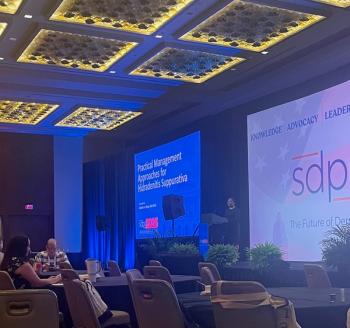
This session with Ginette Okoye, MD, features a discussion about hidradenitis suppurativa (HS) and several helpful approaches for patients.

Raj Chovatiya, MD, PhD, MSCI, and Lawrence Eichenfield, MD, review a recent trial comparing upadacitinib to dupilumab for patients with atopic dermatitis.
Raj Chovatiya, MD, PhD, MSCI, and Lawrence Eichenfield, MD, discuss recent data assessing ruxolitinib cream for patients as young as 2 years old with atopic dermatitis.

Patients in the spesolimab cohort demonstrated rapid improvements in DLQI scores compared with placebo, which were maintained through week 48.

Matthew Zirwas, MD, reviews the clinical discrepancies of certain JAK-targeting therapies and their role in dermatology patient outcomes.
Matthew Zirwas, MD, discusses the prospect of pairing JAK inhibitors like ruxolitinib cream with other disease-targeting options for conditions including vitiligo and alopecia areata.

Responses were highly durable throughout 4 years of bimekizumab treatment.