Special Report

The HCPLive Special Report page is a resource for live video interviews with leading clinical experts and investigators from major medical conferences and events throughout the year.
Series
All
All
Practical Approach to Treating Growth Hormone Deficiency: How to Leverage Registries to Guide Treatment Decisions
An expert outlines a practical framework for diagnosis, treatment initiation, and dose optimization in children with growth hormone deficiency.

Advancements and Insights from the Obesity Medicine Association Conference 2026
A 5-part series covering the most impactful news from - and key clinician insights on - the Obesity Medicine Association (OMA) Annual Conference 2026 in San Diego, California, from April 8-12, 2026.
Optimizing Diagnosis and Management of FCS in 2026
A pair of leading subject matter experts discuss the current landscape of familial chylomicronemia syndrome, including unmet needs, diagnostic challenges, genetic complexity, treatment strategies, and special populations including pregnancy.
Beyond Type 2: Classifying Diabetes and Screening for Hypercortisolism in the 2026 AACE Algorithm
Today we’re focusing on what may be the single biggest conceptual addition to this update — a brand-new diabetes classification algorithm that pushes clinicians to look beyond a default diagnosis of type 2.
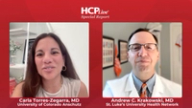
New Pediatric Atopic Dermatitis Guidelines: What Clinicians Need to Know
A 6-part series breaking down key questions and changes to the new pediatric atopic dermatitis guidelines, featuring Andrew C. Krakowski, MD, of St. Luke's University Health Network, and Carla Torres-Zegarra, MD, from the University of Colorado Anschutz.
Psoriasis Treatment Selection: Route of Administration and Comparative Effectiveness
Moderate to severe psoriasis management has undergone a substantive shift with the arrival of icotrakinra, the first oral IL-23 receptor blocker, alongside the continued maturation of advanced biologic therapies targeting the IL-23/IL-17 axis. In this HCP Live special report, Bruce Strober, MD, PhD, Clinical Professor of Dermatology at Yale University School of Medicine, examines how clinicians can navigate treatment selection among biologics and emerging oral agents by integrating mechanism-based sequencing, indirect comparative effectiveness data, long-term durability evidence, and individualized patient factors including psoriatic arthritis pattern and comorbidity profile.

Updates in Cutaneous Lupus Erythematosus from AAD 2026
Expert perspectives from the floor at the American Academy of Dermatology 2026 annual meeting on news and updates in cutaneous lupus erythematosus.
Behind the Guidelines: Understanding 2026 ACC/AHA Dyslipidemia Guidelines
A 9-part series breaking down key questions and changes to the 2026 ACC/AHA Dyslipidemia guidelines, featuring Ann Marie Navar, MD, PhD, a writing committee member, and Pamela Morris, MD, vice chair of the writing committee.
CSU Management Updates: 2026 Guidelines and Latest Data
Experts discuss the most clinically meaningful changes in the 2026 international urticaria guideline update, including the expanded step-up therapy framework and the current limitations of biomarkers in routine CSU practice.

The Changing Landscape of Glomerular Disease Research and Treatment
Barbara Gillespie, MD, and Tobias Huber, MD, discuss the rapidly evolving landscape of glomerular disease research and care. They cover recent scientific advances, from biomarker discovery and molecular technologies to emerging targeted therapies, that are reshaping the understanding and treatment of conditions such as APOL1-mediated kidney disease, membranous nephropathy, and IgA nephropathy. The discussion also highlights global collaborative efforts, including initiatives to refine clinical trial endpoints and accelerate therapeutic development, offering practicing clinicians insight into the breakthroughs and challenges shaping the future of glomerular medicine.

HFSA/AAHFN Joint Statement on Tech Integration in Heart Failure
A 6-part Special Report series, created in collaboration with the Heart Failure Society of America and American Association of Heart Failure Nurses, exploring the HFSA/AAHFN joint statement on integrating technology into heart failure care.

2026 Media Day with UChicago Medicine
At a 2026 Media Day with UChicago Medicine, HCPLive sat down with Russell Cohen, MD, and Benjamin McDonald, MD, PhD, to discuss the how the institution is embracing the latest advances in gastroenterology and driving innovation through involvement in clinical trials.


Unmet Needs and Challenges in Allergy Management
This 4-part special report examines persistent unmet needs and evolving best practices in anaphylaxis care, drawing on expert discussions from HCPLive, Contemporary Pediatrics, and Patient Care. Featuring insights from leading allergists, the series highlights recent guideline updates, practical challenges in real-world management, and emerging treatments aimed at improving early recognition, timely epinephrine use, and patient-centered decision-making across the lifespan.
Navigating Hypercortisolism Management in 2026
Richard Auchus, MD, and Ralph DeFronzo, MD, reframe hypercortisolism, including classic Cushing syndrome, adrenal adenoma–related cortisol excess, and non-neoplastic forms, as an under-recognized yet common driver of refractory metabolic disease, emphasizing practical clinical red flags and the simple, high-yield use of the overnight 1-mg dexamethasone suppression test to identify high-risk patients and guide further diagnostic evaluation and treatment.
Weight-Loss Pharmacotherapy Beyond Incretins: Patient Selection, Safety, and Real-World Decision-Making
Dr Cagney Cristancho emphasizes that non-incretin obesity medications remain essential due to real-world access and patient-specific factors, and should be used through individualized selection, safety monitoring, and long-term chronic disease management.

Breaking Down the New Dietary Guidelines 2025–2030: Evidence, Gaps, and Real-World Practice
A panel of experts examines the 2025–2030 Dietary Guidelines for Americans, unpacking what has changed, where controversy remains, and how these population-level recommendations translate into real-world patient care. The series explores key topics including protein intake, saturated fat, added sugars, fiber, pediatric nutrition, alcohol guidance, cultural dietary patterns, and food access, highlighting areas where visual messaging and written guidance may diverge.
Emphasizing practical interpretation over rigid application, the series equips clinicians with insight into personalizing nutrition counseling across diverse patient populations while accounting for health equity, cultural context, and the realities of everyday clinical practice.
Evaluating Therapeutic Options in FCS
This program explores the latest in a growing evidence base for the care of familial chylomicronemia syndrome, including applying FDA-approved therapies for triglyceride management.

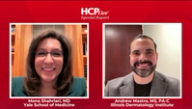
Switching Therapeutic Classes in Atopic Dermatitis
Mona Shahriari, MD, and Andrew Mastro, MS, PA-C, discuss challenges in long-term management of atopic dermatitis and navigating switching therapeutic classes.
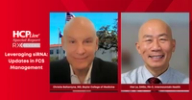
RX Review: Leveraging siRNA in FCS Management
Christie Ballantyne, MD, and Viet Le, DMSc, PA-C, discuss the changing landscape of familial chylomicronemia syndrome management and how the introduction of plozasiran impacts care.
Updates in the Treatment Landscape of Chronic Spontaneous Urticaria
A structured outline of expert discussion points, data highlights, and launch scheduling related to emerging treatments—particularly remibrutinib—for chronic spontaneous urticaria (CSU).

HFSA/ASPC Joint Statement on Shifting the Focus for Heart Failure
A 7-part Special Report series, created in collaboration with the Heart Failure Society of America and American Society for Preventive Cardiology, exploring the HFSA/ASPC joint statement on heart failure prevention.
Advertisement
Advertisement
Trending on HCPLive
1
Targeting Gut Candida to Treat IBD, With Iliyan D. Iliev, PhD
2
Half-Life vs. Real Life: How Real-World Evidence Is Reframing Wet AMD Treatment
3
Phase 3 PARADIGM: HLP003 (Psilocibin-d10) for Adjunctive MDD Use
4
Why Clinicians Should Not Wait to Augment Inadequate Response in MDD
5