A hepatologist on the lag between drinking and liver disease, metabolic risk, prevention gaps, and when the burden may peak.
Hepatology in Q3 2026: brelovitug and lonafarnib advance in hepatitis D, plus Wilson disease, MASH, and US alcohol use updates.
In HDV, the
Rare and cholestatic liver disease saw mixed results. Volixibat received Breakthrough Therapy and Orphan Drug designations for itch in primary sclerosing cholangitis (PSC), and Monopar began a rolling NDA for ALXN1840 in Wilson disease. Odevixibat did not improve native liver survival in biliary atresia.
In metabolic liver disease, zabopegdutide reduced liver fat within 12 weeks in
Alcohol coverage showed US drinking declined from 2022 to 2024 except among adults aged 50 to 64, and hepatologists discussed binge drinking and fibrosis risk. The quarter also marked the Ochsner Transplant Institute's 10,000th organ transplant.
Catch up on the quarter's hepatology coverage from the HCPLive editorial team below.
On September 28, 2026, Mirum Pharmaceuticals announced that brelovitug, a monoclonal antibody targeting hepatitis B surface antigen, met the primary endpoint of the phase 3 AZURE-1 trial in chronic HDV.
At week 24, 56% of patients on 300 mg weekly and 45% on 900 mg every 4 weeks achieved both virologic response and alanine aminotransferase (ALT) normalization, compared with 0% with delayed treatment. No serious adverse events were reported with brelovitug. Mirum plans to submit a biologics license application in the first half of 2027.
On August 11, 2026, the FDA accepted EIT Pharma's NDA for lonafarnib in chronic hepatitis D, supported primarily by the phase 3 D-LIVR trial of more than 400 patients across 21 countries.
Lonafarnib, an oral agent designed to interfere with the HDV life cycle, previously received Breakthrough Therapy, Fast Track, and Orphan Drug designations. No FDA action date has been disclosed.
On August 5, 2026, the FDA granted Breakthrough Therapy and Orphan Drug designations to volixibat, an ileal bile acid transporter (IBAT) inhibitor, for cholestatic pruritus due to PSC. The designations were based on phase 2b VISTAS data showing a significant placebo-adjusted improvement in itch severity.
The FDA has since recommended an additional phase 3 study, moving a potential NDA filing by Mirum Pharmaceuticals to the first half of 2027.
On July 22, 2026, Monopar Therapeutics began a rolling NDA submission for ALXN1840 (bis-choline tetrathiomolybdate), a once-daily oral therapy that binds and removes excess copper in Wilson disease.
In the phase 3 FoCus trial of 214 patients, ALXN1840 produced about 3 times greater copper mobilization than standard of care over 48 weeks. The most common adverse event was a reversible increase in transaminase levels.
On July 24, 2026, Ipsen announced that the IBAT inhibitor odevixibat (Bylvay) did not improve native liver survival, defined as time to liver transplant or death, compared with placebo in the phase 3 BOLD trial.
The trial enrolled 254 infants with biliary atresia who had undergone Kasai hepatoportoenterostomy. Detailed efficacy data and subgroup analyses have not yet been released.
Phase 2 data published in The Lancet Gastroenterology & Hepatology showed that zabopegdutide, a once-weekly dual glucagon-like peptide-1 (GLP-1) and glucagon receptor agonist, reduced liver fat by at least 30% in 75.8% of patients with metabolic dysfunction-associated steatotic liver disease (MASLD) or MASH at 12 weeks.
Liver fat normalized in 48.5% of patients, and liver stiffness and fibrosis biomarkers also improved. Liver fat fell by 37.4% even among patients who lost less than 5% of body weight.
A randomized trial published in Cell Metabolism compared ketogenic, Mediterranean, and very-low-fat plant-forward diets in 55 adults with obesity, prediabetes, and hepatic steatosis.
After matched weight loss of about 10%, the ketogenic diet reduced intrahepatic triglyceride content by 67%, compared with 45% in the other 2 groups. Half of the ketogenic group had remission of prediabetes, versus 29% and 7% in the other groups.
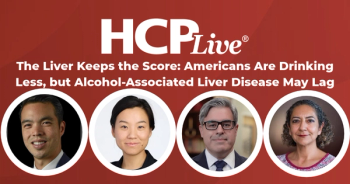
Brian P. Lee, MD, MAS, of Keck Medicine of USC, discusses his Annals of Internal Medicine study showing alcohol use declined among US adults from 2022 to 2024 but rose among those aged 50 to 64.
He covers routine screening with the AUDIT-C and phosphatidylethanol testing, sex-specific heavy drinking thresholds, and fibrosis screening for heavy drinkers older than 50.
Frances Lee, MD, of the Icahn School of Medicine at Mount Sinai, discusses her analysis linking metabolic dysfunction and alcohol-associated liver disease (MetALD) and ALD to 2.58-fold and 4.55-fold higher odds of advanced fibrosis, respectively, compared with MASLD.
She explains why weekly alcohol thresholds can miss binge drinking and how binge patterns should factor into risk assessment.
Ari Cohen, MD, MBA, director of the Ochsner Transplant Institute, discusses the program's 10,000th organ transplant and 4,000th liver transplant.
He covers long-term care before and after liver transplant, machine perfusion, living donation, and gaps in access to transplant evaluation.