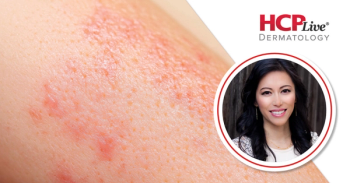
April Armstrong, MD, MPH, discusses 1-year RELIEVE-AD-PEDs data on rapid, sustained dupilumab disease control in adolescents with atopic dermatitis.
The supplemental New Drug Application for Arcutis’ roflumilast cream 0.05% (Zoryve) is for mild to moderate atopic dermatitis in those down to 3 months.
The
FDA officials have assigned the medication a Prescription Drug User Fee Act (PDUFA) target action date of February 23, 2027. Once approved, the expanded indication for roflumilast cream 0.05% would make it the first once-daily, nonsteroidal, targeted topical option specifically indicated for atopic dermatitis in this younger age bracket. Currently, the drug is approved for children in the 2 - 5 year range with mild to moderate disease.
“Infants with atopic dermatitis are particularly vulnerable to burdensome symptoms such as intense itch and sleep disruption, which can impact the whole family,” Lawrence F. Eichenfield, MD, of Rady Children’s Hospital San Diego and the University of California San Diego School of Medicine and an INTEGUMENT-INFANT clinical trial investigator, said in a statement.1 “Managing these symptoms can be particularly challenging for parents and caregivers due to the very limited FDA-approved treatment options as well as concerns about the use of topical steroids on infants whose skin barrier and immune system are still developing,”
The sNDA is supported by phase 2 open-label INTEGUMENT-INFANT trial findings as well as a phase 1 pharmacokinetic analysis looking at once-daily roflumilast cream in infants between 3 months and less than 24 months of age.2 There were 101 subjects in the phase 2 study, while the phase 1 study included 19 infants. In both studies, investigators reported safety, pharmacokinetic, and efficacy data consistent with previously observed findings in older pediatric populations using this topical agent.
Eichenfield et al found, after 4 weeks of use, approximately one-third of infants successfully attained Validated Investigator Global Assessment for Atopic Dermatitis (vIGA-AD) success. Success was defined as clear or almost clear skin and at least a 2-grade improvement from the point of baseline. More than half reached a 75% Eczema Area and Severity Index score improvement (EASI-75). Additionally, they found one-third saw success with this endpoint by the 2-week mark.
Investigators also noted improvements in scalp, while caregivers reported rapid pruritus reductions. Specifically, nearly half of infants showed clinically meaningful improvement within 10 minutes of roflumilast cream application. The medication was generally well tolerated, and there were no new safety signals seen during the 4-week study period. Among the adverse events (AEs) reported were vomiting, diarrhea, nasopharyngitis, and upper respiratory tract infection. All such AEs were not shown to be severe.
“There is a significant unmet need in this population for therapies that can be used anywhere on the body for any duration of time, including on sensitive areas such as the face and skin folds,” Eichenfield said in a statement.1 “If approved, ZORYVE cream 0.05% could provide clinicians and caregivers with an important new steroid-free treatment option that was specifically developed for infants and very young children.”
References