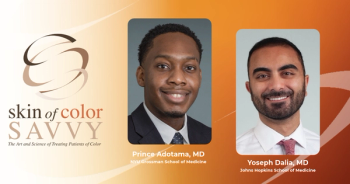
Yoseph Dalia, MD, discusses diagnosing and treating pseudofolliculitis barbae, its occupational impact, and barriers to care in skin of color.
This segment of the latest Skin of Color Savvy episode highlights clinician viewpoints surrounding sun protection and skin cancer.
A recent segment of the
Hosted by Rebecca Vasquez, MD, an associate professor of dermatology at the University of Texas Southwestern Medical Center, the episode featured Jeanine Downie, MD, the founder of Image Dermatology PC in Montclair, New Jersey; Henry Lim, MD, a former chair of dermatology at Henry Ford Health in Detroit, MIchigan; and Jane Yoo, MD, an assistant clinical professor at the Icahn School of Medicine at Mount Sinai in New York, New York.
The conversation centered on the idea that sunscreen should be viewed as only one component of a broader photoprotection strategy. Lim emphasized that clinicians should continue to encourage patients to spend time outdoors because of the physical and psychological benefits of outdoor activity. However, he argued that sun safety must be approached as a “total package” rather than relying exclusively on sunscreen use.
According to Lim, effective photoprotection includes seeking shade when possible, wearing photoprotective clothing, utilizing wide-brimmed hats and sunglasses, and applying broad-spectrum sunscreen to exposed skin. He also stressed the importance of educating both clinicians and patients about visible-light protection, particularly for individuals with darker skin tones, who may be more susceptible to pigmentation disorders. Lim noted that tinted sunscreens are currently among the best available options for visible-light protection in the United States.
The discussion then shifted toward public education and outreach. Downie argued that skin cancer prevention campaigns have historically failed to adequately represent diverse populations, contributing to the misconception that skin cancer primarily affects lighter-skinned individuals. She called for greater inclusion of models with skin of color in educational materials, public service campaigns, and patient-facing resources.
Downie pointed to the death of Bob Marley from acral lentiginous melanoma as a frequently cited example in discussions of skin cancer among Black patients. However, she emphasized that public health messaging should not focus exclusively on uncommon presentations. Instead, she advocated for educating patients about both atypical and more common forms of skin cancer that can occur across all skin tones. Downie also stressed that awareness campaigns should illustrate the real-world consequences of delayed diagnosis, noting that greater visibility and representation remain critical to improving outcomes.
Referencing the advocacy efforts discussed earlier in the episode, Lim highlighted continued public education as a major priority. He also outlined several research areas that may improve photoprotection in the future, including the development of newer ultraviolet filters capable of providing enhanced protection against longer-wave UVA radiation, which plays an important role in hyperpigmentation and photoaging.
Beyond sunscreen filters, Lim expressed optimism about emerging research into “biologic photoprotection.” These approaches include antioxidants and other ingredients designed to suppress UV-induced skin changes rather than simply blocking UV radiation. He noted that while only a limited number of such agents are currently supported by strong evidence, ongoing research into topical and oral photoprotective compounds may eventually expand the options available for skin cancer prevention and skin health, particularly among patients with skin of color.
To learn more about SOCS’s programs and initiatives, visit
Editor’s note: This episode was summarized with the help of artificial intelligence tools.
Disclosures: Lim reported research funding to his institution from Incyte, L'Oréal, Pfizer, and PCORI; consulting relationships with ISDIN, Beiersdorf, Ferndale, L'Oréal, Eli Lilly, Zerigo Health, Skinosive, Kenvue, Cantabria Labs, and NAOS; and speaking engagements for La Roche-Posay, Cantabria Labs, Pierre Fabre, NAOS, Uriage, Pfizer, and ISDIN. Downie reported consulting, research, and/or speaking relationships with Johnson & Johnson, Allergan, SkinMedica, Merz, Pfizer, Galderma, Lifes2Good, Perigee Medical, Nutrafol, Valeant, Intendis (Bayer), BTL, Restorsea, Procter & Gamble, Theraplex, ThermiRF, Revance, Neothetics, Evidera, Alphaeon, Ranbaxy, Fibrocell, BioPharmX, and Exeltis, and is a shareholder in RegimenMD. Yoo reported serving as a consultant for Amorepacific US Inc. Vasquez reported no relevant disclosures.
References