
Opinion|Videos|June 23, 2026
Hypercortisolism in Refractory Diabetes, CATALYST Data
Learn key clues that diabetes isn’t type 2, and how autoantibody tests plus C‑peptide guide accurate adult type 1/LADA diagnosis.
Advertisement
Episodes in this series
Experts examine the role of hypercortisolism in difficult-to-control diabetes, highlighting findings from the CATALYST trial and the practical implications of dexamethasone suppression testing in this population.
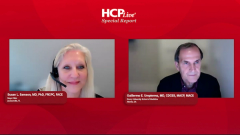
Here, Samson broadens the discussion from autoimmune etiologies to secondary endocrine causes of diabetes, focusing on hypercortisolism. She notes that diabetes can occur in the context of overt Cushing syndrome and acromegaly, in which treatment of the underlying endocrinopathy often leads to improved glycemic control and, in some cases, remission of diabetes.
Samson then turns to milder forms of cortisol excess, including so-called autonomous cortisol secretion from adrenal nodules, in which patients may lack classic Cushingoid features but still exhibit significant metabolic disturbances. She explains that the new 2026 AACE algorithm explicitly lists hypercortisolism among the conditions that warrant further evaluation when patients exhibit unexplained hyperglycemia or require unusually high insulin doses.
Umpierrez, who served as a principal investigator for the CATALYST trial, describes the study’s design and key findings. The trial enrolled more than 1000 adults with difficult-to-control type 2 diabetes, many of whom also had hypertension or required multiple glucose-lowering agents. Participants underwent an overnight 1‑mg dexamethasone suppression test, with morning cortisol levels measured the following day. A cortisol concentration greater than 1.8 μg/dL was considered indicative of nonsuppressible cortisol or hypercortisolism.
According to Umpierrez, approximately 23.8% of these patients met criteria for hypercortisolism, and the prevalence was even higher (around 36.6%) among those taking multiple antihypertensive medications. Subsequent adrenal imaging revealed that about one-third of patients with abnormal suppression tests had adrenal abnormalities, most commonly unilateral adrenal nodules.
Building on these data, Samson and Umpierrez discuss the therapeutic and practical implications of identifying hypercortisolism in patients with “type 2” diabetes that is refractory to standard management. Samson notes that in CATALYST, patients with hypercortisolism who entered a treatment phase with the glucocorticoid receptor antagonist mifepristone experienced improvements in weight, waist circumference, and hemoglobin A1c—on the order of a 1.5% reduction over 24 weeks. She cautions that while more research is needed to define screening strategies and long-term outcomes, the findings support a more active search for cortisol excess in patients with unexplained insulin resistance and metabolic instability.
Practically, Samson emphasizes that a positive dexamethasone suppression screen should prompt referral to an endocrinologist for comprehensive evaluation and management of hypercortisolism. Within the 2026 AACE algorithm, this approach reinforces the broader message that clinicians should consider endocrine comorbidities when glycemic control is unexpectedly difficult.
Advertisement
Related to this article

Raj Chovatiya, MD, PhD, on zasocitinib results in the scalp, nails, palms and soles, speed of response and once-daily oral dosing in psoriasis.

Philadelphia-area PAH specialists discuss real-world patient mismatch with trial criteria, drug sequencing, and insurance access barriers.

FDA expands marstacimab approval to children and patients with inhibitors, backed by new BASIS trial data.
Frances Lee, MD, on stigma's role in ALD care and why women may progress to advanced disease faster than men.
In this Q&A, Raj Chovatiya, MD, PhD, discusses where zasocitinib fits in the psoriasis treatment algorithm and what high clearance rates mean for patients.

The sNDA for amikacin liposome inhalation suspension is supported by phase 3b ENCORE trial data, with a PDUFA date of January 28, 2027.

Aquestive has resubmitted its needle-free epinephrine film after an FDA rejection over usability, not efficacy. This FAQ covers what changed.

Stay updated with the latest healthcare breakthroughs, including Bayer's finerenone expanding to type 1 diabetes-associated CKD.
Advertisement
Advertisement
Trending on HCPLive
1
Half-Life vs. Real Life: How Real-World Evidence Is Reframing Wet AMD Treatment
2
FDA Grants Priority Review for Insmed's ARIKAYCE sNDA for MAC Lung Disease
3
When Innovation Builds Clinical Confidence: Evaluating Treatment Options in Hemophilia A
4
The HCPFive: Top News for Healthcare Providers from the Week of 09/13
5