
Opinion|Videos|October 22, 2026
Laboratory Workup and Mast Cell Pathophysiology in CIndU
Targeted laboratory testing and an understanding of the type I and type IIb immune pathways help clinicians characterize CIndU and explain to patients why their skin reacts the way it does.
Advertisement
Episodes in this series
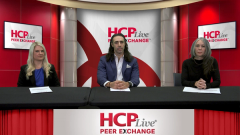
In "Laboratory Workup and Mast Cell Pathophysiology in CIndU," the panel moves from the history to the bloodwork and the biology beneath it.
Dr. Cotter asks which laboratory tests help distinguish CIndU subtypes. Dr. Finklea explains that when CSU and CIndU overlap, she orders a complete blood count with differential, total IgE, anti-thyroid peroxidase antibodies, and an erythrocyte sedimentation rate or C-reactive protein. Updated guidelines suggest similar testing for certain CIndU subtypes, including cold urticaria and symptomatic dermographism. In these patients she typically expects elevated IgE, normal basophils, normal CRP, and negative anti-TPO antibodies.
Dr. Trotter notes that overlap between subtypes may reach 35% in the literature. She adds the CSU workup when an overlap is suspected and extends it for cold urticaria. Without formal provocation tools, her clinic uses ice cube testing and even a small treadmill to reproduce cholinergic symptoms. Dr. Cotter jokes that this amounts to a dermatology stress test.
Dr. Finklea then turns to pathophysiology. CIndU is not fully elucidated, but it is considered primarily mast cell driven. Basophils, neutrophils, B cells, T cells, and sensory nerves also contribute. Two immune pathways activate the mast cell. Type I autoallergy is IgE mediated, with IgE binding autoallergens such as double-stranded DNA, IL-24, or thyroid peroxidase. Type IIb autoimmunity is IgG mediated. Both converge on Bruton tyrosine kinase, triggering histamine and cytokine release.
She believes type I is dominant in CIndU, supported by response to anti-IgE therapy and typical laboratory findings. Subtype nuances exist, including neutrophil involvement in delayed pressure urticaria, MRGPRX2 and gut microbiome links in dermographism, and adrenergic features in cholinergic urticaria. Dr. Trotter closes by describing how patients want to know why, and how she explains autoreactivity and the skin-gut axis.
Our next episode, "The Hidden Quality-of-Life and Mental Health Burden of CIndU," turns to the toll CIndU takes on sleep, work, school, and mental health.Welcome back to another HCPLive Peer Exchange series. In "CIndU Subtypes, Overlap With CSU, and Practical Provocation Testing," moderator David Cotter, MD, PhD is joined by Shannon Trotter, DO, FAOCD, FAAD and Lindsey Finklea, MD to open the series on chronic inducible urticaria.
Advertisement
Related to this article

A recent MRI analysis of the pivotal OCEANIC-STROKE trial has indicated a complete lack of association between infarct patterns and asundexian’s efficacy.

AAD and HSF issued the first joint hidradenitis suppurativa guidelines, outlining 37 recommendations and flagging step therapy as a major barrier.

A new analysis of 4 major trials has revealed the association between lower SBP and higher TTR and the risk of recurrent stroke after intracerebral hemorrhage.

Data from the phase 2a BIRCH trial demonstrated the treatment’s improvements in mRS and NLR, positioning it for a late-phase trial in the future.

A new analysis of the BRIDGE-TNK trial has demonstrated that patients with cardioembolism are more likely to derive benefit than those with large artery atherosclerosis.

Check out highlights from news published on day 3 of CHEST 2026, spanning COPD, pulmonary embolism, pulmonary hypertension, and AI.

At CHEST 2026, Retno Ariza Soemarwoto, MD, discusses curcumin’s effect on IL-17 in COPD, bioavailability, and what a guideline-ready trial needs.

FDA approves bepirovirsen after phase 3 trials show 19% achieved functional cure at 24 weeks off all hepatitis B treatment.
Advertisement
Advertisement
Trending on HCPLive
1
TTR and Systolic Blood Pressure Load Control Improve Recurrent Stroke Risk
2
Tozorakimab Sustains COPD Exacerbation Benefit to 2 Years: Henrik Watz, MD
3
ASN Kidney Week 2026 Preview: 8 Late-Breakers We’ll Unpack With the Investigators
4
Frespaciguat Misses 6MWD End Point in PH-COPD: Gabor Kovacs, MD, PhD
5