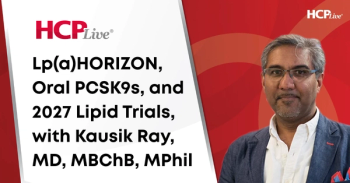
Kausik Ray, MD, MBChB, MPhil, discusses Lp(a)HORIZON, remnant cholesterol targets, enlicitide, and the lipid outcome trials to watch in 2027.
Robert Rosenson, MD, discusses the long-term extension of the phase 3 PALISADE trial, which demonstrated plozasiran’s association with lower ApoC3 and fasting TG.
New long-term extension data from PALISADE have underscored plozasiran’s safety and efficacy in reducing triglycerides and apolipoprotein C3 (ApoC3) among patients with
These data were presented at the
“This open-label extension confirms the safety of plozasiran, a small interfering RNA that’s directed to the liver by the galvanic moiety,” Rosenson explained in an exclusive interview with HCPLive. “We now have longer-term data that should give both patients and practitioners comfort about the use of this ApoC3 inhibitor.”
PALISADE was a phase 3 trial evaluating plozasiran’s efficacy and safety compared to placebo in patients with FCS. Patients with fasting TG ≥10 mmol/L at screening and a diagnosis of FCS, among other criteria, were eligible for enrollment. Patients using any hepatocyte-targeted siRNA or antisense oligonucleotide molecule within the last 365 days from day 1, as well as those with active pancreatitis or newly diagnosed diabetes mellitus within 12 weeks before day 1, among other criteria, were excluded.2
Enrolled patients were randomly assigned in a 2:1:2:1 ratio to receive either plozasiran 25 mg, placebo 50 mg, or matching placebo subcutaneously every 3 months (Q3M) for a total of 4 doses, followed by another 8 doses during the open-label period. The primary endpoint was percent change from baseline in fasting TG at month 10. Secondary endpoints included average percent change from baseline in fasting TG at months 10 and 12, percent change in ApoC3 at month 10, and the percentage of patients with positively adjudicated acute pancreatitis events through month 12, among other criteria.2
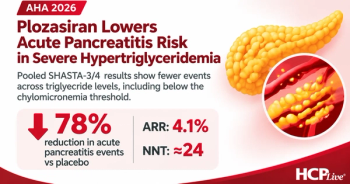
A total of 75 patients were enrolled in the trial, among whom the median TG level at baseline was 2044 mg/dL. After 10 months of treatment, the median change in fasting TG level was -80% in the 25-mg arm, -78% in the 50-mg arm, and -17% in the placebo arm (P <.001). Additionally, plozasiran treatment demonstrated better results among the key secondary endpoints compared to placebo, including incidence of acute pancreatitis (odds ratio [OR], 0.17; 95% CI, 0.03 to 0.94; P = .03). Adverse event risks were also similar across both groups, with the most common being abdominal pain, nasopharyngitis, headache, and nausea.3
Of the 75 patients enrolled in the trial, 65 entered the open-label extension, with a median baseline TG of 2259 mg/dL. By month 24 of treatment, Rosenson and colleagues noted that median TGs were reduced by 76% - these reductions were observed as early as month 1. Additionally, 48% of patients saw TG reductions <500 mg/dL through month 36, with a median of 473 mg/dL. ApoC3 levels similarly declined by around 84% by month 36.1
LDL-C levels increased during the extension but remained below mean thresholds of 55 mg/dL and 70 mg/dL. HDL-C rose by roughly 66%, reaching 27 mg/dL. Non-HDL-C and remnant cholesterol both also decreased, consistent with prior reports from month 24. ApoB remained below 90 mg/dL for the duration of the extension. Plozasiran demonstrated its favorable safety profile, with no renal- or hepatic-related treatment-emergent adverse events occurring in any arm.1
Ultimately, Rosenson and colleagues determined that the PALISADE extension study further bolstered plozasiran’s positive evidence base. The team recorded substantial reductions in both ApoC3 and TG levels that were sustained over 36 months, as well as a reduction of recurrent acute pancreatitis. This extension further establishes PALISADE as the first long-term safety and efficacy data reported for plozasiran in a phase 3 study.1
“Everybody listening to this talk today should be aware that most patients with severe hypertriglyceridemia don’t have pancreatitis; they have cardiovascular events, and we need to focus on that spectrum,” Rosenson said.
Editors’ Note: Rosenson reports disclosures with Amgen, Arrowhead, AstraZeneca, Lilly, Novartis, Verve, and others.