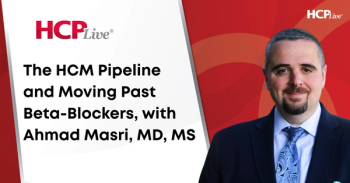
Ahmad Masri, MD, MS, highlights HCM agents to watch in 2027, including sotagliflozin and EDG-7500, and how MAPLE-HCM challenged beta-blocker use.
Ahmad Masri, MD, MS, discusses the move toward medical therapy in HCM, the nonobstructive treatment gap, and imaging's role in diagnosis and follow-up.
Care for
Patients with nonobstructive disease have long faced the widest gap, with no proven medical therapy and little randomized evidence behind the beta-blockers and calcium channel blockers often used in practice.2,3
A 2026 crossover trial published in the Journal of the American College of Cardiology found bisoprolol reduced exercise capacity in this population, while verapamil had no significant effect.3
The phase 3 ACACIA-HCM trial, published in The New England Journal of Medicine, became the first positive trial of a targeted therapy in nonobstructive HCM.1 Aficamten improved both patient-reported health status and exercise capacity vs placebo at 36 weeks.2
Cytokinetics announced plans to submit a supplemental New Drug Application for this indication in the fourth quarter of 2026.1
Beyond new drugs, the field has also leaned more heavily on imaging and circulating biomarkers to confirm the diagnosis and track patients over time. Ahmad Masri, MD, MS, director of the Hypertrophic Cardiomyopathy Center and Cardiac Amyloidosis Program at Oregon Health & Science University, served as principal investigator of ACACIA-HCM.
In the following interview, Masri spoke with HCPLive at the American Heart Association Scientific Sessions 2026 in Chicago about the evolution of HCM care, the nonobstructive treatment gap, and imaging.
HCPLive: What has been the biggest shift in how hypertrophic cardiomyopathy is treated over the past 5 years?
Ahmad Masri, MD, MS: I think the first thing is the excitement we have in this space. People recognize that this is a common problem with significant unmet need, and seeing that you have medications that can actually improve how patients feel and function has been really transformative. I think the biggest shift is that you're transforming a disease with very few treatments, where the definitive treatments used to be more invasive, into one with more medical approaches. You see this excitement from the patients, from the physicians, from the clinicians, and so I think this has been really transformational, because it also showed everybody the potential of focusing on specific forms of heart disease. It always used to be that you'd hear people say, "I'm going to do HFpEF and HFrEF and this and that." HCM, and to a similar degree amyloid, for example, have shown that, no, you can ask more specific questions, and as long as you have the science, as long as you have a good drug to try, you actually can have really good answers as well.
HCPLive: Where do patients with nonobstructive HCM stand today relative to those with obstructive HCM in terms of available treatments?
Ahmad Masri, MD, MS: It's very frustrating, because everything is stacked against these patients. One, their identification is much harder than in obstructive HCM. Two, a historical lack of therapies, even invasive therapies. They are usually chronically limited, but because they're not dying with contemporary management of sudden cardiac death, people usually dismiss some of their chronic limitations and exercise limitations. And finally, there are no evidence-based therapies available that are known to improve how these patients can live their lives and their quality of life. Even the beta blockers and calcium channel blockers that are recommended by the guidelines actually have no role in these patients. If anything, there was a small triple-crossover study from Europe showing that the best thing you can do for your nonobstructive patient, compared with beta blockers and calcium channel blockers, is do nothing, because placebo performed the best, verapamil was slightly worse, and bisoprolol was really worse than placebo on [how they] feel and function. That's exactly where the frustration comes from. You're seeing patients day in, day out in the clinic, and you actually start by saying, "I am so sorry. You don't have obstruction on your exercise test or any of the echoes we've done for you, which limits your treatment options. So you either consider doing nothing, or you consider addressing just the risk factors that you have, or doing a clinical trial." That's why, with ACACIA-HCM, we were very excited to finally have a medical therapy that can get us to a point where, potentially with an approval from the regulators, this can change.
HCPLive: How has imaging changed the way you diagnose and follow patients with HCM?
Ahmad Masri, MD, MS: The truth of the matter is that HCM is an image-based diagnosis. It is a clinical phenotype, but the clinical phenotype then has to be accompanied by a good-quality image to be able to make that diagnosis. You cannot run an HCM program, you cannot serve your patients well, without having a well-characterized, sophisticated set of images. Usually, it's a combination of echo and MRI, if possible. During follow-up, you also need some of those modalities to allow you to understand in a precise way what is happening with your patients. There's a lot of conversation about what you need to learn about your patients with HCM when you follow them over time, and at the individual patient level, we're afforded the tools, between circulating biomarkers and imaging tools on echo, that allow us to be precise and to understand what's happening with our patients. So in HCM, most of the people I know in this space are big fans of imaging and circulating biomarkers to allow us to study the disease. This obviously doesn't translate to all other diseases. Think about transthyretin amyloidosis. You don't need echocardiography beyond the first run unless something happens to the patient. That's very different in HCM.
Editor's Note: This transcript has been edited for grammar and clarity using artificial intelligence tools.