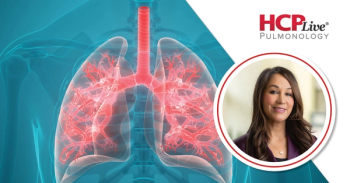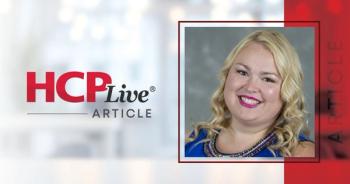
Jean Elwing, MD, discusses what drove ralinepag's reduction in PAH clinical worsening in ADVANCE Outcomes and where the it could fit if approved.
Ralinepag is an oral, once-daily, selective prostacyclin IP receptor agonist designed to mimic sustained exposure of parenteral prostacyclin. It was tested against placebo on top of background therapy in the phase 3 ADVANCE Outcomes trial, which randomized 687 participants, 350 to ralinepag and 337 to placebo. Ralinepag reduced the risk of clinical worsening by 55% versus placebo (HR, 0.45; 95% CI, 0.33-0.62; P <.0001).1
Ralinepag also produced a placebo-corrected improvement in 6-minute walk distance of 20.4 m (P = .0033) and reduced NT-proBNP by 24.3% relative to placebo at week 28 (P = .0013). Most participants, 79.8%, were already on dual background PAH therapy at baseline, with a mean 6-minute walk distance of 439 m and median NT-proBNP of 213 pg/mL.1
A new analysis presented at
In the smallest subgroup, the 84 participants meeting none of the 3 criteria, the hazard reduction was 40% and the confidence interval crossed 1.0 (HR, 0.60; 95% CI, 0.35-1.03; P = .0664). Jean Elwing, MD, professor of medicine in the division of pulmonary, critical care and sleep medicine at the University of Cincinnati College of Medicine, led this subgroup analysis. Elwing spoke with HCPLive during the meeting about what the risk-stratified findings mean for patients who have already reached conventional low-risk targets.
Jean Elwing, MD: The prostacyclin pathway is one of the key therapeutic targets in pulmonary arterial hypertension. Prostacyclin signaling promotes pulmonary vasodilation and has antiproliferative effects, making it an important component of PAH treatment. Ralinepag is a once-daily oral prostacyclin IP receptor agonist designed to provide sustained receptor activation. It has a long effective half-life, relatively low peak-to-trough fluctuations in plasma concentrations, and is pharmacologically active in its parent form without requiring metabolic activation. The rationale is to provide sustained prostacyclin-pathway treatment through a convenient once-daily oral formulation, offering an additional option for patients who could benefit from prostacyclin-pathway therapy without the complexity of parenteral or inhaled delivery systems. Importantly, ADVANCE Outcomes demonstrated that adding ralinepag to background PAH therapy reduced the risk of clinical worsening by 55% compared with placebo (HR 0.45; 95% CI 0.33-0.62; P <.0001), providing evidence that sustained oral IP receptor activation can translate into meaningful clinical benefit.
Jean Elwing, MD: Risk assessment is central to PAH management, and achieving low-risk status is an important treatment goal. However, patients who meet traditional low-risk criteria may still experience disease progression. In ADVANCE Outcomes, many participants had relatively favorable baseline characteristics, including a mean 6MWD of approximately 439 m and a median NT-proBNP of 213 pg/mL, and approximately 80% were receiving dual background PAH therapy. We wanted to understand whether the clinical benefit of ralinepag was consistent across different baseline risk profiles, particularly among patients who had already achieved low-risk criteria. We used the 3 established French noninvasive criteria: WHO functional class I or II, 6MWD greater than 440 m, and NT-proBNP below 300 pg/mL, and categorized patients according to whether they met 0, 1, 2, or all 3 criteria. This approach allowed us to examine whether patients with favorable clinical characteristics could still derive additional benefit from treatment.
Jean Elwing, MD: I think this is one of the most interesting findings from the analysis. Among patients meeting all 3 low-risk criteria, who represented nearly one-third of the study population, ralinepag was associated with a 67% relative reduction in the hazard of clinical worsening compared with placebo (HR 0.33; 95% CI 0.12-0.92; P=0.0338). These patients had favorable clinical characteristics, including a mean baseline 6MWD greater than 500 m and low NT-proBNP levels. Despite meeting all 3 traditional low-risk criteria, they still had the potential to experience clinical worsening, and additional treatment was associated with improved outcomes. This reinforces an important distinction: low risk does not mean no risk. Our current treatment approach appropriately emphasizes achieving and maintaining low-risk status; however, these findings suggest that reaching conventional low-risk thresholds may not represent the full extent of achievable treatment benefit. I would not interpret these exploratory results as meaning that every low-risk patient requires additional therapy. Rather, they support continued risk assessment, attention to residual disease burden, and individualized consideration of further treatment optimization.
Jean Elwing, MD: Patients meeting none of the 3 low-risk criteria had a hazard ratio of 0.60, corresponding to a 40% relative reduction in the hazard of clinical worsening with ralinepag; however, the confidence interval crossed 1.0 (95% CI 0.35-1.03; P=0.0664). An important consideration is that this was the smallest subgroup, with only 84 patients, and the limited sample size reduced statistical precision and made it more difficult to demonstrate a statistically significant treatment effect within this subgroup. The direction of the treatment effect still favored ralinepag, and we observed favorable hazard ratios across all 4 risk groups. It is also important to recognize that patients meeting none of the 3 low-risk criteria were not necessarily all in the highest category of risk according to comprehensive risk assessment tools; this analysis was based on the number of low-risk criteria achieved, rather than a full multidimensional risk classification. I would therefore interpret the finding as evidence of greater uncertainty in this smaller subgroup, rather than evidence that patients with less favorable baseline characteristics do not benefit from ralinepag. These results also should not be interpreted as demonstrating a statistically greater treatment effect in low-risk versus higher-risk patients without formal interaction testing.
Editor's Note: This transcript has been edited for grammar and clarity using artificial intelligence tools. Disclosures for Elwing include Acceleron, MerckActelion, Janssen, Aerovate, Altavant, Bayer, Gossamer Bio, Inhibikase, Liquidia, and United Therapeutics.