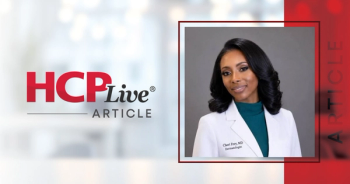
In this session, Cheri Frey, MD, shared a framework for evaluating skincare products, from ingredient plausibility to clinically meaningful results.
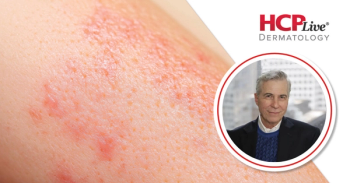
In this Q&A, Hilary Baldwin, MD, discusses common misperceptions, the current pipeline, and how she separates rosacea from acne.
Diagnosis is often complicated further by overlapping rosacea subtypes and presentations that mimic or coexist with acne, making an accurate read of the skin essential before starting therapy.
In an interview with HCPLive, Hilary Baldwin, MD, medical director of the Acne Treatment & Research Center at Atlantic Health, addressed the persistent stigma around rosacea, the current rosacea treatment pipeline and her approach to patients presenting with more than one rosacea subtype simultaneously. This interview follows Baldwin’s “Acne and Rosacea Update 2026” presentation at Maui Derm NP+PA Summer 2026 in Colorado Springs.2
HCPLive: Are there persistent misconceptions around rosacea?
Baldwin: The outside world looks at somebody with an enlarged red nose, especially if it has telangiectasias on it, and [immediately assume] that the person is consuming too much alcohol. It's called a “whiskey nose”—a “rum blossom” in the past—and this is simply not true. That is an assumption that everybody makes when they see patients with rhinophymatous noses, or red noses.
One of the other misconceptions of the patient is that there's no treatment. I have patients come in all the time for other issues with a red face or [with] papules [on their] face as an adult, and [when] I [point it] out, [they say], “Oh, I didn't know that could be treated,” or “I've always looked like this,” or “my sister looks like this and so does my mother.”
That doesn't necessarily mean you don't want treatment. It's incumbent upon us to mention the findings of rosacea in patients who come in for other reasons and don't specifically ask about their rosacea because they simply don't know that there are excellent treatments out there.
HCPLive: What's currently in the pipeline for rosacea?
Baldwin: I don't think there is anything. I am unaware of anything in the pipeline.
HCPLive: How do you help clinicians decide which treatment to reach for in a patient presenting with multiple rosacea subtypes at once?
Baldwin: Most of our rosacea patients do not fit neatly into a category of erythematotelangiectatic, papulopustular, phymatous, or ocular. They have a little bit of everything, or more than 1 component.
Unfortunately, the treatments that we have treat only 1 aspect of rosacea, so when patients have combination rosacea, they're going to need at least 2 medications, sometimes 2 medications [and] a procedure.
What I like to do is hand them a mirror [and] have them look at themselves while I point out the salient features of their disease. Your eyes are a little bit red when you wake up in the morning, or your eyes [are] dry. You have gunk in the corner of your eye that you need to clean out. Notice this little redness on your cheeks. You've got a couple pimples over here; you've got some…broken blood vessels, or telangiectasias on [your] nose.
I point out all the features, and then I say, ‘Okay, so this is what you've got. What do you care about?’ This is a crucial question. You would be amazed at what doesn't bother people and what does.
I've had people come in with a bright red face, stop sign red, not even realizing that they have a red face. Sometimes that doesn't bother them, and you can't assume what would bother you on your face…bothers them. Additionally, there might be 1 thing that can be treated with pharmacologic treatment with a co-pay, and another 1 that's going to require a procedure and out-of-pocket expense. So, I [ask] them first: Which of all these things that I just showed you do you care about the most?
It's very important to get the patient buy-in and make sure that they understand all the little aspects of this because it's a chronic disease. It's going to require chronic treatment, so they really need to be a part of the decision-making process.
HCPLive: Acne and rosacea can overlap or can be confused in adult patients. What clinical features help you separate the 2 when a patient presents with the mixed picture?
Baldwin: Acne and rosacea have a lot of features in common. One of our first jobs is to determine which disease they have.
Let's start with age. An acne patient is more likely to be younger, and a rosacea patient more likely to be older. Of course, many women go on to have adult acne, so that's not always the most important feature. The most important to me is the presence or absence of comedones.
If you see comedones, it is acne. Period. It is not rosacea. If there's no comedones, it could be either one. Hyperpigmentation and scarring really does not occur in rosacea; a papule comes and goes and generally leaves no mark behind, except maybe a little erythema.
Of course, [the patient] could have rosacea now [but] had acne as a child, so they have some scarring from that. But if the lesions that they get are creating scars, it is acne.
Background erythema [is] a hallmark of rosacea. In acne, there is no such thing. The pimples are red, but the normal skin surrounding the pimple is usually not red. Acne can be on the chest and back as well, and rosacea is generally not.
Rosacea is usually the center of the face. Acne can be the center of the face as well, but when it is, it's mostly comedones, and that would not be seen in rosacea.
The size of the pimples matter. When you see big, juicy red papules…that's mostly acne. Rosacea papules, although quite red, tend to be smaller than acne papules.
HCPLive: If a clinician can only change one habit in their acne or rosacea management this year, what would it be?
Baldwin: Consistent use of the medications that we recommend.
I think the patients don't realize when we come up with a relatively complicated regimen, perhaps 2 topicals, or a topical and a pill, that there's a reason for each of the ingredients that we have recommended to them. [Patients] tend to stop something, and…[say], “That wasn't working.” How do you know? You were using 2 things, and you stopped 1.
Compliance is important, but ultimately, I think the fault comes back to us. If the patient doesn't recognize the importance of multiple steps in their regimen, [it] is because we [failed] to educate them adequately [on] why we're forcing them to use more than 1 thing. It's not a plot to make them miserable. There's a rational reason for the combination therapies. Patient education is paramount, and [it is] often not done quite as well as we could.
Watch the interview with Baldwin as she uses a single hypothetical patient to illustrate how
Editor’s note: Reported disclosures for Baldwin include Galderma Laboratories, L.P, Ortho Dermatologics, a division of Bausch Health US, LLC, SUN PHARMACEUTICAL INDUSTRIES INC., LNHC, Inc, GENZYME CORPORATION, Journey Medical Corporation, and Novartis Pharmaceuticals Corporation.
References