
News|Videos|November 26, 2025
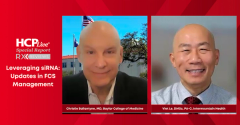
RX Review: Integrating New Therapies in FCS Treatment Algorithms
Author(s)Viet Le, DMSc, PA-C, Christie Ballantyne, MD
Fact checked by: Patrick Campbell
Explore how the latest FDA approvals impact the management of FCS.
Advertisement
Episodes in this series
With new approvals, the most obvious question for clinicians often becomes: How do I fit this into treatment algorithms?
This same question is being posed by cardiologists across the US as the field welcomed the second approval for
In part 5 of our
Ballantyne explains while these agents represent major scientific milestones, they must be incorporated with careful attention to patient needs and existing management principles. Historically, strict dietary restriction has been the cornerstone of therapy, often requiring patients to maintain extremely low-fat intake. Despite the availability of potent medications, Ballantyne reiterates nutritional management remains foundational because it supports medication effectiveness and helps mitigate triggers for pancreatitis.
The segment then focuses on practical integration of therapy. Ballantyne highlights the importance of consistent lipid monitoring and clear communication between lipid specialists, cardiologists, and nutritionists. Medication selection may vary according to patient preference, access considerations, safety profiles, and prior treatment response. The conversation underscores clinicians should provide structured education to ensure patients understand the ongoing role of diet, even when receiving advanced therapies.
Relevant disclosures for Ballantyne include Arrowhead Pharmaceuticals, Inois, Merck, Novartis, Novo Nordisk, New Amsterdam, Esperion, AstraZeneca, Eli Lilly, and others. Relevant disclosures for Le include Amarin, Bayer, Esperion, Idorsia, Janssen, Novo Nordisk, Novartis, Lexicon Pharmaceuticals, and Pfizer.
References:
Arrowhead Pharmaceuticals. Arrowhead Pharmaceuticals Announces FDA Approval of REDEMPLO® (plozasiran) to Reduce Triglycerides in Adults with Familial Chylomicronemia Syndrome (FCS) - Arrowhead Pharmaceuticals, Inc. Arrowhead Pharmaceuticals, Inc. Published November 19, 2025. Accessed November 25, 2025. https://arrowheadpharma.com/news-press/arrowhead-pharmaceuticals-announces-fda-approval-of-redemplo-plozasiran-to-reduce-triglycerides-in-adults-with-familial-chylomicronemia-syndrome-fcs/ .
Virani SS, Morris PB, Agarwala A, et al. 2021 ACC Expert Consensus Decision Pathway on the Management of ASCVD Risk Reduction in Patients With Persistent Hypertriglyceridemia: A Report of the American College of Cardiology Solution Set Oversight Committee. J Am Coll Cardiol. 2021;78(9):960-993. doi:10.1016/j.jacc.2021.06.011
US Food and Drug Administration. FDA approves Tryngolza (olezarsen). U.S. Food and Drug Administration. Published December 19, 2024. Accessed November 25, 2025. https://www.fda.gov/drugs/news-events-human-drugs/fda-approves-drug-reduce-triglycerides-adult-patients-familial-chylomicronemia-syndrome .
Advertisement
Related to this article

Catch up on key FDA approvals, major trial updates, and critical clinician insights from the last 3 months.
The Liver Keeps the Score: Americans Are Drinking Less, but Alcohol-Associated Liver Disease May Lag
Drinking fell for the first time since COVID-19, but not for adults 50 to 64. Hepatologists explain what clinicians can do to close the gap.
The FDA set a June 18, 2027, PDUFA date for the subcutaneous GP IIb/IIIa inhibitor, based on phase 3 CeleBrate data.

Stay up-to-date with the latest FDA approvals, trial readouts, and key clinician insights across cardiovascular care.

As drinking declines, Stevan Gonzalez, MD, Frances Lee, MD, and Brian Lee, MD, on the lingering burden of alcohol-associated liver disease.
FDA novel drug approvals in Q3 2026: 22 new therapies, including enlicitide, daraxonrasib, oveporexton, and first treatments for rare diseases.

Patients with obesity or overweight and T2D saw substantially greater mean weight loss and HbA1c improvement with petrelintide versus placebo.

Remibrutinib doubled complete Total Fric Score response vs placebo at week 12 in RemIND, becoming the first therapy approved specifically for SD.
Advertisement
Advertisement
Trending on HCPLive
1
New Injectable Substantially Reduces Visceral Adipose Tissue in Obesity
2
Remibrutinib Receives FDA Approval for Symptomatic Dermographism
3
RELIEVE-AD-PEDs: Dupilumab Sustains Adolescent Atopic Dermatitis Control at 1 Year
4
Top Reason for Leaving HAE Attacks Untreated, Survey Finds
5