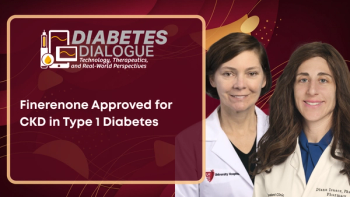
The approval, backed by FINE-ONE data showing a 28% UACR reduction at 6 months, is the first new CKD treatment for this group in 3 decades.
Stay updated with the latest healthcare breakthroughs, including phase 3 data, new clinical findings, and regulatory updates.
Welcome to The HCPFive, your go-to roundup for the latest healthcare news and breakthroughs, curated specifically for busy healthcare professionals.
Each week, we highlight 5 key developments or headlines from healthcare that you need to know — whether it's a cutting-edge treatment, regulatory updates, or innovations shaping the future of medicine. This week's top stories include phase 3 data for roflumilast cream (Zoryve) in infants and older pediatric patients with
With The HCPFive, you'll get the essential takeaways to stay informed and ahead of the curve. Here's your quick dive into the top stories for the week of June 14, 2026 — let's jump in!
A pair of poster presentations from the Revolutionizing Atopic Dermatitis 2026 Conference in Nashville, Tennessee, highlighted roflumilast cream (Zoryve) data across the pediatric age spectrum. In the INTEGUMENT-INFANT trial, roflumilast 0.05% cream applied once daily for 4 weeks in infants aged 3 to 24 months with mild-to-moderate atopic dermatitis (AD) achieved vIGA-AD treatment success in 49.0% of patients and EASI-75 in 67.5% at week 4. In a separate vehicle-controlled phase 3 trial of roflumilast 0.15% cream in patients aged ≥6 years, the agent produced numerically greater improvement than vehicle across all 4 EASI body regions and all 4 clinical signs from week 1 through week 4.
Presented at the Endocrine Society Annual Meeting 2026 in Chicago, Illinois, open-label extension data from the PATHFNDR-1 and PATHFNDR-2 trials showed paltusotine (Palsonify), a once-daily oral selective somatostatin receptor type 2 agonist, maintained biochemical and symptomatic control of acromegaly through 2 years in both SRL-switched and treatment-naïve patients. In PATHFNDR-1 (SRL-switched), mean IGF-1 levels were stable at 0.81x upper limit of normal at week 96. In PATHFNDR-2 (treatment-naïve), mean IGF-1 levels decreased from 1.64x ULN at baseline to 0.96x ULN at week 72. No new safety signals were identified across either extension.
In a recent Diabetes Dialogue episode, cohosts Diana Isaacs, PharmD, and Natalie Bellini, DNP, discussed 3 pediatric diabetes milestones announced around the American Diabetes Association Scientific Sessions 2026. These include the expanded FDA indication for teplizumab in children and adolescents aged 8–17 years with newly diagnosed stage 3 type 1 diabetes, in which 95% of PROTECT trial participants maintained peak C-peptide levels above the study threshold at week 78; the FDA clearance of Dexcom Stelo as the first over-the-counter glucose biosensor for children aged ≥2 years not using insulin; and the pediatric approval of inhaled insulin (Afrezza) as an alternative to mealtime injections for children managing type 1 diabetes.
Presented at the Endocrine Society Annual Meeting 2026, a poster from Angel Mary Joseph, MBBS, MD, MRCP, of Leeds Teaching Hospitals NHS Trust, showed tirzepatide (Zepbound) reduced mean BMI from 41.2 to 37.5 kg/m² and mean HbA1c from 61.9 to 52 mmol/mol over approximately 10 months in patients with type 2 diabetes, advanced CKD, and severe obesity who were ineligible for kidney transplant assessment due to elevated BMI. In total, 8 patients reached a BMI <35 kg/m², meeting the threshold for transplant assessment eligibility. Tirzepatide was well tolerated, with no reported severe hypoglycemia.
An HCPLive feature published this week interviewed 3 dermatologists — Harrison Nguyen, MD, MBA, MPH; Shannon Trotter, DO; and Matthew Zirwas, MD — about how prior authorization requirements, step therapy protocols, and formulary restrictions are affecting dermatology practice and patient access to biologics for conditions including atopic dermatitis, psoriasis, and hidradenitis suppurativa. All 3 clinicians described prior authorization as an escalating administrative burden, with step therapy delays potentially leaving patients without effective treatment for months. All three also agreed on the need for reform, citing greater formulary transparency, streamlined authorization processes, and restructured pharmacy benefit manager incentives as priority areas.