

Among the factors associated with psoriasis, the location of some patients from this large, Italian cohort was considered to be the most influential.
Armand Butera is the assistant editor for HCPLive. He attended Fairleigh Dickinson University and graduated with a degree in communications with a concentration in journalism. Prior to graduating, Armand worked as the editor-in-chief of his college newspaper and a radio host for WFDU. He went on to work as a copywriter, freelancer, and human resources assistant before joining HCPLive. In his spare time, he enjoys reading, writing, traveling with his companion and spinning vinyl records. Email him at [email protected].
Among the factors associated with psoriasis, the location of some patients from this large, Italian cohort was considered to be the most influential.
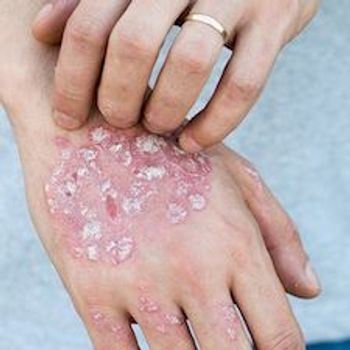
Though previous research had demonstrated an increased risk of MetS in patients with psoriasis, this study was first to consider the prevalence of the condition a global scale.

Dr. Karan Lal returns to discuss key identifiers of pediatric morphea, and how dermatologists can collaborate with doctors from different branches of medicine to treat the disease.

Dr. Smith provides an overview of this rare group of diseases, its variations, and where to find additional support outside of clinical environments.

Dr. Lisa Arkin speaks to how evidence-based, expert opinion-led consensus treatment plans for scleroderma can help change the way patients and providers approach the disease.

Dr. Cordoro speaks on the prevalence of variants of scleroderma in children, and how provides can better recognize and treat the disease in pediatric populations.

Investigators suggested that additional studies could explore the rate of mental health services use in patients with scleroderma with a clinical diagnosis of major depressive disorder or other mental health disorders.
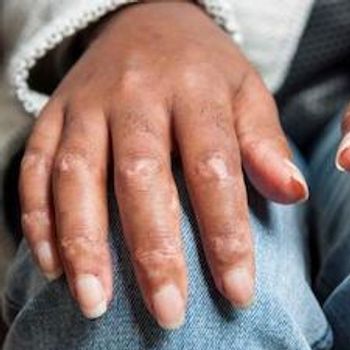
The data obtained from the study supported the idea that IL-6 could be used as a potential marker for judging the efficacy of SSc.

Despite this, investigators suggested better quality filtering of scleroderma content on YouTube.

With this decision, dupilumab is now the only biologic medicine approved from infancy through adulthood for people with AD.
New phase 3 data indicates that a statistically significant number of patients treated with either 8 mg twice-daily or 12 mg twice daily CTP-543 experienced greater scalp regrowth compared to those on placebo

New phase 3 data from the STRATUM trial found that 80.1% of individuals treated with roflumilast foam achieved "IGA Success" compared to 59.2% of patients treated with vehicle at week 8.

Despite being rare, little is known regarding the pathophysiology of DLLR following COVID-19 vaccination.
Dr. Brown and Mr. Zavodnick speak on the first and only FDA-approved steroid-free topical medication in its class approved for psoriasis, and the data that bolstered this approval.

Severe or inflammatory acne can result in prominent scarring in affected patients, which highlights the importance of grading acne in diagnosis of the skin condition.

Investigators observed that patients with quantifiable levels of brodalumab following 12 weeks of therapy experienced significantly higher PASI reductions that those without.

A greater prevalence of hidradenitis suppurativa, psoriasis, folliculitis, and hirsutism in pediatric patients with obesity compared to the general pediatric population.

While the long-term efficacy and safety of the biologic has been investigated in, few studies have been based on real life experience.
Dupilumab is the first and only biologic to show positive Phase 3 results in patients with prurigo nodularis.
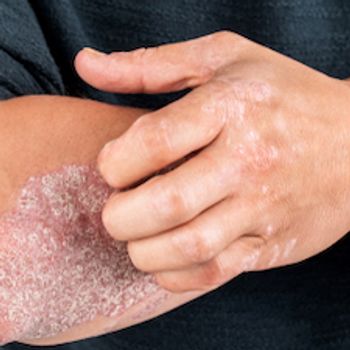
Despite most adverse events of special interest being deemed mild to moderately severe in nature, these types of events have been increasingly reported in real-world practice.
Despite this, close gynecological monitoring of pregnant women with PR was still recommended.

Keratosis pilaris has often been associated with AD and filaggrin loss-of-function mutations, the latter of which are frequent in Europe with an approximate prevalence of 7%
Investigators led by Dr. Bowie deemed it necessary to establish “transparent classification” of topical corticosteroids in the pursuit of stronger and more reliable dermatologic outcomes and treatments.

Though patients with undifferentiated pruritus had higher serum LDH levels, these levels were not associated with an increased risk of hematologic cancer.
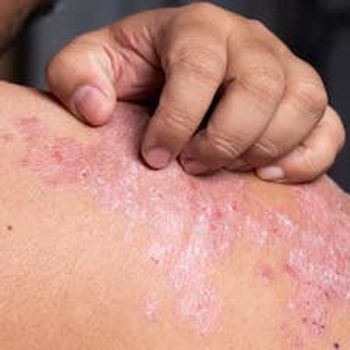
Prior to this new data, only 2 studies had evaluated the association between psoriasis and NAFLD in the US.

Investigators suggested that the large number of systemic therapies used when treating HS in these patients indicated referral delays or difficulties in obtaining disease control in those with moderate to severe HS.
This approval makes tapinarof cream the first and only FDA-approved steroid-free topical medication in its class.
Despite this, more than half of nurses included in this global survey were not financially compensated for their additional work.
New research has suggested that approximately 2%-5% of patients with sarcoidosis also struggle with cardiac sarcoidosis.
Dupilumab is the first treatment in the US indicated for adults and pediatric patients over 12 years with EoE.