
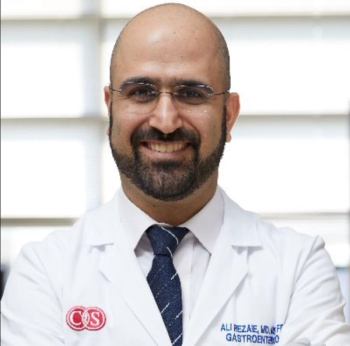
Rezaie describes recent trends in GLP-1RA prescription patterns from his population-based research presented at DDW, highlighting increases in off-label use.
Connor Iapoce is the assistant managing editor for HCPLive, after joining the MJH Life Sciences team in April 2021. He graduated from The College of New Jersey with a degree in Journalism and Professional Writing. He enjoys listening to records, going to the movies, and playing with his cat, Squish. You can reach him at [email protected].
Rezaie describes recent trends in GLP-1RA prescription patterns from his population-based research presented at DDW, highlighting increases in off-label use.

TNF-α levels in the sweat correlate with serum values in patients with IBD, suggesting the wearable's feasibility in non-invasive disease monitoring.

Microbiota differences between individuals with and without MAFLD were associated with dietary intake and clinical outcomes.

Zhang explains disparities in HCC care and the negative impact on long-term outcomes, also addressing potential considerations for vulnerable patient populations.

The MyGut digital health monitoring platform proves feasible and impactful during integration into inflammatory bowel disease care.

Higher exposure dupilumab significantly improved histologic and endoscopic outcomes in children with EoE aged 1 to <12 years.

At week 52 of the Phase 3 EoE KIDS trial, higher exposure dupilumab significantly improved the endoscopic reference score in children with EoE.

A diagnosis of chronic kidney disease was approximately 3-times more likely in Crohn's disease than in ulcerative colitis.

A retrospective analysis in the US found bariatric surgery lowers mortality rates and shortens hospital stays in patients admitted with NAFLD.

Interim results from the open-label, phase 3 study show seladelpar demonstrated clinically meaningful improvements in markers of cholestasis and liver injury.

Initial consultations by female gastroenterologists led to a significant reduction in subsequent healthcare utilization compared with male gastroenterologists.

The smartphone app demonstrated higher accuracy, sensitivity, and specificity in patients with severe anemia than those with moderate anemia.

Retrospective data suggest the off-label use of IVIg could be helpful in the management of severe autoimmune hemolytic anemia.

From the prospect of semaglutide and MDMA for substance use disorder to evolving research around personality disorders and OCD, here are 5 key topics from the annual psychiatric meeting.
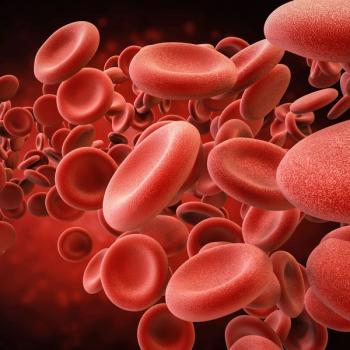
Liposomal iron achieves a partial correction of transferrin saturation, with no significant effect on iron storage and hemoglobin, in patients with NDD-CKD.

Automated anemia detection from fundus images may benefit patients undergoing routine retinal imaging.

Announced on May 15, 2024, the IND application supports a phase 1/2 study of CID among adults with chronic ITP.

Age and sickle cell disease genotype predicted individuals with sickle cell retinopathy at risk for proliferative disease.

Within one month of treatment, anti-VEGF therapy improves anatomic and visual outcomes among eyes with stage 3 and 4 proliferative sickle cell retinopathy.
Announced by Sanofi on May 10, 2024, the updated FDA label is based on full results from the pivotal phase 3 XTEND-Kids study.

At the end of ARVO 2024, Srinivas R. Sadda, MD, became the organization's president for the 2024-2025 year. He spoke to HCPLive about his expectations for the next year in eye care.

Factors, including social deprivation and race, significantly affected visit adherence for patients with nAMD across a large healthcare system.

At ARVO 2024, Nazlee Zebardast, MD, MSc describes the value of a polygenic risk score to predict the onset of primary open-angle glaucoma.

A higher dietary intake of several nutrients was strongly associated with slower progression toward the central macula in eyes with non-central GA.

At ARVO 2024, Roger Goldberg, MD explores the greater reductions in hard exudates achieved with faricimab than aflibercept in eyes with DME.

At ARVO 2024, Deepayan Kar, MD, PhD, describes the potential of measuring contrast sensitivity function using a novel gaze tracking-based VR headset in AMD.

Dolly Chang, MD, PhD, describes results from an exploratory analysis on the long-term impact of rapid fluid reduction on outcomes in DME.

Daniel Su, MD describes the promise of APX3330 for delaying or preventing diabetic retinopathy progression in a post-hoc analysis of the ZETA-1 trial.

Disease characteristics in wet AMD at baseline were not linked to aflibercept 8 mg dosing interval extensions in the phase 3 PULSAR trial at 96 weeks.

Daniela Ferrara, MD, PhD described the key takeaways from the machine learning model's performance in predicting outcomes for various treatment durations of faricimab in DME.