

Investigators stress the need for timely surgical intervention to ensure favorable visual outcomes in patients with severe complications, including retinal detachment and vitreous hemorrhage.
Connor Iapoce is the assistant managing editor for HCPLive, after joining the MJH Life Sciences team in April 2021. He graduated from The College of New Jersey with a degree in Journalism and Professional Writing. He enjoys listening to records, going to the movies, and playing with his cat, Squish. You can reach him at [email protected].
Investigators stress the need for timely surgical intervention to ensure favorable visual outcomes in patients with severe complications, including retinal detachment and vitreous hemorrhage.

Investigators from the University of Pennsylvania suggest the associations, particularly beta peripapillary atrophy, and tilted optic discs, should be accounted for when investigating glaucoma in high-risk black populations.

The therapy is the first and only FDA-approved treatment for geographic atrophy, with approval based on positive results from the phase 3 DERBY and OAKS trials.
The NDA has been granted Priority Review with a PDUFA goal date of August 19, 2023. The FDA is not currently planning to hold an Advisory Committee meeting.

Age less than 3 months at surgery was associated with an elevated risk of glaucoma-related adverse events in aphakic eyes, but children with pseudophakia were less likely to develop a glaucoma-related adverse event.

A new analysis cautions against the use of the Amsler grid test, suggesting its performance is not at a level recommended for monitoring in a patient population with an a priori risk of nAMD.
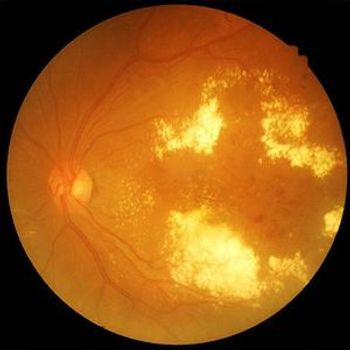
An analysis of the China Stroke Primary Prevention Trial revealed the correlation was more notable when stratified by triglycerides levels and smoking status.

A nationwide study from the United Kingdom identified a low overall prevalence of stress-induced burnout by cataract surgery but reported a reduction in the feelings of personal achievement and a significant proportion willing to give up surgical responsibilities.

An analysis of the NIH All of Us Research Program suggests patients with glaucoma did not fare worse during the early stages of the COVID-19 pandemic, but still endured stress, social isolation, and probable depression.

Results of the LAMP2 trial indicate a delay of myopia onset and progression, rather than prevention, with 0.05% atropine eyedrop use, leading study investigators to call for further research.

Cross-sectional results from the population-based AugUR study suggest a highly significant association between prolonged PRT with early and late AMD.

The significant association between dietary calcium consumption and AMD risk indicates the need for further evaluation of dietary mineral elements in older adults in the US.
Announced by Regeneron, aflibercept injection is the first FDA-approved pharmacologic treatment for preterm infants with ROP.
A meta-analysis and systematic review of RCTs saw no difference between face-down positioning and non-face-down positioning with regard to full-thickness macular hole closure.

A multivariate linear mixed model regression analysis of eyes without DR indicates no statistically significant differences in retinal venular or arteriolar width between subtypes and patients with classical T2D.
A post-hoc analysis of the XIRIUS and XOLARIS trials suggest the gene therapy improved some visual function for patients with XLRP, but the reported SAEs require further safety assessments.

Based on the findings, investigators suggest the evaluation of diastolic blood pressure be considered as a therapeutic measure in patients with glaucoma.

An analysis of Denmark's FORSYN study suggests new advances in the treatment of chorioretinal vascular diseases have significantly reduced vision loss.

Data indicate 2 out of 5 patients utilized LVR services among those who received a referral recommendation during the CDSS active phase, while onsite LVR service provision increased utilization rates.

New 6-month findings from a First-in-Human glaucoma treatment trial indicate the drug delivery platform continued to show a 45% reduction in mean intraocular pressure.

Aflibercept treatment resulted in statistically significant anatomic improvement, but no improvement in visual acuity among patients with NPDR without CI-DME at 4 years of analysis.

An analysis of the Lifelines cohort revealed DED had a significant impact on work functioning, comparable to the impact of other chronic diseases considered function impairing.

Phase 2b findings suggest VEGF-C/D inhibition with 2.0 mg OPT-302 in combination with ranibizumab achieves superior vision gains compared to the current standard of care for nAMD.
The January 2023 ophthalmology month in review features modifications in age-related macular degeneration risk, links between ophthalmic disease and quality of life, and complications during cataract surgery.

In a Dutch population, greater sedentary behavior was associated with an increased risk of DED, but data suggest the association was only significant for those with less than recommended physical activity.

Real-world data suggest nAMD eyes can extend injection intervals by switching to brolucizumab from other anti-VEGF therapies, while maintaining vision and reducing CMT.
Two-year data suggest the average cost of aflibercept monotherapy was approximately $26, 500 compared with approximately $14, 000 for the bevacizumab-first group in eyes with center-involved DME.
The FDA and CDC are urging the immediate discontinuation of EzriCare Artificial Tears as they investigates a multistate cluster of potential bacterial contamination.
The biologic from Amgen and AstraZeneca was approved for self-administration in a pre-filled, single-use pen for patients aged 12 years and older with severe asthma.

The geographic range of practitioner to million persons has increased since 2007, with disparities in practitioner distribution associated with lower socioeconomic status.