

People with diabetes were 11% more likely to develop glaucoma and/or OHT, and individuals with glaucoma and/or OHT were 12% more likely to develop diabetic retinopathy.
Connor Iapoce is the assistant managing editor for HCPLive, after joining the MJH Life Sciences team in April 2021. He graduated from The College of New Jersey with a degree in Journalism and Professional Writing. He enjoys listening to records, going to the movies, and playing with his cat, Squish. You can reach him at [email protected].
People with diabetes were 11% more likely to develop glaucoma and/or OHT, and individuals with glaucoma and/or OHT were 12% more likely to develop diabetic retinopathy.

The advisory committee voted 3-8 against the benefit-risk profile of omecamtiv mecarbil for heart failure with reduced ejection fraction.

The accurate prediction of EF trajectory phenotypes may determine personalization of prognosis and treatment in a pediatric population with acute myeloid leukemia.

A total of 55 metabolites were significantly different between samples from patients with SCD at baseline and healthy control samples.

Eyes with bacillary detachment had higher fluid volumes, increased CST, EZ attenuation, and increased sub-RPE volume at baseline.

After decades of unmet needs in the progressive form of vision loss, the complement inhibitor drug class is nearing the market for affected patients.

Close to half of patients with wet AMD treated with aflibercept could safely stop eye injection therapy after one year without further vision loss, according to the pilot study.

A look back at 2022, including new drug approvals, the significance of treatment for geographic atrophy, and what the future holds within the retina space. Veeral Sheth, MD joins to discuss in a Q&A.

Dr. Glasser shares perspective on the adoption of telehealth in ophthalmology and the importance of increased funding to provide sufficient reimbursement for all physician services.

Macular holes in stage 2 progress faster than those in stages 3 and 4, making it beneficial to perform vitrectomy without delay in this population.
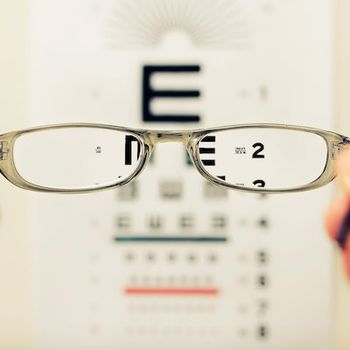
Adults with vision impairment had a lower prevalence of having health insurance coverage and a usual health care provider, and a higher prevalence of having an unmet health care due to cost.

A post-hoc analysis of the HARBOR trial suggest a greater proportion of ranibizumab-treated eyes with nAMD gained/maintained visual acuity at SRF resolution.
Study data indicate the AI-based follow-up system could make an autonomous decision in 73% of the cases, of which 91.8% were in agreement with retina experts consensus.

Visual complaints during atropine therapy may be reduced by using progressive addition lenses.

No difference was seen in the odds of tractional retinal detachment between those with a loss to follow-up period of 6 months or longer and those without loss to follow-up.

A recent quality improvement study demonstrated the potential to enhance ophthalmic telehealth using asynchronous testing, which was effective in subspecialty-level care.
The study data indicate high early-stage CRT variability showed a significantly higher risk of legal blindness.
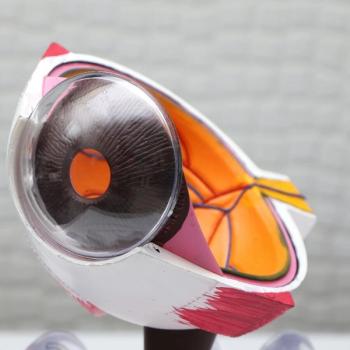
The study reported 6.1% of study patients with NTG had ODD diagnosed using EDI-OCT, compared to the 1.8% – 2.0% reported in the general population.

Low luminance contrast sensitivity was significantly more reduced in nGA eyes than in eyes with drusen alone, but no differences were seen when assessing other cone functions with normal luminance CS or LLVA

Dry AMD was more common than wet AMD, but visual acuity was more significantly affected in patients with wet AMD.
The implant significantly reduced CRT in patients with RVO-ME, but the study reported no relationship between OCT biomarkers and clinical outcomes.
The findings may support the use of macular imaging for monitoring at the time of glaucoma diagnosis and for monitoring the rate of GCC thinning.

Neither the retinal disease nor the VEGF inhibitor type was significantly associated with rhegmatogenous retinal detachment risk.
Enhanced ellipsoid integrity, greater outer retinal thickness, and decreased GA were associated with increased BCVA gains with risuteganib.

The mean PCDP was estimated by 2 different methods to be 10.7 years and 10.1 years for open-angle glaucoma.

The post-hoc analysis suggests reliable quantification of photoreceptor loss is an essential tool to evaluate therapeutic efficacy in slowing GA progression.

All ocular treatment-emergent adverse events were intravitreal injection related and mild or moderate in severity.

Two-thirds of eyes achieved a good visual outcome of 20/40 or better after cataract surgery among individuals with T2D.
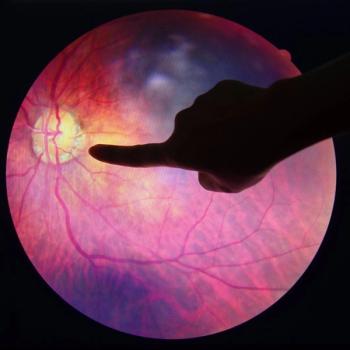
A faster rate of visual field progression was observed among 37 glaucomatous eyes treated with anti-VEGF for nAMD compared with a control group of 4304 eyes without anti-VEGF.
Serious forms of cardiovascular diseases were observed to be connected to a specific form of AMD with subretinal drusenoid deposits.