
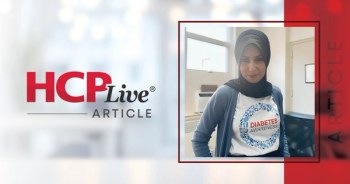
These recommendations simultaneously emphasize the efficacy of weight loss drugs and encourage incorporating lifestyle therapy on top of medication.
Ryan Livingston joined the MJH Life Sciences team in March of 2025, shortly after graduating from TCNJ with a bachelor’s degree in English. He enjoys creative writing, reading, and scuba diving. He can be reached at [email protected].
These recommendations simultaneously emphasize the efficacy of weight loss drugs and encourage incorporating lifestyle therapy on top of medication.

The report details the disease burden, mortality, and quality of care trends for 5 major risk factors and the 5 leading causes of CVD death.

Bristol Myers Squibb has reported positive results from the ongoing SCOUT-HCM trial, demonstrating mavacamten’s efficacy in reducing Valsalva LVOT.

According to an announcement by parent company Medtronic, the MiniMed Go app is expected to launch in the spring of 2026.

The Q4 recap for cardiology spotlights major FDA decisions, key clinical trial updates, and more.

The Q4 recap for cardiology spotlights major FDA decisions, key clinical trial updates, and more.

The Q4 recap for endocrinology spotlights major FDA decisions, updates to diabetes care standards, and key clinical trial updates.
This updated approval builds on the success of Fibryga’s 2024 approval for AFD, which was based on positive data from the phase 3 FIBRES trial.
Catch up with major FDA decisions, critical conference news, and more.
Data from the ongoing phase 4 PETITE-T1D study, highlighting the substantially reduced progression to stage 3 T1D, headline the application.

The updated guideline offers recommendations for RBC transfusions and iron management, while continuing to prioritize patient-centered care.
The NDA is based on positive 52-week data from the phase 3 VERIFY clinical trial, which demonstrated rusfertide’s capacity to reduce phlebotomy dependency.
Catch up with major FDA decisions, critical conference news, and more.

A recent retrospective cohort analysis of the ACCORD phase 3 study has revealed a correlation between higher index values and increased mortality risk.

Catch up on the most impactful headlines in dyslipidemia from all of 2025 with our Year in Review.
The CRL notes that additional mechanistic and natural history data have not altered the previous review conclusions.
The novel oral NMDA receptor antagonist, sigma-1 agonist, and aminoketone CYP2D6 inhibitor has indicated its efficacy and safety across 3 clinical trials.
The FDA has issued a CRL for selective cortisol modulator relacorilant, citing a need for more evidence of effectiveness.
The FDA has approved oral neurokinin-1 receptor antagonist tradipitant for the prevention of motion sickness, marking the first approval in decades.
Catch up on the most impactful headlines in hormonal disorders from all of 2025 with our Year in Review.
Catch up on the most impactful headlines in HF from all of 2025 with our Year in Review.

Catch up on the most impactful headlines in cardiology from all of 2025 with our Year in Review.

The FDA has approved small-molecule pyruvate kinase R activator mitapivat for the treatment of anemia in adults with alpha- or beta-thalassemia.
Catch up on the most impactful headlines in dyslipidemia from all of 2025 with our Year in Review.
The FDA has approved an sNDA for the FUROSCIX On-body Infusor in pediatric patients and accepted another for the FUROSCIX ReadyFlow Autoinjector.

Catch up on the most impactful headlines in ophthalmology from all of 2025 with our Year in Review.
The FDA’s decision is based on positive results from the phase 3 THRIVE and THRIVE-2 clinical trials, which showed veligrotug’s efficacy and rapid onset of benefits.
Catch up on the most impactful headlines in T2D from all of 2025 with our Year in Review.

Results from the ATTAIN-MAINTAIN phase 3 study have displayed orforglipron’s efficacy in maintaining weight loss without major safety concerns.
Experts redefine obesity, distinguishing between preclinical and clinical forms, aiming to improve diagnosis and treatment strategies for better health outcomes.