






C Difficile Infection
Latest News
Advertisement
Latest Videos








CME Content























































Advertisement
More News

Experts discuss new and emerging treatments the management of CDI, highlighting the phase 3 trials for SER 109.

The median exposure of vedolizumab was 1.93 years and lower incidence rates were found for infliximab or adalimumab.

The interrupted time-series resulted in an increase in C. difficile infection incidences during the pre-pandemic period from 0.00 to 3.36 infections per 10,000 bed days during the COVID-19 pandemic.

RBX2660 showed similar efficacy and safety in treating patients with and without immunocompromised conditions.

Both the incidence and prevalence of inflammatory bowel disease is growing among the older population.

RBX2660 was the first ever live microbiota therapeutic to gain approval from the FDA for rCDI.

Joseph Reilly, BS, PharmD, BCGP, and Andrew Skinner, MD, discuss the potential benefits of using live-jslm early on to treat CDI, as well as the implications of this new treatment.

For the maintenance trial, 42% and 55% of patients treated with upadacitinib 15 mg and 30 mg achieved clinical remission at week 52, compared to 14% of the placebo group.

The linaclotide group had significant improvements from baseline in the 12 week SBM frequency rate and 12-week stool consistency.
Joseph Reilly, BS, PharmD, BCGP; Candace Cotto, RN; and Andrew Skinner, MD, review C. difficile infection (CDI), its risk factors, symptoms, and quality of life for the patient.
Experts provide an overview of the gut microbiome and its importance to nutrition and overall health.

There were also 9 RT176 strains that carried the cfr(E)gene and one RT001 strain carried the cfr(C) gene. However, they were without a linezolid resistance.

The geometric mean duration of single-occupancy room isolation was 1.8 days in the mPOCT group, compared to 2.6 days in the control group.

RBX2660 and Vowst are now both approved for the prevention of recurrent C. difficile infections.

Vowst represents the first oral live microbiota therapeutic approved for recurrent C. difficile infections.
The treatment is the second live microbiota therapeutic approved by the FDA, coming just a few months after the agency approved RBX2660 for recurrent C. difficile infections.
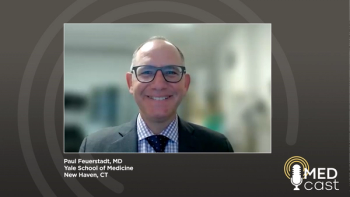
Dr Paul Feuerstadt joins Dr David Hudesmand and Dr Jordan Axelrad in a discussion about treatment approaches for C difficile infections, and the latest advances in treating recurrent infections with fecal microbiota transplantation.

The rate of CDI recurrence through week 9 using the efficacy analysis 3 definition was 13.8% for the high-dose VE303 group, compared to 37% for the low-dose VE303 group and 45.5% for the placebo group.

From a novel topical gene therapy to a multi-pathway targeting HF drug, the second quarter of 2023 is laden with interesting regulatory decisions.

Patients with no prior colonoscopy had significantly higher all-cause mortality and colorectal cancer specific mortality compared to patients with detected colorectal cancer.

Increased age, male sex, COPD, CHF, dependent functional status, and C. difficile infection were associated with increased mortality within 30 days of surgery.

The incidence of mPDAI-defined remission at week 14 was 31% in the vedolizumab group, compared to 10% in the placebo group.

The majority of patients felt it was important for healthcare providers talk to them about the symptoms, possible treatments. In addition, most patients are not prescribed a medication right away.

Among 1660 cases with only PCR data, the cycle threshold was significantly associated with recurrence-free survival.

There were few or no studies investigating education and training, personal protective equipment or monitoring, and evaluation of interventions.
Advertisement
Advertisement
Trending on HCPLive
1
From Injectable to Oral: Optimal Durable Clearance Across the IL-23 Class
2
Ritlecitinib Stabilizes Vitiligo in Tranquillo Trial, With Iltefat Hamzavi, MD
3
Advances in Treating High-Impact Psoriasis from EADV 2026
4
FDA Updates Sotatercept Label, ERS Releases PAH Guidelines Based on HYPERION Data
5