
Cardiology
Latest News

Advertisement
Latest Videos
CME Content






















































Advertisement
More News
Stein discusses the results of a groundbreaking open-label extension, which indicates the efficacy and safety of this investigative oral PCSK9 inhibitor.
Bayer’s investigational FXIa inhibitor has proven its superiority to placebo in reducing ischemic stroke risk without increasing major bleeding rate.
Tamura discusses the positive results of the phase 2 trial and its implications for the treatment of a specific subset of patients with high-sensitivity IL-6 PAH.
Grapsa highlights the significant treatment gap between men and women suffering from aortic stenosis, as well as the skewed mortality risks resulting from them.
Bhatt discusses the positive results from the phase 2 trial of quarterly and monthly doses of investigational IL-6 inhibitor pacibekitug.

Ip highlights the uniform safety of patient-administered etripamil nasal spray across a series of phase 2 and 3 studies.
Gulati discusses how cardiologists should change their standard care practices to include and educate patients, which will reduce treatment burden and improve adherence.
Whelton discusses the successful results of an open-label extension investigating GMRx2 (WIDAPLIK), a novel triple combination pill for hypertension.

The FDA has approved RNA interference therapeutic plozasiran for the treatment of familial chylomicronemia syndrome.
Badimon explains the impact of sotagliflozin’s improvements in left ventricular mass, diastolic function, and 6-minute walk test results in patients without diabetes.
Marston discusses the CORE and CORE2 trials, highlighting olezarsen’s success in lowering fasting triglyceride.
Le discusses the increased risk of mortality and major adverse cardiovascular events in patients with both PAD and AF.
Data from 4 of the most impactful trials presented at the American Heart Association Scientific Sessions 2025.
Lau discusses the use of virtual shared medical appointments for increasing access to cardiovascular care in a traditionally underserved population.
Acoramidis also increased serum transthyretin in patients with wild-type ATTR-CM or the pathogenic variant ATTRv-CM.

Cohosts Stephen Greene, MD, and Muthiah Vaduganathan, MD, sat down with Ambarish Pandey, MD, to discuss the revolutionary POLY-HF trial and how polypills can fit into heart failure treatment.
Lau discusses the importance of developing and applying technology to predict potential adverse cardiovascular outcomes in pregnant patients.

Discover groundbreaking insights from ASN Kidney Week on the SURPASS-CVOT trial.
Target-D: Optimized Vitamin D Dosage Reduces Risk of Myocardial Infarction in Heart Disease Patients
Although the initial MACE composite outcome was not statistically significant, investigators saw follow-up MI risk reduced by >50%.
The SGLT2 inhibitor also displayed its efficacy in reducing left ventricular myocardial fibrosis and volume, as well as improving diastolic filling dynamics.
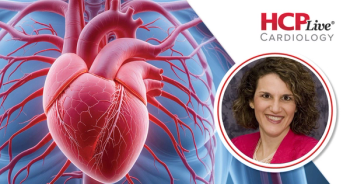
Sotatercept Improves Composite Mortality Endpoint in Patients With PAH, With Vallerie McLaughlin, MD
McLaughlin discussed the previous ZENITH, PULSAR, and STELLAR trials, and how this pooled cohort analysis emphasizes sotatercept’s impressive efficacy.
Data from the DECAF study suggests caffeine may have a slightly beneficial effect on AF recurrence, although investigators urge caution in interpretation.

Navar discusses the groundbreaking results of this phase 3 trial, as well as the implications of an oral PCSK9 inhibitor for treatment adherence and persistence.
REGN7508 and REGN9933 displayed their efficacy in preventing deep venous thromboembolism in patients undergoing knee replacement surgery in 2 phase 2 clinical trials.
This first-in-human phase 1 trial resulted in a groundbreaking reduction in both LDL cholesterol and triglycerides for the first time in history.
Advertisement
Advertisement
Trending on HCPLive
1
eGFR Underestimates CKD in Patients with Cancer, Study Finds
2
Tegoprubart Improves Quality of Life vs Tacrolimus After Kidney Transplant
3
GLP-1s Tied to Weight Loss in Peritoneal Dialysis, With Steven Brunelli, MD
4
Kidney Compass: Final 2-Year TELIGAN Data for Telitacicept in IgA Nephropathy
5