






Gastroenterology
Latest News
Advertisement
Latest Videos





CME Content




























































Advertisement
More News

Zhang explains disparities in HCC care and the negative impact on long-term outcomes, also addressing potential considerations for vulnerable patient populations.

The MyGut digital health monitoring platform proves feasible and impactful during integration into inflammatory bowel disease care.

Higher exposure dupilumab significantly improved histologic and endoscopic outcomes in children with EoE aged 1 to <12 years.

Dubinsky explains the disconnect between patients with Crohn disease and health care providers regarding the impact of and importance of addressing bowel urgency.

At week 52 of the Phase 3 EoE KIDS trial, higher exposure dupilumab significantly improved the endoscopic reference score in children with EoE.

Rezaie explains findings from his recent research connecting GLP-1RA use to aspiration pneumonia after endoscopy with deep sedation.

Fendrick explains how stool-based colorectal cancer screening tests can help alleviate the current colonoscopy backlog amid growing demand for the procedure.
A diagnosis of chronic kidney disease was approximately 3-times more likely in Crohn's disease than in ulcerative colitis.
Fendrick explains the value of additional modalities for colorectal cancer screening to combat the colonoscopy backlog and help patients get screened.

A retrospective analysis in the US found bariatric surgery lowers mortality rates and shortens hospital stays in patients admitted with NAFLD.

Interim results from the open-label, phase 3 study show seladelpar demonstrated clinically meaningful improvements in markers of cholestasis and liver injury.

Initial consultations by female gastroenterologists led to a significant reduction in subsequent healthcare utilization compared with male gastroenterologists.

A Veterans Affairs study finds low alpha-1 antitrypsin phenotyping rates, indicating the need for improved healthcare provider education on AATD.

Geneoscopy's ColoSense received FDA approval on May 06, 2024 based on data from the phase 3 CRC-PREVENT trial.
This April 2024 month in review highlights World IBS Day, updates in the gastroenterology pipeline, ACP Internal Medicine meeting coverage, and recent IBD research.
Announced on April 18, the approval is based on the VISIBLE 2 trial and comes less than 7 months after the approval of SC vedolizumab in ulcerative colitis.

Wilt discusses the different screening methods recommended by ACP and explains how he talks about screening with his patients.
Wilt discusses ACP guidelines regarding what age to begin colorectal cancer screening and the benefits versus harms of screening at 45 compared to 50 years of age.
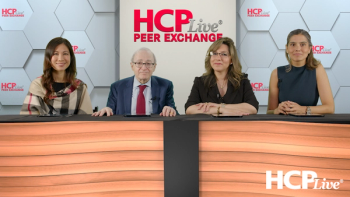
Experts discuss the warnings regarding IL-17 blockers and inflammatory bowel disease.

In recognition of World IBS Day, we spoke with Jeffrey Roberts about what led him to found the holiday in 2019 and took a closer look at the continued marginalization of the condition.

A new study found an intervention targeting proton pump inhibitor overuse was linked to an absolute reduction of 7.3%.

Incident use of anti-TNF therapy was linked to an increased risk of kidney function decline but not all-cause mortality in patients with newly diagnosed IBD.

Patients with a delayed appendicitis diagnosis had 1.23 times increased hospital care costs, and Black patients had a greater increased cost than White patients.

Findings demonstrate a similar postoperative safety profile for both tofacitinib and biologics in patients with medically refractory ulcerative colitis undergoing colectomy.

Findings highlight the safety and efficacy of switching from originator to biosimilar adalimumab, which also showed favorable results in adalimumab-naïve patients with IBD.
Advertisement
Advertisement
Trending on HCPLive
1
The Case for Routine Kidney Screening, With Pranav Garimella, MBBS, MPH
2
FDA Approves Obinutuzumab (Gazyva) for Idiopathic Nephrotic Syndrome
3
Zilurgisertib Receives FDA Approval for FOP in Patients 12 and Older
4
What The FDA Psychedelic Hearing Means for Psychiatrists
5