




Hepatology
Latest News
Advertisement
Latest Videos





CME Content




























































Advertisement
More News
Cynthia Levy, MD, professor of medicine at the University of Miami, provided further insight into unmet needs in PBC, the use of OCA-bezafibrate in PBC, and the significance of results from a pair of phase 2 studies presented at The Liver Meeting.

Therapy with glecaprevir/pibrentasvir (G/P) demonstrated a virologic response at posttreatment week 12 rate, which was superior to the prior efficacy threshold.

Patients with HCV-related cirrhosis remain at risk for developing liver-related and non-liver-related events after achieving sustained virologic response.
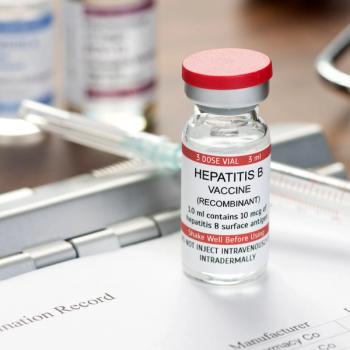
A cohort analysis shows foreign-born patients are significantly less likely to be immunized for HBV than US-born patients.

After receiving the COVID-19 vaccination, the antibody titers of patients with cirrhosis and hepatocellular carcinoma were significantly reduced compared to patients with chronic hepatitis C patients.

Hepatitis B virus vaccination effective for patients with chronic hepatitis C, nonalcoholic liver disease, and liver cirrhosis to significantly improve survival rates.

A new study from AASLD 2023 provides a snapshot of how the introduction of second-generation direct-acting antivirals on treatment patterns for hepatitis C.

Chari Cohen, DrPH, MPH, discusses the current landscape of hepatitis B management and areas she sees room for development.
Topline data from Study 747-213 and a planned interim analysis from Study 747-214 were presented at The Liver Meeting 2023 from the American Association for the Study of Liver Diseases.

Findings were presented at The Liver Meeting 2023 from the American Association for the Study of Liver Diseases and showed empagliflozin reduced liver fat content in both patients with T2DM and nondiabetic patients.

The study author discusses the impact of findings showing MASH resolution without worsening fibrosis is a surrogate endpoint for 15-year bariatric surgery survival.
Loomba discusses how practices like his own are adapting to the new nomenclature in metabolic-associated liver disease.

Serum Bile Acid Independently Predicts Liver Survival in Alagille Syndrome with Neonatal Cholestasis
A new study from the GALA cohort shows serum bile acid's association with clinical outcomes is relevant in the context of IBAT inhibitor therapy.
Results showed decreased mortality rates among patients with severe alcohol-associated hepatitis treated with corticosteroids after the COVID-19 pandemic.

Pooled data from The Liver Meeting showed odevixibat sustains itch and serum bile acid benefits in patients with Alagille syndrome. An investigators shares what he wants to learn next.

Sumera Ilyas, MBBS, discussed cholangiocarcinoma in primary sclerosing cholangitis and the need for global efforts to improve access to more advanced diagnostic testing.
Post hoc phase 2b analyses suggest peogzafermin may benefit severe fibrosis regardless of MASH patients' cirrhosis status.

We sat down with Jessica Ferrell, PhD, to discuss key takeaways from her session about the developing role of bile acids both for and beyond cholestatic and metabolic diseases.
Retatrutide, an investigational triple-agonist therapy, may help resolve liver fat prior to progression to severe disease.
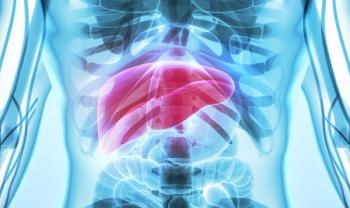
Results from this prospective study in Japan found older age, history of hepatocellular carcinoma, and decreased albumin level at SVR were significantly associated with liver-related mortality after SVR.

We sat down with Ana Lleo, MD, PhD, to discuss primary sclerosing cholangitis biomarkers and the need for future research in this field.
New pooled phase 3 and extension trial data show odevixibat continues to improve disease management and itch reduction in children with Alagille syndrome.

Results presented at The Liver Meeting 2023 from the American Association for the Study of Liver Diseases highlighted an association between food insecurity and low household income with the risk of NAFLD in adolescents.
Investigators observe significantly greater 15-year survival rates after bariatric surgery among patients who achieve MASH resolution versus those who do not.

Phase 3 data presented at The Liver Meeting 2023 from the American Association for the Study of Liver Diseases demonstrated the safety and efficacy of seladelpar in patients with primary biliary cholangitis through 12 months of treatment.
Advertisement
Advertisement
Trending on HCPLive
1
The Case for Routine Kidney Screening, With Pranav Garimella, MBBS, MPH
2
Anti-Alpha-Gal Antibodies Block IgE Binding in Alpha-Gal Syndrome
3
Nearly 9 in 10 US Adults With CKD Don't Know They Have It, With Pranav Garimella
4
Weekly Insulin Efsitora Alfa (Onswik) Gains FDA approval for Type 2 Diabetes
5