




Hepatology
Latest News
Advertisement
Latest Videos







CME Content









































Advertisement
More News

The modified difference-in-differences analysis found notable increases in DAA use after state Medicaid programs relaxed certain coverage restrictions.

Although overall engagement in the HCV care cascade improved after the introduction of DAAs, vulnerable subgroups still received less testing and treatment.

Results showed poorly controlled HbA1C increased the risk of elevated ALT levels in children and adolescents with type 1 diabetes, suggesting an important link to MASLD.
HBV DNA and HBsAg were not significantly associated with NAFLD in patients with treatment-naïve HBV, but age, BMI, comorbidities, and certain metabolic laboratory parameters were.
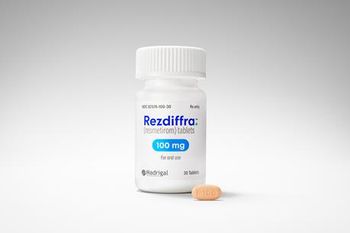
Madrigal Pharmaceuticals announced resmetirom is available in the US beginning on April 9, 2024, ushering in a new era of NASH management.

An analysis of NHANES data found no significant association between HCV infection and risk of prostate cancer, contrary to findings from previous research.

Talal highlights the use of facilitated telemedicine for increasing access to HCV treatment and other areas it might expand access for underserved patient populations.

Results highlight increased safety and efficacy of curative HCV therapy among reproductive-age female patients compared with males, potentially preventing vertical infection transmission.

The 2024 HBV guidelines provide updated evidence-informed recommendations on key priority topics including treatment eligibility, diagnostics, and service delivery.
Talal discusses the integration of a facilitated telemedicine approach into opioid treatment centers in New York, giving people with opioid use disorder easier access to HCV treatment.
Participants who received facilitated telemedicine initiated DAA therapy faster and had greater cure rates than those who were referred to an off-site hepatitis specialist.
Our March 2024 hepatology month in review highlights HCPLive’s coverage of the FDA approval of resmetirom for MASH/NASH and other key hepatic pipeline news.

SZN-043 showed evidence of target engagement, Wnt signal activation, and effects on liver function, supporting its advancement to a phase 1b trial in severe alcohol-associated hepatitis.

Topline results at week 52 show LPCN 1148 treatment met both the primary and hepatic encephalopathy endpoints in the management of cirrhosis.

New data suggest adding fibrate therapy to frontline PBC treatment could result in earlier and higher rates of biochemical response.

The first-in-human trial of VRON-0200, a novel immunotherapy for chronic hepatitis B virus, presented at the APSAL meeting, demonstrates a promising safety and tolerability profile.

Patients with cirrhosis had greater health care costs than matched controls, attributed mostly to cirrhosis complications and high inpatient utilization in the first year after diagnosis.

The phase 2, proof-of-concept LEGEND trial achieved its primary efficacy endpoint for absolute reduction in HbA1c at week 24 with lanifibranor alone or in combination with empagliflozin.

A recent survey found telemedicine-based HCV treatment at a syringe access program could improve access to treatment among people who inject drugs.

Harrison discusses the role of GLP-1-based therapies in NASH management and situations where resmetirom may be a better option following its recent FDA approval.
Harrison discusses important lessons from obeticholic acid’s FDA failure and what set resmetirom apart from its predecessor, poising it to become the first FDA-approved NASH treatment.
In the final installment in our 5-part video series, our pair of experts in hepatology touch upon how an approval for MASH would impact conversations around screening for asymptomatic patient populations.
In part 4 of our 5-part video series, Arab and Banerjee discuss how the study population of MAESTRO-NASH compares to MASH populations in real-world settings.
In part 3 of our 5-part discussion, Arab and Banerjee dive into the results of the pivotal MAESTRO-NASH trial and how it can inform use of resmetirom in real-world settings.
In part 2 of this 5-part video series, our experts in hepatology discuss the challenges, pitfalls, and recommendations for screening of MASH/MASLD in real-world settings.
Advertisement
Advertisement
Trending on HCPLive
1
Lp(a)HORIZON, Oral PCSK9s, and 2027 Lipid Trials, with Kausik Ray, MD, MBChB, MPhil
2
Single Dose of CIDEB siRNA Normalizes Liver Fat in MASLD Through 36 Weeks
3
ESSENCE: Semaglutide Improves Liver Markers in MASH Without Obesity
4
Elebsiran Plus Tobevibart Suppresses HDV RNA in Phase 3 ECLIPSE 1 Trial
5