





MASH / MASLD
Latest News
Advertisement
Latest Videos






CME Content























































Advertisement
More News

Alkhouri explains the unmet need in MASH leading up to resmetirom’s historic FDA approval and the impact its availability has had for both patients and clinicians.

The case-control study found the prevalence of MASLD was greater among patients with plaque psoriasis, further suggesting a potential synergistic role between the two.

Alkhouri explains survodutide’s mechanism of action as a glucagon/GLP-1 receptor dual agonist and reviews key findings about its use in MASH from the interim analysis.
End-of-study results from the phase 3 REGENERATE study were presented at DDW and highlight obeticholic acid’s trend in benefit for clinical outcomes.

Microbiota differences between individuals with and without MAFLD were associated with dietary intake and clinical outcomes.

Results presented at DDW detail the association between ALT, Fibroscan CAP, Fibroscan VCTE, and histological response to resmetirom in patients enrolled in MAESTRO-NASH.

Results showed metabolic dysfunction was an independent predictor of liver-related events and hepatocellular carcinoma in patients with chronic HCV who achieved SVR.

Results showed poorly controlled HbA1C increased the risk of elevated ALT levels in children and adolescents with type 1 diabetes, suggesting an important link to MASLD.
HBV DNA and HBsAg were not significantly associated with NAFLD in patients with treatment-naïve HBV, but age, BMI, comorbidities, and certain metabolic laboratory parameters were.
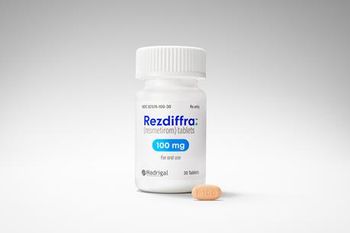
Madrigal Pharmaceuticals announced resmetirom is available in the US beginning on April 9, 2024, ushering in a new era of NASH management.
Our March 2024 hepatology month in review highlights HCPLive’s coverage of the FDA approval of resmetirom for MASH/NASH and other key hepatic pipeline news.

SZN-043 showed evidence of target engagement, Wnt signal activation, and effects on liver function, supporting its advancement to a phase 1b trial in severe alcohol-associated hepatitis.

Topline results at week 52 show LPCN 1148 treatment met both the primary and hepatic encephalopathy endpoints in the management of cirrhosis.

The phase 2, proof-of-concept LEGEND trial achieved its primary efficacy endpoint for absolute reduction in HbA1c at week 24 with lanifibranor alone or in combination with empagliflozin.

An analysis of NHANES data suggests fewer than 3 in 10 patients with NAFLD received statin therapy, with only 50% with dyslipidemia receiving statins.

Harrison discusses the role of GLP-1-based therapies in NASH management and situations where resmetirom may be a better option following its recent FDA approval.
Harrison discusses important lessons from obeticholic acid’s FDA failure and what set resmetirom apart from its predecessor, poising it to become the first FDA-approved NASH treatment.

In the final installment in our 5-part video series, our pair of experts in hepatology touch upon how an approval for MASH would impact conversations around screening for asymptomatic patient populations.
In a landmark decision, the FDA has granted accelerated approval to resmetirom (Rezdiffra) for noncirrhotic NASH with moderate to advanced fibrosis.

The phase 3 ENLIGHTEN program will consist of 2 phase 3 trials evaluating the safety and efficacy of pegozafermin in patients with MASH.

Although abstinence is the safest approach, patients with SLD at low risk for advanced fibrosis can safely consume < 7.4 g/day of alcohol, equivalent to half of a standard US drinking unit.

Our February 2024 month in review highlights some of our top hepatology content from the past few weeks, including pipeline updates, phase 2/3 trial data, and new research in liver diseases.

Results suggest a high prevalence of fatty liver in adults with chronic HCV, which was significantly associated with central obesity, elevated blood pressure, and metabolic syndrome.
Survodutide, a dual agonist from Boehringer Ingelheim and Zealand Pharma, was associated with MASH resolution without worsening fibrosis among 83% of participants in a phase 2 trial.
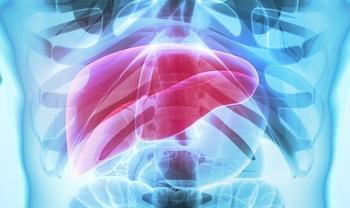
NAFLD, ALD, liver fibrosis and cirrhosis, and recently diagnosed viral hepatitis were all associated with a greater risk of cataract.
Advertisement
Advertisement
Trending on HCPLive
1
New Injectable Substantially Reduces Visceral Adipose Tissue in Obesity
2
Remibrutinib Receives FDA Approval for Symptomatic Dermographism
3
When to Switch Biologics in Severe Asthma, With Florence Schleich, MD, PhD
4
RELIEVE-AD-PEDs: Dupilumab Sustains Adolescent Atopic Dermatitis Control at 1 Year
5