





Ophthalmology
Latest News
Advertisement
Latest Videos




Podcasts

CME Content


























































Advertisement
More News

An audio recap of the top 5 stories in healthcare news from the week of 06/02-06/08.
Parent company Amneal Pharmaceuticals, Inc. has announced intentions to launch the topical anti-inflammatory agent in the third quarter of 2025.

GLP-1 RAs, one of the most common medications for obesity and diabetes, have several inherent risks that are often overlooked in favor of their efficacy.

This recent study highlights the intricate variations between glaucoma cases, encouraging a more individual approach to analyzing treatment responses.
If approved, lamivudine may bring DME treatment and better vision outcomes to communities who cannot afford more costly intravitreal injections.
This May was characterized by HCPLive’s coverage of the ARVO and Envision conferences, as well as a slew of FDA approvals towards the end of the month.

Contrary to prior research, this study indicates that combining tumor necrosis factor inhibitors or another biologic with antimetabolites has a better chance of managing inflammation than any individual medication.

Investigators suggest that semaglutide should be used judiciously in treating type 2 diabetes mellitus, as it poses no real risk of nonarteritic anterior ischemic optic neuropathy.

Variance in lens size or position and angle width, among other measurements, were effective indicators of long-term angle closure progression, based on a recent retrospective study.
TRYPTYR, formerly AR-15512, displayed rapid onset and sustained tear production in its pivotal Phase 3 trials in 2024.

Loading doses of the two anti-VEGF treatments for macular edema secondary to branch retinal vein occlusion may be interchangeable, providing a cheaper alternative to ranibizumab.
A recent study reveals that glaucoma surgery significantly improves visual outcomes and reduces medication burden in children with uveitic glaucoma.

A retrospective study indicated the safety and efficacy of FA implants, exhibiting its success in lowering central retina thickness.

Recent results have confirmed faricimab’s efficacy, although a small sample size and short follow-up period invite further studies.
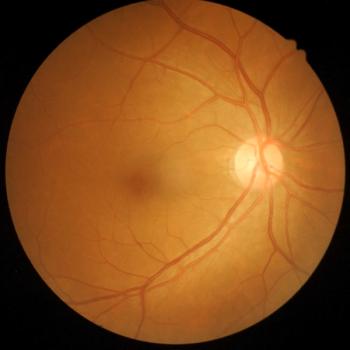
Type 2 macular neovascularization, reductions in outer nuclear layer and central foveal thickness, and intraretinal fluid may indicate higher odds of retinal atrophy.

Panretinal photocoagulation and anti-VEGF therapy combined also results in better BCVA and were less likely to require additional treatment within 1 year.

While aflibercept 8 mg and faricimab both trigger intraocular pressure, the effects are transient and no more significant than other anti-VEGF treatments.

Triamcinolone acetonide injections effectively prevent diabetic macular edema after vitrectomy, highlighting its potential in postoperative care.

Trief and MD candidate Justin Cheong physically peeled the Haab’s striae from a patient’s eye, allowing for better adherence and maintenance of the DSEK graft.
Susvimo is the first FDA-approved continuous delivery treatment for diabetic retinopathy capable of maintaining vision through one refill per 9 months.
Early data on Selagine, Inc.’s immunoglobulin eye drops have indicated significant reductions in DED symptoms without differences in adverse events or tolerability.

Veligrotug shows promising long-term Phase 3 results for treating thyroid eye disease, supporting its BLA submission in the second half of 2025.
Findings suggest a connection between RVO history and cystoid macular edema with the risk of developing postoperative macular edema after uneventful cataract surgery.

The recent analysis has indicated the implant’s relative success in maintaining treatment for NIU without need for supplementary treatments.
Recent data from the GALE trial align with OAKS and DERBY results, indicating a successful treatment of geographic atrophy.
Advertisement
Advertisement
Trending on HCPLive
1
KT-621 Achieves Deep STAT6 Degradation, Initial Respiratory, Skin Gains
2
AIRCULES: Lunsekimig Benefit Scales With Severity, With Njira Lugogo, MD
3
ESC 2026 Recap: 5 Practice-Changing Trials to Know
4
Semaglutide Cuts Asthma Attacks by up to 40% in Real-World Study
5