





Ophthalmology
Latest News
Advertisement
Latest Videos








Podcasts



CME Content


























































Advertisement
More News

This HCPLive Five episode focuses on 5 key ophthalmology updates from the ASRS2025 conference.
An audio recap of the top 5 stories in healthcare news from the week of 08/03-08/09.

Avacincaptad pegol, pegcetacoplan, and aflibercept 8mg do not increase risk of ocular hypertension and glaucoma, despite having higher volumes.

Stay updated with the latest healthcare breakthroughs, including an FDA approval and new clinical trial data, in this week's essential news roundup.

Results from a recent trial indicated continuously decreasing risks of all forms of retinal vascular occlusion and retinal vein occlusion for 5 years after treatment.

Both trials indicated lasting visual improvements in patients treated with Ixo-vec who had previously received anti-VEGF injections.

An interim report from the ongoing trial shows few adverse events resulting from 60 weeks of treatment with the combined AAV vector/dual-transgene cassette.

The new, bioerodible intravitreal implant, which periodically releases the tyrose kinase inhibitor vorolanib, may be capable of reducing treatment burden for at least 6 months.
A month with few regulations instead saw significant research advancements presented at the American Society of Retina Specialists’ 2025 meeting.

The larger dose exhibited better gains in best-corrected visual acuity with fewer injections during the study period.

Investigators believe this connection could be used to prognosticate and prevent future cases of diabetic retinopathy.

The combination therapy of aflibercept and micropulsed yellow laser treatment results in good anatomical responses and substantially fewer intravitreal injections.

The mitochondria-targeting medication preserves photoreceptor health regardless of baseline photoreceptor outer segment thinning burden.

Compared to sham treatment, the PER-001 implant is safe, efficacious, and effective in reducing macular ischemia, vascular leakage, and microaneurysms.

Results from the DAVIO 2 trial have shown the equivalence of a single dose of EYP-1901 to aflibercept Q8W in visual acuity over 6 months.

This FDA News Month in Review provides a round-up of regulatory decisions from July 2025.

Post hoc analyses of the TENAYA and LUCERNE phase 3 trials indicated important endpoints that could signal the potential for treatment interval extension.

EYP-1901 successfully achieved an extended time to first supplemental treatment versus aflibercept, indicating a potential for further dose interval extension.

Patient responses indicate that the device is simple and easy to use, and clinical data reflects its effectiveness in recognizing hallmark signals of AMD.

FDA approves aceclidine ophthalmic solution 1.44%, revolutionizing presbyopia treatment for millions with a once-daily eye drop.

Results from an extension study of the PHOTON trial indicate longer-lasting visual and anatomic improvements in patients receiving aflibercept 8mg versus 2mg.

A recent analysis of data from the phase 3 YOSEMITE/RHINE trials has indicated a greater reduction in hard exudates using faricimab versus aflibercept.
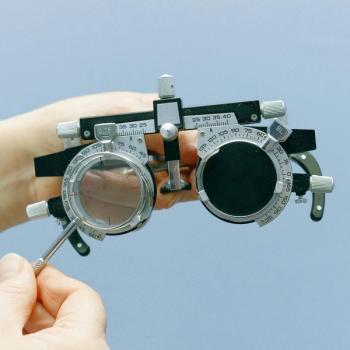
In a trial studying faricimab’s efficacy in Black, Hispanic/Latino, and Native American patients with DME, investigators found results consistent with the YOSEMITE/RHINE trials.

Announced by Aldeyra Therapeutics, Inc. on July 17, the FDA also assigned a PDUFA target action date of December 16, 2025.

Nguyen spoke to the importance of being aware of heightened stress, anxiety, and depression due to myopia’s long-term treatment requirements.
Advertisement
Advertisement
Trending on HCPLive
1
AIRCULES: Lunsekimig Benefit Scales With Severity, With Njira Lugogo, MD
2
KT-621 Achieves Deep STAT6 Degradation, Initial Respiratory, Skin Gains
3
ESC 2026 Recap: 5 Practice-Changing Trials to Know
4
What Baseline Disease Severity Hides in PsA Trial Data, With David Oberlin, MD
5