

The FDA has set a PDUFA date for daprodustat for February 1 for adult patients with chronic kidney disease.





The FDA has set a PDUFA date for daprodustat for February 1 for adult patients with chronic kidney disease.

Therapeutic candidate Sparsentan could expand treatment options for 2 rare kidney diseases. Dr. Jula Inrig expands on the potential for the FSGs patient population.

Dr. Jula Inrig explains the mechanism of action for the Dual Endothelin Angiotensin Receptor Antagonist (DEARA) investigational candidate Sparsentan, for rare kidney diseases.
Dr. Jula Inrig highlights the key data presented at ASN Kidney Week on investigational candidate Sparsentan for IgA nephropathy.

The treatment reduced UACR by 37.1% and LDLc by 17.12 compared to placebo.

Low sodium intake is considered less than 2.3 grams per day.

Dr. Demirjian explained suggested changes to how dialysis is conducted in hospital settings.

In a late-breaking abstract presented at ASN 2022, dapagliflozin attenuated the decline in eGFR between month 1-36 compared to placebo.

Investigators evaluated how the risk of kidney failure and death affects US veterans with chronic kidney disease (CKD) in research presented at Kidney Week 2022 ASN Annual Meeting.

There are plans for a larger sized study testing zetomipzomib in patients with lupus nephritis.

In a late-breaking abstract, investigators observed a 28% reduction in kidney disease progression or cardiovascular deaths compared to placebo.

With the population aging, there is a need for more home environmental treatment options for patients with kidney disease.

New research presented at Kidney Week 2022 ASN Annual Meeting, demonstrates an association between albuminuria and risk of cognitive problems.

In a late-breaking abstract, investigators assess how pantoprazole 40 mg daily effects long-term kidney function.

In a late-breaking abstract, investigators assess how discontinuation of ACEi or ARBs impact disease progression for advanced CKD.

The study shows vitamin D levels do not necessarily forecast the risk of cardiovascular disease in patients with chronic kidney disease.

In the last 20 years, most were adult studies which indicates a need for pediatric research activity, especially considering the potential that targeted therapies have for treating chronic kidney disease in children.

Approximately 1 out of every 6 patients with COVID-19 had a reduced eGFR.

Females generally have a lower risk of cardiovascular disease compared to males.

Data presented during ASN 2022 shows how heart failure impacts risk factors for renal outcomes of patients with chronic kidney disease.
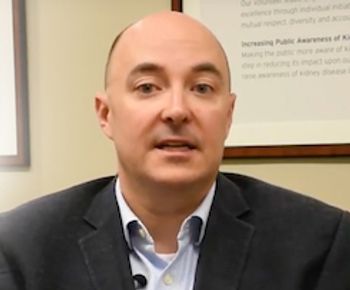
Michael Spigler, vice president of Patient Services and Kidney Disease Education for the American Kidney Fund, talks about the challenges and future of nephrology during Kidney Week.
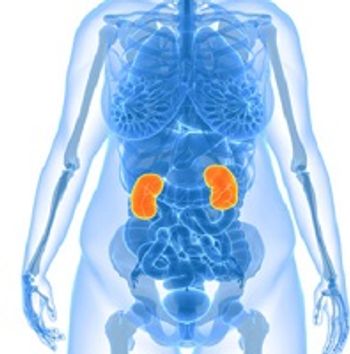
Studies are ongoing to test the safety and efficacy of treating primary hyperoxaluria type 1 patients with lumasiran.

George Mulligan, PhD, discusses during Kidney Week the results of a phase IIa study showing potential in a new drug to treat patients at risk for developing an acute kidney injury following cardiovascular surgery.

George Bakris, MD, discusses how nephrologists can work with other specialists and what the highlight of Kidney Week was.

Todd Alexander, MD, discusses a relatively new field of nephrology research during Kidney Week.
George Bakris, MD, discusses the major study during Kidney Week, as well as what diseases should get more attention in future research.

During Kidney Week, Katherine Tuttle, MD, discusses the plethora of options available to nephrologists, including dulaglutide.

In a study presented at Kidney Week, investigators breakdown data on the end-of-life care for non-dialysis veterans with chronic kidney disease.

Matthew Weir, MD talks about some of the challenges in nephrology and what has people buzzing while at Kidney Week.
Matthew Weir, MD, discusses the START-CKD trial at Kidney Week.