
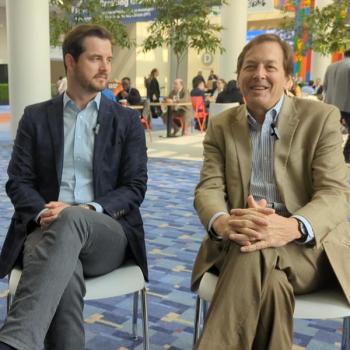
“We all know that exacerbations are the most costly disease impact of COPD,” study investigator Dr. Charlie Strange says.
“We all know that exacerbations are the most costly disease impact of COPD,” study investigator Dr. Charlie Strange says.

Dr. Jean-Pierre Llanos Ackert and Dr. Chris Ambrose discuss the latest data on the breakthrough biologic for severe asthma.

Investigators Dr. Jean-Pierre Llanos Ackert and Dr. Chris Ambrose share insight on the efficacy of tezepelumab in severe, uncontrolled asthma, and baseline predictors of enhanced response which support tezepelumab as a promising biologic treatment option.

Late-breaking data validates the FDA clearance of Cytovale's IntelliSep test, demonstrating its potential to aid in the early detection of sepsis in US emergency departments, with the aim of improving patient outcomes.
Late-breaking data from ATS 2023 show new positive evidence of the innovative in-vitro diagnostic tool IntelliSep test that measures the viscoelastic properties of leukocytes, showing promising results for rapid sepsis diagnosis in EDs.

Data indicates that addressing mood disorders in patients not only improves mood symptoms but also demonstrates positive effects on certain cardiac events, suggesting benefits for both mental and physical well-being.
Key opinion leaders at ATS 2023 urge physicians to treat more than just symptoms in patients with COPD and consider mood disorders and cardiac comorbidities.
Lungcast hits the road, as the director of pulmonary and critical care medicine at University of Vermont joins to discuss ATS 2023 headlines and the Airways Clinical Research Network.
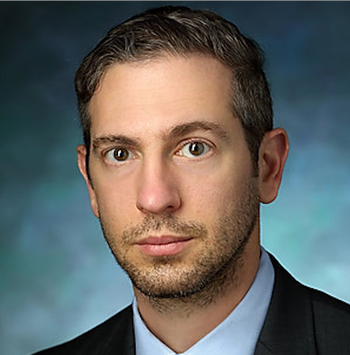
At ATS 2023, Dr. Galiatsatos illuminates what makes lung cancer screening different and how the screening approach is changing.

In an interview at ATS 2023, Dr. Rutland stresses the importance of studying the immune system's response to various diseases, emphasizing the potential impact of pipeline molecules.

A post hoc analysis shows benralizumab was even more efficacious in patients with concomitant nasal polyps at both 6 and 12 months.
Dr. Panagis Galiatsatos explains the new lung cancer screening aims to address the disparities of disease onset and progression across different racial populations.
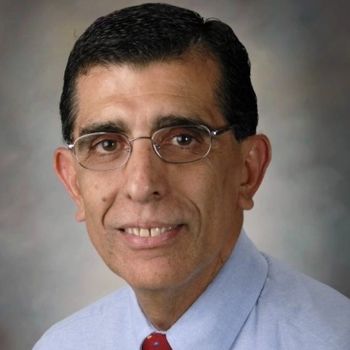
Though still not in abundance on the market, ICS/LAMA/LABA triple-therapy single inhaler treatment options are becoming more valued for COPD exacerbation and comorbid disease risk.

An analysis of the phase 3 NAVIGATOR trial shows tezepelumab did not provide differing efficacy among men and women, despite historic trends of disparate severe asthma outcomes among sexes.
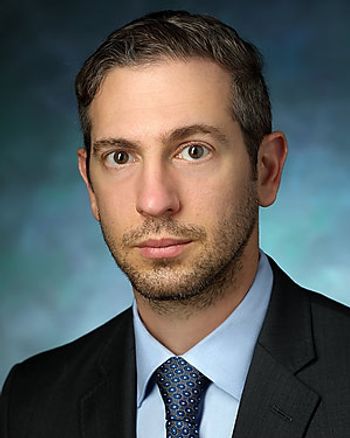
Unlike other screenings, lung cancer screening is new and patients need to know what happens next, according to Dr. Panagis Galiatsatos.
Dr. Rutland emphasizes the importance of understanding cellular communication and its potential to manipulate disease processes for patient benefit, including the observed link between ILD, inflammation, scarring, and pulmonary hypertension.
Promising results from the ATS Conference suggest that AD109, an oral treatment for obstructive sleep apnea, demonstrated significant reduction of AHI and potential mitigation of daytime fatigue.

Dupilumab demonstrates significant improvements in patients with COPD, type 2 inflammation by reducing exacerbations, improving lung function and quality of life, and alleviating respiratory symptoms.

An analysis of the COPDGene Study presented at ATS 2023 suggests presence of mucus plugs in medium- to large-sized airways were associated with an increased risk of mortality in adjusted models.
AD109 shows the potential to address an unmet need in obstructive sleep apnea treatment.
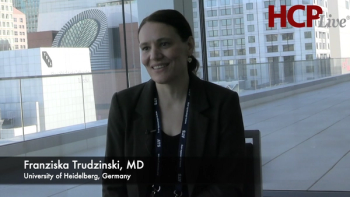
Dr. Trudzinski speaks of the importance of diagnosing sex-specific pulmonary and extra-pulmonary comorbidities in women with COPD, as well as the lack of research regarding COPD prevalence in women.

Safety and efficacy data for the oral asthma therapy was presented at a late-breaking session at ATS 2022.

Investigators defined AHR as “a hallmark of persistent asthma”, noting that it could also be assessed via indirect challenge with mannitol.

In particular, airway epithelial cells (AEC) in allergic asthmatic (AA) were shown to upregulate mucus metaplasia, matrix-remodeling, and glycolytic programs while failing to upregulate antioxidant genes.
Results from the 2 APPaRENT trials suggest regular inhaled corticosteroids/LABA alone or with short-acting beta agonists were the preferred treatment approach with physicians.

With this new decade-long cohort, Dr. Chen notes that researchers are "one step closer to a more accurate view of what sarcoidosis may be like in the United States", with has been suggested to be more prominent in African American communities.

A post-hoc analysis of the VOYAGE study also found that the biologic improved the percent predicted pre-bronchodilator FEV1 in this patient population.
Dr. Chatterjee cites an urgent need for new treatment strategies, adding that reducing airway iron could result in a decrease in the production of aspergillus fumigatus proteases.
Dr. Au spoke of how the new data provides an opportunity to think about how lifestyle intervention focused on weight and moderate exercise can actually have meaningful impacts on patients with COPD.

This model was responsible for correctly identifying 73% of patients with pulmonary arterial hypertension 6 months prior to a confirmed diagnosis.