

This interview at SDPA features Janelle Ball, founder and CEO of BC Educators, who discusses tips related to success with insurance authorizations.
This interview at SDPA features Janelle Ball, founder and CEO of BC Educators, who discusses tips related to success with insurance authorizations.

Amlitelimab shows promise as a safe and effective treatment for moderate-to-severe atopic dermatitis, with sustained benefits post-treatment.

This interview segment at the 2025 SDPA Conference highlights additional insights by Friedman on the management and diagnosis of chronic hand eczema, or CHE.

Based on recent data, artificial intelligence can improve patients’ awareness of their condition, as well as confidence in, and satisfaction with, their care.
In an interview conducted at the 2025 SDPA Conference, Friedman provided several insights into management and diagnosis of chronic hand eczema, or CHE.

At SDPA 2025, Candrice Heath, MD, said many clinicians remain unaware of baby perfume traditions that may contribute to persistent symptoms in patients of color.

The analysis of Rome Foundation Global Epidemiology Study data identified 4 dietary pattern clusters linked to variations in the global prevalence and severity of IBS.

Research has indicated a substantial increase in axial length, a contributing factor of myopia, in young adults who report regular mobile device usage.
At SDPA 2025, Candrice Heath, MD, presented on what you can do in your clinic to bridge the gap in pediatric atopic dermatitis among children with darker skin tones.
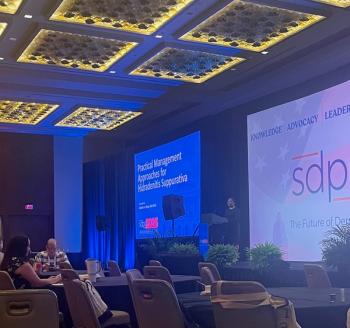
This session with Ginette Okoye, MD, features a discussion about hidradenitis suppurativa (HS) and several helpful approaches for patients.

Verma discussed how recent advances in the field affect clinician management of type 2 diabetes and peripheral artery disease.

Positive topline results show the trial met its primary endpoint for MASH resolution and fibrosis improvement, with significant weight loss effects without plateauing.

Dellon describes what excites him most about EoE recently but points to barriers to optimal care as well as unanswered research questions and clinical needs.

Despite its availability as an over-the-counter medication, BTOS is frequently prescribed by clinicians for the treatment of ocular redness due to minor eye irritations.
Verma discussed how new data from the STRIDE trial support the role of GLP-1 RAs as protective vascular medications.

Donovan and Feig shared exciting findings and further research from a study evaluating an insulin pump with Control-IQ technology with Dexcom G6 sensor.

This interim report of an ongoing study has indicated an overall positive impression of the INFUSE for Astigmatism contact lens among a 100-patient population.

Check out the top 5 interviews from SLEEP 2025.

A survey study has indicated a substantially positive perspective on UMFfA contact lenses, including reports on well-maintained vision, comfort, and ease of fitting.

Rezpegaldesleukin showed significant efficacy in improving EASI scores in moderate-to-severe atopic dermatitis patients.

From new data for potential IgAN treatments to the use of combination initiation therapy for type 2 diabetes and CKD, here are 5 key updates from the annual meeting.

The combination was significantly more efficacious than either therapy alone on both body composition and physical activity; safety events were similar across study arms and consistent with known profiles.

In this report, Chovatiya highlights lebrikizumab’s evolving role in long-term atopic dermatitis management.
The report highlights lebrikizumab’s potential for sustained disease modification and its evolving role in long-term atopic dermatitis management.

Sleep Number studies presented at SLEEP 2025 show that heating and cooling patterns improve sleep quality, especially for women experiencing menopause.

Topline data from the phase 1b study for the final 400 mg dose cohort demonstrate favorable safety, tolerability, and pharmacokinetics similar to the 150 mg dose cohort.

A new study reveals how removing cysteine from diets transforms fat storage into fat burning, offering insights for improved health and longevity.

Yale researchers explore the risks and benefits of higher buprenorphine doses for opioid use disorder, aiming to improve treatment outcomes for veterans.

A new Yale study advances the ability of genome engineers to edit multiple DNA sites by threefold, and helps prevent unwanted mutations in the process.

A new Yale study investigates how artificial intelligence might help identify patients at risk of developing agitation in the emergency department.