
The American Academy of Sleep Medicine revised the guidelines for REM sleep behavior disorder for the first time since 2010.
The American Academy of Sleep Medicine revised the guidelines for REM sleep behavior disorder for the first time since 2010.

A redo surgery often improves the quality of life in a number of ways for patients with ulcerative colitis.
From new ACG GERD guidelines to the efficacy of colonoscopies, our latest issue addresses topics changing practice and stirring conversation.

A review of changes to clinical, dietary and screening strategies for patients with GERD.

A northern Europe-based trial highlights the potential impact of streamlined and community-supported colonoscopy screening for cancer.

A recent randomized controlled trial showed the limitations of either option, despite being a cornerstone of care.
Analysis from a multicenter, randomized, double-blind, parallel group study comparing the drugs as induction and maintenance therapies in biologic-naïve patients.
Dr. Demirjian explained suggested changes to how dialysis is conducted in hospital settings.

Patients with obesity have higher costs and longer hospital stays for IBD.
Up to 2% of patients with IBD also have EoE.

In the second portion of the Rare Disease Report: CDKL5 podcast, Elia Pestana Knight, MD, a pediatric epileptologist shares her clinical expertise on CDKL5 deficiency disorder (CDD).

Reena Mehra, MD, MS, reviews telling signs, the role of obesity, and the importance of proper testing for sleep apnea.
The Cleveland Clinic Director of Sleep Disorders Research navigates the complexities of OSA presentation, progression, management and eradication with the Lungcast team.
This episode of DocTalk features 5 expert retina specialists discussing the top line data from the conference.
The best overall outcomes were attained in eyes without fluid and ellipsoid zone integrity preservation, investigators said.
Patients with obesity who had bariatric surgery had lower rates of mortality compared to patients who did not have bariatric surgery.
In recent years more and more biologics have come on the market for the treatment of IBD.

Data show the presence of five and six risk factors increased the risk of VTE exponentially to 10.9% and 25%, respectively
New research has suggested that approximately 2%-5% of patients with sarcoidosis also struggle with cardiac sarcoidosis.
A look into the efficacy of ozanimod in patients with UC and the potential risk for cardiovascular events.
Patients who have IPAA are more than twice as likely to suffer from male sexual dysfunction.
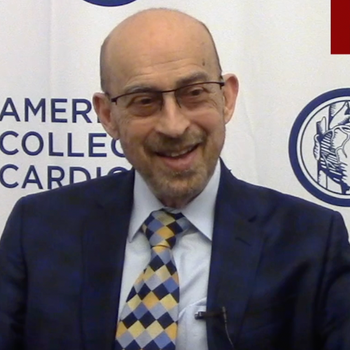
Steve Nissen, MD, reviews the promising phase 1 APOLLO findings, and details what needs to be investigated next for the siRNA.

New phase 1 APOLLO data show the investigative single-dose siRNA infusion may address an inherent risk factor for severe cardiovascular events.

Desai discusses the potential long-term effects of mavacamten and what it could mean for a patient population with HCM.
Findings from VALOR-HCM suggest more data is needed to assess the durability of improvement in septal reduction therapy eligibility over longer time periods.

There is no clinically meaningful differences in safety and efficacy between biologics and biosimilars.

The majority of drugs in development for IBD target inflammation.

There was not a statistically significant correlation between CDI recurrence and age, gender, previous proton pump inhibitor use, and antibiotic exposure.

Dennis Bruemmer, MD discusses new agents and perspectives on care in treating patients with type 2 diabetes at high risk of CV, renal complications.

Ulcerative colitis patients with fatigue are more likely to be unemployed, have moderate or severe disease, and higher Mayo scores.