
Patients who utilized virtual and in-person visits had comparable numbers of follow-ups, referrals, and outpatient surgeries.
Patients who utilized virtual and in-person visits had comparable numbers of follow-ups, referrals, and outpatient surgeries.

An assessment of VISTA and VIVID patient data uncovered surprising risk factors associated with aflibercept success or failure in DME resolution.
A trio of experts from the Cleveland Clinic join Dr. Rizzo for a talk on lung transplant trends and challenges in the US.

Increased cumulative smoking was associated with increased risk of hospitalization and death.
Despite the difficult circumstances, experts believe colorectal cancer rates will not decrease in the coming years due to delays in screenings.

COVID-19 positive patients with COPD demonstrated a greater risk for hospitalization, ICU admission, and need for invasive mechanical ventilation compared with non-COPD patients.
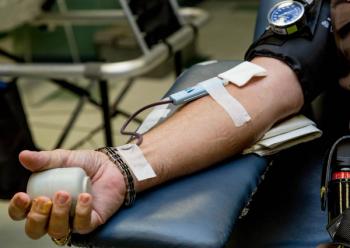
Blood supply shortages have underscored a need to develop new strategies which limit transfusions and triage blood products.

As of February, 121 unique therapies are involved in clinical trials for Alzheimer disease, with putative disease-modifying agents targeting disease onset or progression accounting for the largest number.

A secondary ACCELERATE assessment shows a particular set of patients who may benefit from Lp(a)-lowering novel agents.

What is the primary care physician's role in detecting the rare hepatologic condition?

A Cleveland Clinic study showed about 13% of its transfusions were in deference to current guidelines. That said, there's plenty of gray area for cause of care.

The fully active robot and accompanying preparation software provides surgeons capability to individualize strategy pre-operation.

Outside of CPAP, what therapies—invasive and non-invasive—exist for patients?

Recent research advances have associated the gut's health to overall patient health. What do we know now?

The fourth version of the Cleveland Clinic’s Alzheimer pipeline includes 156 clinical trials and 132 agents currently in all 3 phases of clinical trials in the US.

What resources shaped the most recent #DocTalk Tweet Chat on finding solutions in the physician burnout epidemic?

An analysis of more than 62,000,000 found that prevalence rates of nonalcoholic fatty liver disease were 3 times higher in patients with Crohn's disease.

Positive findings for the envelope support some of the first indications that a preventive measure could address cardiac surgery infection rates.

A new Cleveland Clinic study has programmed EHRs to limit the rate of chest X-rays among patients. How has it helped both their stay and treatment progression rates?

A new cohort from the Cleveland Clinic shows that the index could allow ICU clinicians to know whether a patient needs prone positioning or ECMO.

In 2018, investigators confirmed that one of the staple symptoms of multiple sclerosis—white matter demyelination—isn't always consistent.

The septic shock therapy was approved by the FDA last December. How has it fared in its first year of real-world clinical use?

Pauline Funchain, MD, highlights how humility may be one of the best characteristics in medicine right now.

Daniel Ontaneda, MD, provides insight into the implications of discovering a new subtype of multiple sclerosis: myelocortical MS.

Bruce Trapp, PhD, discusses his team’s recent discovery of a new subtype of multiple sclerosis: myelocortical MS.

One Cleveland Clinic practitioner describes his real-world experience with the use of mepolizumab in patients with severe eosinophilic asthma.

A team of investigators at Cleveland Clinic discover a novel subtype of multiple sclerosis which features neuronal loss but no demyelination of the brain’s white matter.

Cleveland Clinic investigators have discovered a novel form of the neurological condition which does not demyelinate the brain's white matter.

The Cleveland Clinic’s pioneer of minority programs plans to end health disparity.
