

Once-daily VTAMZA delivers week-one sleep gains and lasting itch control in atopic dermatitis, with safety consistent across studies.
Once-daily VTAMZA delivers week-one sleep gains and lasting itch control in atopic dermatitis, with safety consistent across studies.
Post hoc pooled data from ADORING 1 and 2 demonstrate statistically significant improvements in patient and family sleep scores in children aged 2–17 years

Sicherer discussed how findings from CAFETERIA may inform treatment decisions for children with high-threshold allergy.

Anadani discusses a recent study highlighting the myriad contributing factors in the steadily increasing risk of maternal stroke across the country.

Brown discusses a destigmatised future of obesity management in patients with kidney failure.

Bhatt discusses a recent study from GSK highlighting AREXVY’s efficacy in lowering major adverse cardiovascular events.

Pressman discusses his recent study highlighting the interplay between right ventricular end-diastolic volume and ejection fraction and the left ventricle’s health.
4-year LUCENT data show mirikizumab reduces UC-related hospitalizations and surgeries, supporting durable remission and potential disease modification.

In this interview, Neal Bhatia, MD, highlights several key points about treating psoriasis and obesity via ixekizumab and tirzepatide.

Expert panel identifies high agreement for multi-organ involvement, but uncertainty remains in moderate isolated skin or mucosal symptoms.
New data show a >10% drop in newborn hepatitis B vaccination, raising concern for rising chronic infection and future liver cancer risk.
This February episode of The Medical Sisterhood highlights key points on juggling work as a clinician and work as a mother.

Willingness to pursue living kidney donation is shaped by relationships, health, and a multidisciplinary approach, not just finances.

Creager discusses the accomplishments of the ACC and AHA’s joint PE clinical practice guideline while continuing to look to the future of the disease.

Hurtado-Lorenzo discusses trial data showing time-restricted feeding in Crohn’s disease results in weight loss, symptom improvement, and microbiome changes.

Jolley discusses the team’s combination of volume rendering and cardiac MRI-based valve evaluation to provide 4D models of the heart and blood flow.
Systematic review identifies patient and clinician barriers to obesity management before kidney transplantation, with Adrian Brown, PhD.

Updated HAE guidelines support early self-treatment; Cancian discuss transitioning patients from injectable on-demand therapy to oral sebetralstat after KONFIDENT data.

Rare kidney diseases are hard to detect early, but precision therapies and updated guidelines offer new ways to improve patient outcomes.
Diabetes Dialogue cohosts Diana Isaacs, PharmD, and Natalie Bellini, DNP, cover the recent approval and what it means for Wegovy 7.2 mg in the US.
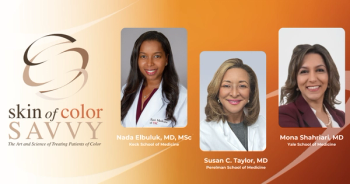
This new February episode of the Skin of Color Savvy podcast highlights why 2026 may be the year of skin health equity in the dermatology field.
Diabetes Dialogue cohosts Diana Isaacs, PharmD, and Natalie Bellini, DNP, discuss the Portal Pump's recent Breakthrough Designation from the FDA.
KONFIDENT investigator Cancian discusses oral sebetralstat’s role in the updated HAE treatment guidelines.
Survey of 600 US relatives finds donor–recipient closeness and expected life extension drive living kidney donation more than financial concerns.
Diabetes Dialogue cohosts Diana Isaacs, PharmD, and Natalie Bellini, DNP, discuss the recent release of the Eversense 365 by Sequel Medtech and Senseonics, paired with the Twiist insulin pump.

Levine discusses 24-hour adverse event resolution, retreatment questions, and scalability of supervised psilocybin therapy for treatment-resistant depression.
This interview segment highlights additional points on bimekizumab and psoriasis related to patient-reported outcomes (PROs) in the 3 year BE RADIANT study.
In this segment of his interview, Vender highlighted his own views on the significance of BE RADIANT trial findings on bimekizumab for psoriasis.
Levine breaks down Compass Pathways’ phase 3 data on COMP360, highlighting next-day onset and sustained symptom improvement through 26 weeks.

SEQUENCE trial data highlight sustained 3-year clinical and endoscopic remission with risankizumab in anti-TNF–exposed Crohn’s patients.