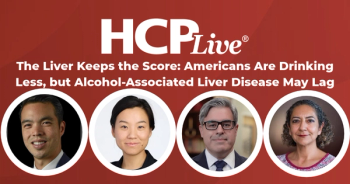
The Liver Keeps the Score: Americans Are Drinking Less, but Alcohol-Associated Liver Disease May Lag
Drinking fell for the first time since COVID-19, but not for adults 50 to 64. Hepatologists explain what clinicians can do to close the gap.
The month in review spotlights hepatic podcast episodes from HCPLive, new clinical trial data, and coverage from DDW.
May proved to be a dynamic month in hepatology, marked by notable advances across research, clinical practice, and public awareness. The launch of Liver Lineup: Updates & Unfiltered Insights, HCPLive’s new expert-led podcast, provided timely commentary on emerging data from the 2025 European Association for the Study of the Liver (EASL) Congress, while new findings from pivotal trials and major meetings—including Digestive Disease Week (DDW)—shed light on therapeutic progress in
Check out this May 2025 hepatology month in review for a recap of HCPLive’s coverage of the top hepatic news and research from the past few weeks:
May saw the launch of HCPLive’s newest podcast, Liver Lineup: Updates & Unfiltered Insights. Hosted by Drs. Kimberly Brown and Nancy Reau, the podcast delivers timely, candid perspectives on the most pressing topics in the fast-moving world of hepatology while diving into the cutting edge of liver disease research, clinical care, and real-world practice.
In their first full-length episode, the hosts recap 4 key abstracts presented at the 2025 EASL Congress, including new data on efimosfermin alfa in patients with
In this episode of Diabetes Dialogue, hosts Diana Isaacs, PharmD, and Natalie Bellini, DNP, examine a newly released American Diabetes Association (ADA) consensus report titled Metabolic Dysfunction-Associated Steatotic Liver Disease (MASLD) in People with Diabetes: The Need for Screening and Early Intervention. The publication emphasizes the importance of recognizing MASLD as a critical comorbidity in individuals with type 2 diabetes and prediabetes and outlines guidance for clinicians to improve early detection, risk stratification, and treatment strategies.
Despite failing to significantly reduce fibrosis without worsening of MASH at 36 weeks, data from the SYMMETRY trial of efruxifermin, a bivalent fibroblast growth factor 21 (FGF21) analogue, highlight the 50 mg dose’s potential benefit on fibrosis reduction at 96 weeks and association with improvements in MASH-related histologic findings, noninvasive markers of liver injury and fibrosis, and markers of glucose and lipid metabolism.
Recent data from the phase 2 ELMWOOD study of elafibranor in patients with PSC shed light on the peroxisome proliferator-activated receptor (PPAR) agonist’s safety and tolerability in this patient population, which currently lacks a US Food and Drug Administration-approved treatment.
Hydronidone met the primary endpoint in a phase 3 trial evaluating its efficacy and safety for the treatment of liver fibrosis in patients with chronic hepatitis B (CHB) in China. Based on these data, Gyre plans to file a New Drug Application with China’s NMPA in the third quarter of 2025 and is preparing to file an investigational new drug (IND) application in the third quarter of 2025. Pending IND clearance, the company plans to initiate a phase 2 trial in the US evaluating Hydronidone for the treatment of
There, Wei Zhang, MD, PhD, and colleagues established the Long-term Individualized Follow-up after Transplant (LIFT) Clinic, a multidisciplinary program involving a hepatologist, a psychiatrist, a social worker, and a case manager to assist in the prevention and management of alcohol relapse in high-risk liver transplant recipients.
New research is shedding light on the prevalence of sleep disorders in patients with PBC, highlighting their association with worse biochemical markers, greater symptom burden, and reduced treatment response rates. Data were presented at DDW 2025 by Ana Marenco Flores, MD, a research fellow in medicine in the division of gastroenterology at Beth Israel Deaconess Medical Center and Harvard Medical School, and suggest the potential benefit of assessing sleep disorders as part of routine clinical care and implementing timely interventions for improving outcomes and quality of life in this patient population.
FibroX, an explainable AI model, may help improve advanced fibrosis detection and predict all-cause and cardiovascular mortality in patients with MASLD, according to data presented at DDW. Findings on its use relative to fibrosis-4 index (FIB-4) demonstrate the superior performance, interpretability, and potential cost savings of the novel AI model.