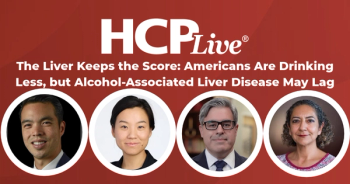
The Liver Keeps the Score: Americans Are Drinking Less, but Alcohol-Associated Liver Disease May Lag
Drinking fell for the first time since COVID-19, but not for adults 50 to 64. Hepatologists explain what clinicians can do to close the gap.

In this episode, Dominic Sisti and Steve Levine talk with Arthur Caplan, PhD, about how the concept of brain death was built and why it still generates controversy 50 years later.
In this episode of
Before ventilators, death was simple to diagnose. Once heart-lung machines could keep a body's heart beating long after the brain stopped functioning, physicians needed a new legal and medical category.
Caplan walks through how that category was built. The conversation follows up on the trio's
Caplan traces brain death's origins to a collision of factors: the arrival of mechanical ventilation, the absence of any clear line between coma and death, and the growth of organ transplantation, which had no legal definition of a deceased donor to rely on. He points to Willard Gaylin's 1974 essay "Harvesting the Dead" as an early, provocative attempt to grapple with what that new power over the dying body might mean.2
The episode also revisits the case of Jahi McMath, the 13-year-old declared brain dead in 2013 after a routine tonsillectomy, whose family used a New Jersey law to keep her on a ventilator for nearly 5 years.3 Caplan and Sisti weigh in on what her case exposed about the limits of the current diagnostic standard and where they disagree on how to interpret it.
Caplan discusses whether a persistent vegetative state should ever be treated as equivalent to death and why he remains cautious about that step despite growing calls to revisit it. He also describes helping establish a "neomort" research program, an idea first proposed as a thought experiment decades ago and now quietly in practice at multiple institutions.
The full conversation covers the 2023 American Academy of Neurology consensus guideline on death by neurologic criteria and why Caplan believes bioethics debates, however slow, do eventually reshape clinical practice.4
Watch the full episode above.
Editor’s note: Reported disclosures include Janssen Pharmaceuticals for Levine. Sisti and Caplan have no reported disclosures.
References